Key Highlights
- What brand identity really means and why it goes beyond logos and taglines
- The proven business benefits of investing in your brand, backed by 2025 data
- How brand consistency directly impacts revenue growth
- Why purpose-driven brands outperform competitors in consumer trust and loyalty
- How branding and digital marketing work together to drive visibility and conversions
- Practical steps to build or refine your brand strategy right now
Most business leaders know that lead generation drives growth. But the brands that consistently outperform their competitors understand something deeper: your brand is doing the selling before any salesperson picks up the phone.
Understanding why branding matters is no longer just a marketing conversation; it is a core part of business success. In a digital-first world shaped by AI search, social media, and consumer values alignment, your brand identity is your most valuable business asset.
In fact, 81% of consumers need to trust a brand before they will consider buying from it. And with 64% of consumers forming ongoing relationships with brands that align with their values, businesses that clearly define their purpose and communicate it consistently are the ones that build lasting loyalty.
So let's break down what branding really is, why it matters, and how you can build one that drives measurable business results.
What Is a Brand Identity and Why Does It Matter?
A brand is so much more than a logo or tagline. It's a precious company asset that helps tell the story behind your company, conveys your passion for your products and services, and ultimately creates a connection with your employees, who, in turn, are proud to work for the brand.
It's also more than just a slogan or a catchy name for a particular product (think of things like Fenty Beauty, Nike, Amazon Essentials, etc.). When we talk about the term brand, the name, design, symbol, and other identifying features of a company make it what it is.
At WSI, our brand is encapsulated in our brand mission: "Unlocking a world of possibility for those we serve." And our brand video communicates how our WSI Consultant network reflects that back to their clients and prospects:
What Branding Isn't
Your brand's identity isn’t just a logo, color palette, slogan, or set of social media templates. Those elements matter, but they only support the bigger picture. Your brand is the full impression people have of your business, shaped by what you say, how you act, and the experience you deliver.
It is also not a one-time project. A strong brand needs regular review, so your message stays clear, consistent, and relevant to your audience.

Elements That Make Your Brand Identity
Brand identity elements include:
- Visual identity, your logo, color palette, typography, and design system
- Brand voice, the tone and language you use across all communications
- Brand values, the principles and beliefs that guide your business decisions
- Brand promise, the specific commitment you make to your customers
Brand story, the narrative of how and why your business exists
Why Is Branding Important for Your Business?
We live in an era of near-infinite consumer choice. Your potential customers are comparing options across websites, social media, AI search results, and peer recommendations, often before they ever contact you directly.
A strong brand does the heavy lifting of differentiation. It tells consumers immediately who you are, what you stand for, and why you are the right choice. When you have a clearly defined brand, you are not just competing on price or features; you are competing on trust.
How Branding Builds Trust with Your Target Audience
Trust is built through consistency. Every time a customer interacts with your brand, on your website, your social media, your packaging, or in a sales conversation, and the experience matches their expectations, trust compounds.
Brands that walk the walk on their stated values earn the deepest loyalty. Patagonia donating 1% of profits to environmental groups while featuring the environment (not clothing) on its homepage banner is a masterclass in brand values made visible. This is why 64% of consumers form lasting relationships with brands that reflect their own values; they are not just buying a product; they are joining a movement.
|
81% of consumers need to trust a brand before they will consider making a purchase. In a digital landscape where buying decisions happen before a customer ever reaches your website, brand trust is no longer optional; it is the price of entry. |
Why Is a Clearly Defined Brand, Purpose, and Messaging Important in Digital Marketing Strategy?
Whether building a brand from scratch or revamping your current one, clearly defining your brand, purpose, and messaging is vital.
A strong brand identity will enhance consumers' awareness of your company and can decide whether they purchase your goods and services or at least share your company with others. It will also help you build customer trust and loyalty. When customers can trust your brand, they'll continue to boost your business through repeat purchases and share their experiences with other consumers.
But it's important to note that your brand messaging can evolve. In some instances, revisiting your brand's mission, tagline, and even the elements that make your company unique from your competitors is necessary to keep your brand from going stale.
In fact, at WSI, we've gone through the process of tweaking our brand messaging to make it more purposeful and indicative of the needs of our clients today and into the future. We’ve seen how transformative it can be when discussing our "why" (unlocking a world of possibility for those we serve) and purpose with our prospective clients and how it has bolstered our entire WSI network.
Whatever your brand identity may be, embracing a clear purpose and crafting compelling messaging not only strengthens your connection with your target audience but also enriches your internal culture. This powerful combination enables you to build marketing campaigns that truly resonate with your audience, surpassing the impact of generic approaches and fostering an authentic and enduring relationship with your customers.
What are the Benefits of Branding?
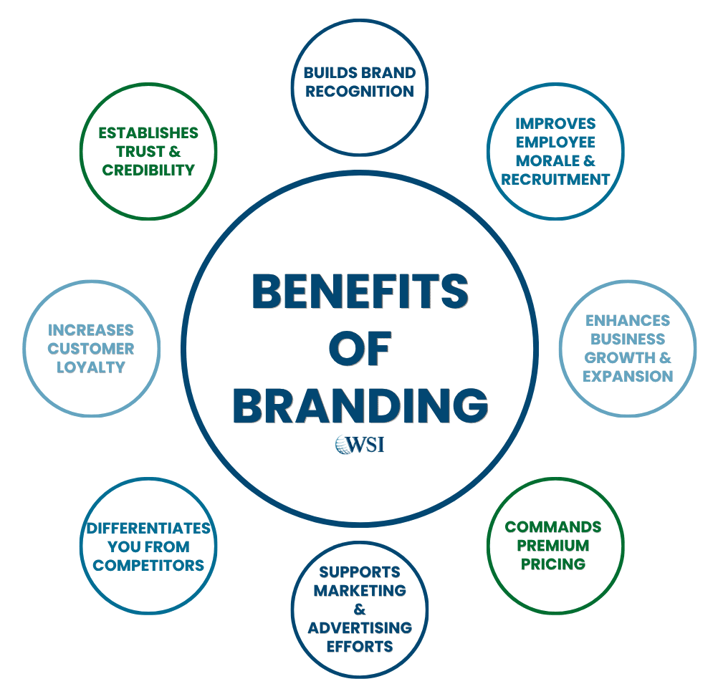
Branding is essential for establishing a strong identity, building trust, and driving business growth. Here are the key benefits of branding:
1. Builds Brand Recognition- A consistent brand identity with a unique logo, colors, and messaging makes your business memorable and easily identifiable.
- Example: Apple’s sleek design and logo create instant recognition worldwide.
- A strong brand conveys professionalism, reliability, and quality, helping customers feel confident in their choices.
- Example: Coca-Cola’s long-standing reputation assures customers of product consistency.
- Consumers tend to stay loyal to brands they connect with emotionally.
- Example: Nike’s “Just Do It” campaign inspires and fosters loyalty among athletes and fitness enthusiasts.
- Branding highlights what makes your business unique, helping you stand out in a crowded market.
- Example: Tesla’s brand is associated with innovation and sustainability, setting it apart in the auto industry.
- A well-defined brand makes marketing campaigns more effective, as customers recognize and engage with consistent messaging.
- Example: McDonald’s golden arches and "I'm Lovin' It" slogan reinforce brand identity in advertising.
- A strong brand can justify higher prices because customers associate it with quality and exclusivity.
- Example: Luxury brands like Rolex and Louis Vuitton command premium pricing due to their strong branding.
- A trusted brand makes expanding into new markets and introducing new products easier.
- Example: Amazon successfully leveraged its brand trust to expand from bookselling to cloud computing and AI.
- Strong branding attracts top talent who want to work for reputable companies. It also fosters a sense of pride among employees.
- Example: Google’s employer branding makes it one of the most desirable workplaces.
How Brand Consistency Drives Revenue Growth
One of the most overlooked truths in business is that inconsistency is expensive. When your website looks different from your social media, your email campaigns use a different tone from your sales pitches, and your messaging shifts from one campaign to the next, consumers disengage. They do not know which version of you to trust. Consistent brand presentation can increase revenue by up to 23%.
|
Companies that maintain consistent branding across all channels report up to a 23% increase in revenue, without increasing ad spend. In contrast, inconsistent branding erodes recognition, undermines trust, and loses customers to competitors who present a clearer identity. |
How Branding and Digital Marketing Work Together
Branding and digital marketing are not separate disciplines; they are two sides of the same coin. Your digital marketing strategy amplifies your brand, and your brand makes every digital marketing effort more effective.
Strong branding improves SEO through branded search volume, the organic signal that occurs when people search specifically for your business name. It improves paid advertising performance through higher quality scores and better ad relevance. And it improves content marketing results because audiences engage more deeply with content from brands they recognize and trust.
How To Develop a Clearly Defined Brand, Purpose, and Messaging
Every brand - especially similar brands competing in the same industry - must stand for something uniquely purposeful to stand out. Here's how we help brands create their identities and how you can get started yourself.
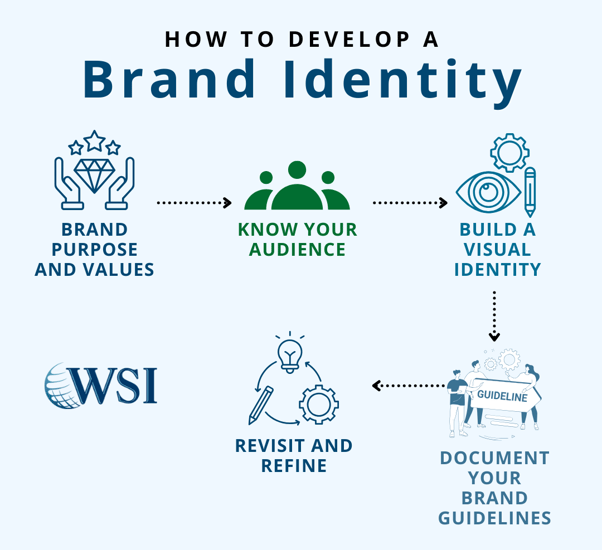
Define Your Brand Purpose and Values
Start with your 'why.' What does your business stand for beyond making money? What problem are you uniquely positioned to solve? Your purpose is the north star that guides every brand and marketing decision.
Know Your Audience Deeply
Your brand identity should reflect the values, needs, and aspirations of the people you serve. The better you understand your audience, the more precisely you can build a brand that connects.
Build a Cohesive Visual Identity
Your logo, color palette, typography, and imagery system should be consistent and intentional. These visual elements create the first impression of your brand; make them count.
Develop a Consistent Brand Voice
How you write and speak across all channels, your website, social media, email, and ads, should feel unmistakably like your brand. Consistency in voice builds familiarity and trust.
Document Your Brand Guidelines
Brand guidelines take the guesswork out of brand consistency. They define exactly how your brand should look, sound, and behave across every touchpoint, for your team, your partners, and your agency.
Revisit and Refine Regularly
Your brand is a living asset. As your business grows, your audience evolves, and the market shifts, revisiting your brand messaging and positioning keeps it relevant and effective.
Things To Keep in Mind for Maintaining a Clearly Defined Brand
Once you've defined your brand, managing it is the next step. Here are a few tips to help you keep a clear brand and be successful:
- Educate and train your employees on your brand's values, purpose, and messaging guidelines
- Listen to your employees and your customers and consider their feedback—remember, it's their brand too!
- Be adaptable to market changes so your brand stays relevant, but do so with purpose and intention
- Try to resist the temptation to chase short-term trends that may not align with your brand identity
- Pay attention to how your customers perceive your brand and make adjustments where necessary
- Monitor and protect your brand from inconsistent representation
Common Pitfalls That Can Occur During a Brand Update
Sometimes pitfalls can happen when you're going through a brand update. Some are minor, while others could harm your company's success. Knowing the common pitfalls can help you avoid them and have a more successful brand update. It's common for companies to experience these pitfalls:
- Not Being Clear and Consistent: A brand that’s not cohesive in its message and purpose is a big turn-off for customers who prefer consistency in the brands they trust.
- Losing Sight of a Core Identity: Sometimes, when the going gets tough, brands abandon what they stand for since it can be an easier path. But the longest-lasting brands endure by doing right by customers and sticking to a core identity - a North Star.
- Updating Your Brand at an Inappropriate Time: “Reading the room” is an important step when updating a brand. For example, avoid rebranding during troubling times, and wait until a calmer period emerges.
- Underestimating the Resources Needed: Updating or changing a brand is a big and complex job. Make sure you’ve outlined the process and have the time, resources, budget, and all relevant stakeholders aligned before starting the project.
Tips for Ensuring a Successful Brand Strategy Update
Updating your brand strategy is exciting, but it can be a complex process with room for error. To ensure that you're successful when updating your brand strategy, here are a few essential tips:
- Conduct Market Analysis: Before you begin your update, you need to do a thorough market analysis to see where your strengths and weaknesses lie. This will allow you to develop the best brand update possible for your business.
- Make Your Objectives Clear: Outlining clear goals, like attracting a new audience or improving your brand reputation, will help you stay focused.
- Stay Consistent: No matter what you're updating within your brand, it's essential to stay consistent with your brand's mission and values so you don't lose loyal customers or lose focus on why you started the company in the first place.
- Address the Update: You'll want to ensure everyone at the company (employees, stakeholders, etc.) and customers know about the updates. Transparency helps to build and maintain trust.
- Monitor the Effectiveness: Monitor your progress and see if it's working and if any more changes need to be made. You want to continue with a tactic only if things are working.
Can AI Help Businesses Create a Unique Brand Voice, or Will it Lead to Generic Branding?
AI can help businesses create a unique brand voice by leveraging data-driven insights, audience segmentation, and consistent messaging across platforms. AI-powered tools analyze customer behavior, preferences, and engagement patterns to craft personalized brand communication that resonates with specific target audiences. By maintaining a cohesive tone and style, AI ensures that a brand’s messaging remains recognizable and aligned with its identity. Additionally, AI-driven content generation can help brands adapt to cultural trends, industry shifts, and audience expectations in real time, enhancing their relevance and appeal.
However, there is a risk that AI could lead to generic branding if overused without customization. Many AI-generated messages follow predictable structures, lacking the emotional intelligence, humor, and authenticity that make brands truly stand out. If multiple businesses rely on the same AI tools without human oversight, their messaging may become homogenized, making it harder to differentiate in a crowded market. The key to success lies in balancing AI automation with human creativity, using AI as a tool for efficiency while ensuring that storytelling, brand personality, and emotional connection remain uniquely human.

Work with WSI on Everything Branding
The global market presents unprecedented opportunities and challenges for businesses, making the importance of a well-defined brand even more crucial. At WSI, we firmly believe that being a purpose-driven brand is the key to unlocking immense value for your customers and society as a whole. By embracing a clear sense of purpose and embodying it in every aspect of your brand, you create meaningful connections and propel yourself to push boundaries and redefine what is possible within your industry. Our mission, "unlocking a world of possibility for those we serve," reflects our commitment to this transformative approach. So, as you navigate the digital landscape, remember that a purpose-driven brand can shape the future, inspire innovation, and create lasting impact.
If you want to understand why branding matters in the age of AI and digital transformation or need help tweaking your brand marketing campaigns, talk to us - we’d love to work with you!