
Key Highlights
- Why knowing how to manage reviews is critical for business growth
- How AI can automate review management and improve customer service
- What Online Reputation Management (ORM) is and why it matters
- The step-by-step process to manage online reviews effectively
- How to choose the right review management software
- Which AI tools help monitor, analyze, and respond to customer feedback
- How to turn negative reviews into opportunities
- Practical ways to track, respond to, and request customer reviews
- How WSI helps businesses implement effective review strategies
If you're running a growing business, you’ve faced negative reviews, and you’ve seen the impact on leads and sales. Maybe it's slow response times, rising service costs, or inconsistent follow-through that’s holding you back. Every unanswered review, especially a negative one, is a missed opportunity to protect your reputation and close the next sale.
Learning how to manage reviews effectively is critical. The numbers are clear: 86% of consumers hesitate to buy from a business with negative reviews, and a 1-star increase in your average rating can boost revenue by up to 9%, according to a study by Harvard Business School. That’s quite compelling proof that investing in Online Reputation Management (ORM) leads to measurable returns on investment.
And the good news? AI-powered tools can help you quickly resolve bottlenecks. From automating review responses to flagging reputation risks in real time, you can manage feedback efficiently, protect your brand, and do it all without hiring extra staff.
AI is no longer an emerging trend in customer service, it’s already changing how growth-focused businesses manage support at scale. If your team is juggling high support volumes or struggling to keep up with rising customer expectations, AI-powered tools like chatbots and intelligent automation can help you deliver faster, more efficient service, without increasing headcount and overhead costs.
AI is already revolutionizing customer service, enabling businesses to enhance responsiveness, decrease wait times, and lower operational costs. And it's not just about speed: AI can help you personalize interactions and gain a deeper understanding of customer needs.
But getting value from AI takes more than plugging in a tool. Knowing where and how to implement it matters if you're aiming for sustainable, long-term gains.
|
86% of consumers hesitate to buy from businesses with negative reviews. |
What is Review Management?
Review management is the process of monitoring, responding to, and improving the online reviews your business receives across platforms like Google, Facebook, Yelp, TripAdvisor, and industry-specific sites.
Why is Online Reputation Management (ORM) So Important?
You can’t afford to overlook your online reputation. What customers say online directly affects your conversions, retention, and bottom line. Consumers are always looking for reliable, third-party reviews to help them decide which businesses to trust, meaning your customer feedback must form a central part of your marketing strategy. The majority of consumers will seek out reviews before making a purchase decision. Negative reviews can have a serious effect on your sales.

What is Online Reputation Management?
The main attributes of online reputation management (ORM) are as follows:
- It is the practice of monitoring and controlling the way your business is perceived on the internet.
- It is a set of tools and tactics you can use to engage with your customers, monitor and respond to negative reviews, and take decisive steps to build a positive reputation.
- The increasing sophistication of artificial intelligence makes it much easier to manage your online reputation and build customer trust. When implemented with the right strategy and tools, AI boosts your reputation and revenue.
ORM is not a simple matter of maintaining a good relationship with your customers. It is an investment in the success of your business, with a direct influence on your leads and sales.
Strong ORM practices can help you:
- Improve your customer service and boost customer satisfaction
- Retain your clients
- Accelerate lead conversion
- Increase your sales
As such, ORM is an active aid to your business’s growth.
What Are the Key Elements of Online Reputation Management?
ORM requires both proactive and reactive approaches. Firstly, you need to conduct a full audit of your current reputation. You can then develop a strategy to enhance and build upon that reputation. After that, constant monitoring is necessary to track incoming customer feedback and respond to it closely.
Understanding Your Current Reputation
You will need to start with a comprehensive audit of your brand and business online, so that you can understand your current online reputation. This can be done in two steps:
- Search for your brand or company name and see what comes up. This process requires a systematic approach and the right tools.. Your reviews likely span multiple platforms. Even a representative sample reveals actionable patterns in customer feedback.
- Once you have gathered this information, you need to analyze it. What are people saying - and where? What common threads can you identify in the various reviews and comments you find? What action steps will you need to take to improve your reputation? Most importantly, how far has your reputation diverged from the image you envisioned and have tried to cultivate?
You have access to proven AI tools that deliver accurate insights and automate fast responses. These tools not only provide you with valuable insights you can use to understand and manage your reputation. You can also use them to automate specific key tasks in the reputation management process, such as responding to customer comments or alerting you to negative reviews. There are many to choose from, ranging from Google Analytics to Birdeye and Reviewly. We’ll take a closer look at some of our preferred tools later on.
Create A Strategy to Build Your Online Reputation
Once you understand where your reputation stands in relation to where you want it to be, you can begin developing a strategy to help you boost and reshape it. First, determine whether you have developed a strong enough understanding of your target audience. Then you can create a targeted reputation management plan to reach that audience and satisfy its requirements. A reputation management plan involves several proactive steps to build and maintain your online reputation. Your plan will help you organize and implement a range of tactics to address and mitigate negative comments and any adverse effects they may have. An effective plan would include the following:
- Constant monitoring of your reviews. AI tools such as Reviewly.ai, Reviews.ai, Right Response AI, and Thryve can help you with this.
- Engagement with customers, both proactive and reactive. Proactive engagements can help you prevent negative reviews, while prompt reactions to negative comments can help rectify issues and resolve customer complaints. AI tools can be used to automate these responses. You can either automate responses or write them yourself, your tools will alert you immediately.
- Developing, organizing, and communicating your brand’s principles and their impact on your business and community helps create a solid foundation for your reputation.
- Establishing procedures for crisis management, such as escalation channels, damage control strategies, and customer relationship protocols.
- Effective search engine optimization helps promote positive information about your brand and diminishes negative information.
Monitor Your Reviews and Online Reputation
Once your audit is complete and you have implemented your new strategy, you will need to continue tracking your reviews and customer feedback on an ongoing basis. There are several tools you can use to do this: more on that later.
Manage Negative Reviews
When negative views arise, deal with them immediately. Respond promptly and professionally, and offer to resolve issues personally. Always let negative feedback serve as a lesson and take steps to ensure that you never make the same mistake twice.
How to Manage Online Reviews
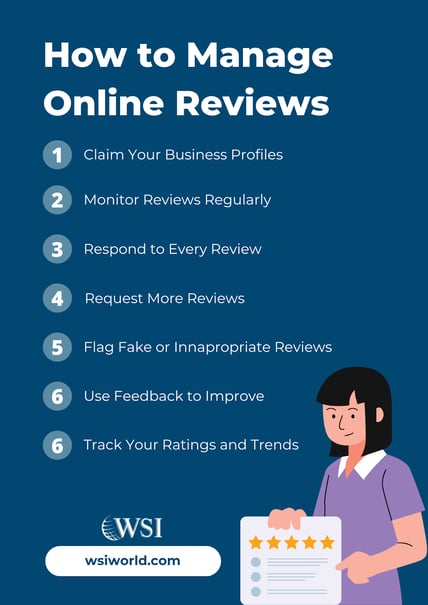
1. Claim Your Business Profiles
Make sure you’ve claimed your listings on:
- Google Business Profile
- Yelp
- TripAdvisor
- Any industry-specific sites
This gives you control over your information and lets you respond to reviews.
2. Monitor Reviews Regularly
Use tools to track reviews across platforms. You can’t respond if you don’t know what people are saying.
Tools like:
- Google Alerts
- ReviewTrackers
- Birdeye
- Yext
3. Respond to Every Review
Respond to both positive and negative reviews. Keep it professional, polite, and prompt.
Positive review response:
- Thank the customer.
- Be specific.
- Invite them back.
Negative review response:
- Stay calm and polite.
- Apologize if appropriate.
- Address the issue and offer to resolve it offline.
4. Request More Reviews
Make it easy for happy customers to leave feedback. You can:
- Send follow-up emails or texts
- Use QR codes on receipts
- Add review links to your website
Timing matters; ask soon after a positive interaction.
5. Flag Fake or Inappropriate Reviews
If a review violates platform policies, report it. Provide details to support your case.
6. Use Feedback to Improve
Look for patterns. Are people complaining about slow service? Poor communication? These insights help you fix issues and improve customer experience.
7. Track Your Ratings and Trends
Watch your average star rating, review volume, and sentiment over time. Set goals and adjust your approach as needed.
|
Always respond to every review, positive or negative. This builds trust and improves visibility. |
How Can AI Help You Strategize and Monitor Your Online Reputation?
Monitoring your online reputation is not an easy task, especially as your company grows and your volume of sales and customer interaction increases. Depending on the kind of business you run and the size of your customer base, the volume of your reviews and their distribution across different online sources will differ. Depending on your business, reviews may come from just a few channels or dozens of channels. The larger your business, the more challenging reputation management becomes. Once again, there is no need for this to become a full-time job for any member of your team, as you can use AI to manage these tasks.
Monitoring
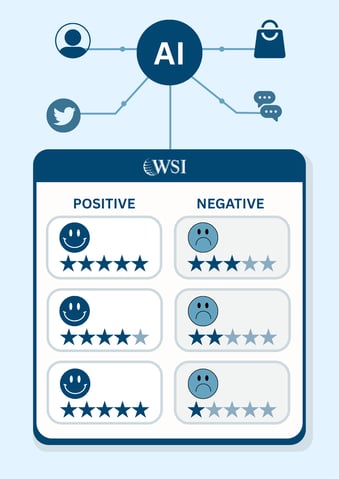
AI and machine learning tools can be employed to monitor your reviews and other customer feedback. Some of the tools currently on the market include Birdeye, Review Trackers, and Mention, among several others.
With these tools, you can:
- Automate the collection, sorting, and filtering of your online reviews.
- Sort positive from negative reviews, and it can even be programmed to alert you when ORM crises arise.
- Conduct ongoing scans on social media, consumer review platforms, eCommerce sites, and elsewhere, and extract relevant information to help you track and understand your online reputation.
|
Try Birdeye, ReviewTrackers, or Podium for streamlined review management across platforms. |
Sentiment Analysis
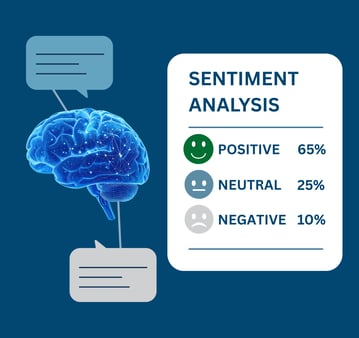
As they collect your reputation data, AI tools can run sentiment analysis on the content, categorizing it as positive, negative, or neutral feedback. The tools mentioned above can all handle this function. Some other great examples are Qualaroo (highly effective for capturing and acting on real-time feedback) and Talkwalker (extremely effective for managing your reputation on social media.
These tools:
- Provide valuable insights into how your customers view your brand and products.
- Enable you to make quick, responsive changes that will lead to an instant, marked increase in your reputation, thus enabling you to improve your service and boost your sales.
Customer Service Enhancement
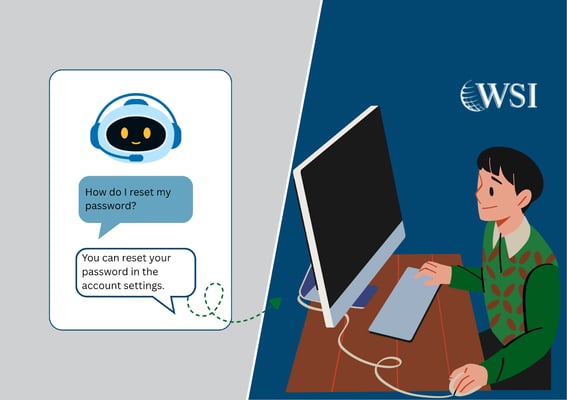
AI tools can do much more than monitor and analyze your customer reviews. You can also use them to help you sharpen your customer service. Alongside your monitoring and analysis tools, you can use chatbots, such as Zendesk, to handle customer inquiries and resolve basic issues quickly. This provides a double benefit. On the one hand, simple problems that might otherwise frustrate customers are resolved rapidly. On the other hand, human agents are freed up to tackle more complex issues.
The results:
- Faster response times
- Improved customer satisfaction
- Better online reputation
- All of which leads to improved lead conversion, sales, and therefore, growth
Predictive Analytics

In addition to analyzing current trends in real time, AI tools like Prophet (an open source option) and Qlik (at the higher end in terms of cost) can also analyze historical data to identify potential risks to your reputation. This can help you correct course and prevent negative impacts to your reputation before they even happen.
If you are looking to unlock the power of AI to boost your online reputation or for any other purpose in your core business or digital marketing, WSI can help you. Our AI Consultants will help you seamlessly incorporate the latest AI technologies into your operations, empowering you to select and adopt a tailor-made solution that will significantly enhance your online reputation, workflows, and goal-setting, among other aspects of your business. Our understanding drives our “human in the loop” (HITL) approach, which suggests that the most effective AI solutions involve collaborative interactions between humans and AI.
While AI can effectively automate tasks and analyze vast amounts of data, human expertise is still crucial at various stages of the client lifecycle. We use this hybrid approach to help you harness the power of AI systems without becoming over-reliant on them.
How to Choose Review Management Software
Choosing the right customer review management software depends on your business size, industry, and goals. Here's what to look for:
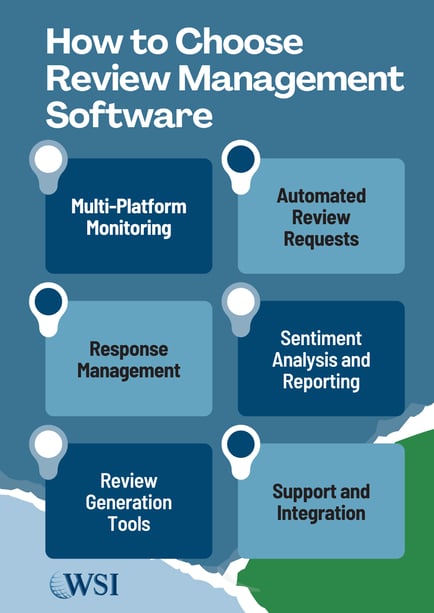
1. Multi-Platform Monitoring
Choose a tool that tracks reviews across:
- Yelp
- Industry-specific sites (e.g., TripAdvisor, Healthgrades)
You need a single dashboard to see everything in one place.
2. Automated Review Requests
The software should let you:
- Send review invites by email or SMS
- Customize messages
- Trigger messages based on events (like a sale or appointment)
Automation saves time and helps you get more reviews.
3. Response Management
Look for features like:
- Pre-written response templates
- Notifications for new reviews
- Direct reply options from within the platform
This helps you respond faster and more consistently.
4. Sentiment Analysis & Reporting
You want insights, not just alerts. Good software will:
- Analyze tone and keywords in reviews
- Show trends over time
- Track average rating, response time, and volume
This data helps you improve service and marketing.
5. Review Generation Tools
Some platforms include:
- On-site widgets to display reviews
- Google review link generators
- QR codes for physical stores
These make it easier for customers to leave reviews.
6. Support & Integration
Look for tools that integrate with your CRM, email, or POS system.
Make sure there’s solid customer support or onboarding help.
Recommended Tools:
- Birdeye: Great for multi-location businesses
- Podium: Best for texting-based review requests
- Yext: Good for enterprise businesses with many listings
- Grade.us: Affordable and flexible for small businesses
- ReviewTrackers: Strong reporting features
Improve Your Review Management Strategy Today!
Want to see how AI can streamline your review management and boost your bottom line? Book a 30-minute AI audit with a WSI Consultant.
FAQs about Review Management#1. Why do online reviews matter for my business? Online reviews influence buying decisions and affect your visibility in search results. Google uses review quantity, quality, and recency as ranking signals for local SEO. #2. How many reviews do I need? Aim for a steady stream rather than a set number. Businesses with recent, consistent reviews perform better than those with old or sporadic feedback. #3. Can I ask customers to leave a review? Yes. It’s not only allowed, but it’s also smart. Ask after a positive experience, through email, SMS, or QR code, just don’t offer incentives, as this violates most platforms’ policies. #4. What should I do about negative reviews? Respond quickly and professionally. Apologize if needed, offer a solution, and take the conversation offline. This shows potential customers you care. #5. Can I remove fake or unfair reviews? You can report them to the platform. If the review violates guidelines (spam, harassment, off-topic), it may be removed. But you can’t delete reviews yourself. #6. How do reviews impact local SEO? Reviews influence your Google Business Profile’s visibility. Google considers review count, rating, keywords in reviews, and how often you respond. #7. Should I respond to all reviews? Yes. Thanking customers shows appreciation, and replying to complaints builds trust. Google also recommends responding to reviews. #8. What’s the best review management tool? It depends on your needs. Tools like Birdeye, Podium, or ReviewTrackers help automate requests, monitor platforms, and manage responses from one place. #9. How can WSI help with review management? We help you get more reviews, monitor platforms, and respond consistently. We also analyze trends to improve service and boost your SEO performance. If you’re still unsure about how to manage reviews, then do not hesitate to reach out to WSI today. |