
Key Highlights
- How AI and marketing automation work together in real business scenarios
- Where AI can reduce manual work and improve campaign performance
- The most effective use cases, including email, ads, and lead management
- How AI supports better targeting, personalization, and timing
- What steps should you take to start using AI in your marketing
- How to measure results and improve performance over time
In the era of rapid technological advancements, AI and marketing automation have come together to optimize marketing procedures. The advent of Artificial Intelligence (AI) has transformed the domain of marketing automation by providing a diverse array of potent instruments that can amplify effectiveness, output, and client satisfaction. 76% of the top companies across industries are now actively using marketing automation and AI marketing tools.
However, choosing the most suitable one might take a lot of work, thanks to the vast array and variety of AI tools out there. To help you navigate these abundant waters, we have created a guide to assist you in understanding and selecting the appropriate AI marketing automation technologies that align with your objectives.
| AI is already part of how marketing works today. If you are still relying on manual processes, you are likely losing time and missing conversion opportunities. |
Understanding AI Marketing Automation Tools
AI for marketing automation is the application of artificial intelligence technologies to streamline and enhance marketing activities. AI marketing automation technologies use machine learning algorithms to evaluate data, forecast customer behavior, and provide customized marketing messages. Marketers can effectively reach their desired audience at the optimal moment by delivering a tailored message, resulting in the highest engagement and conversions.
Many businesses choose to implement AI marketing automation to reduce manual work and improve campaign performance.
AI marketing automation tools and platforms are equipped with diverse characteristics that render them essential for contemporary marketers. Some notable features of artificial intelligence marketing automation tools include:
- Personalized Messaging: AI algorithms use consumer data to understand preferences, actions, and interests, enabling marketers to craft customized marketing messages that connect with specific clients.
- Predictive Analysis: This involves the examination of both past and current data to make predictions about client behavior. AI marketing automation technologies use this analysis to anticipate customer needs and customize marketing efforts accordingly.
- Data Management: Artificial intelligence solutions effectively manage and analyze substantial amounts of data, offering essential insights that facilitate decision-making based on data and optimize campaigns.
- Automated Campaigns: These technologies streamline and mechanize recurring processes such as email marketing campaigns, social media scheduling, and lead scoring, effectively reducing the time and effort required by marketers.
| Start simple. Focus on one use case, like email automation or lead scoring, before expanding into more advanced AI tools. |
Traditional Marketing vs. AI Marketing Automation
.png?width=676&height=956&name=unnamed%20(57).png)
Traditional marketing often relies on manual processes, broad messaging, and delayed performance insights, making it difficult to scale or personalize efficiently. Marketers typically plan campaigns, execute them in fixed channels, and assess performance only after the campaign ends.
In contrast, AI-driven marketing automation introduces real-time decision-making, advanced data analysis, and automated campaign execution. It allows marketers to personalize content for individual users, adjust strategies on the fly, and scale outreach without significantly increasing resources. This shift enables businesses to operate more efficiently, connect with their audiences more meaningfully, and continuously improve campaign performance based on live data.
The Role of AI in Marketing
Marketing AI automation has enabled businesses to harness vast amounts of data for enhanced customer insights and personalized experiences. AI-powered marketing processes analyze consumer behavior patterns, allowing marketers to create highly targeted campaigns and deliver personalized content in real time. With predictive analytics, AI can identify market trends and optimize strategies, while automation of routine tasks like email marketing and customer support streamlines operations. AI also helps by optimizing ad placements and bids, ensuring ads reach the right audience at the optimal time for maximum impact and return on investment. Overall, by investing in AI marketing, you can drive efficiency, effectiveness, and customer satisfaction.
| The real value of AI comes from how you use your data. Better data leads to better targeting, better timing, and stronger results. |
How Does AI Marketing Work?
AI marketing uses artificial intelligence technologies to automate, enhance, and personalize marketing efforts based on data-driven insights. It helps businesses make smarter decisions, improve customer experiences, and increase campaign effectiveness with less manual effort.
Here’s a simplified breakdown of how marketing automation using AI works:
.png?width=763&height=1080&name=unnamed%20(58).png)
1. Data Collection & Analysis
AI gathers and analyzes large volumes of data from various sources, like website activity, social media, emails, and ads. It looks for patterns in customer behavior, preferences, and buying signals.
We help businesses unify their data sources to build a strong foundation for the effective use of AI in decision-making.
2. Customer Segmentation & Personalization
AI segments your audience based on behavior, demographics, and intent. It then helps deliver personalized content, offers, or ads at the right time, increasing engagement and conversion rates.
Example: An eCommerce site might show different homepage banners based on whether a user is a new visitor or a returning customer.
3. Predictive Analytics
AI can predict future customer behavior—like who is likely to buy, unsubscribe, or need support—allowing you to take proactive steps.
Tip: We use predictive analytics to optimize lead scoring, campaign timing, and product recommendations and to forecast future trends in customer engagement.
4. Content Creation & Optimization
Generative AI tools can assist in writing emails, blog posts, product descriptions, and more, faster and with relevance. AI also tests content variations (A/B testing) to find what works best.
Ethical Reminder: We ensure all AI-generated content aligns with brand voice and complies with transparency standards.
5. Chatbots & Customer Engagement
AI-powered chatbots provide 24/7 support, answer FAQs, and guide users through sales funnels, enhancing customer experience without increasing staff workload.
Bonus: Chatbots collect valuable insights for further optimization.
6. Campaign Optimization
AI continually learns which ads, channels, and messaging work best and adjusts campaigns in real-time for better ROI.
We apply AI tools to optimize Google Ads and paid social campaigns, ensuring every dollar spent is data-backed, often by using an automation platform that supports multi-channel marketing execution.
7. Ethics & Compliance
AI must be used responsibly. This means respecting data privacy laws, avoiding bias, and ensuring inclusivity.
We prioritize ethical AI use, ensuring your strategy aligns with legal and ethical standards and stays ahead in a competitive landscape where trust is essential.
| AI is not a set-and-forget solution. You still need to review performance and adjust your strategy regularly. |
Benefits of Utilizing AI Marketing Automation Tools
Applications of AI marketing automation systems are helping businesses stay ahead of the competition. Some of the most notable benefits of marketing software include:
- Enhanced Efficiency and Productivity: Automation eliminates manual operations, enabling marketers to concentrate on critical activities and amplifying efficiency and productivity. Recent data shows that companies using marketing automation report an average 34% increase in revenue, driven by improved conversion rates and efficiency.
- Personalization: AI allows for the implementation of tailored experiences on a large scale, which improves customer engagement and loyalty. In 2026, 60% of marketers report higher engagement and 58% report increased customer loyalty after adopting AI-driven automation.
- Data Management and Analysis: AI systems offer potent data management and analysis capabilities, allowing businesses to extract essential insights and make informed decisions based on data. In addition, nearly 75% of customer interactions are expected to be AI-driven, highlighting the growing role of personalization in marketing.
|
Focus on measurable outcomes like conversion rates, cost per lead, and revenue. These are the metrics that show real impact. |
How to Use AI in Marketing
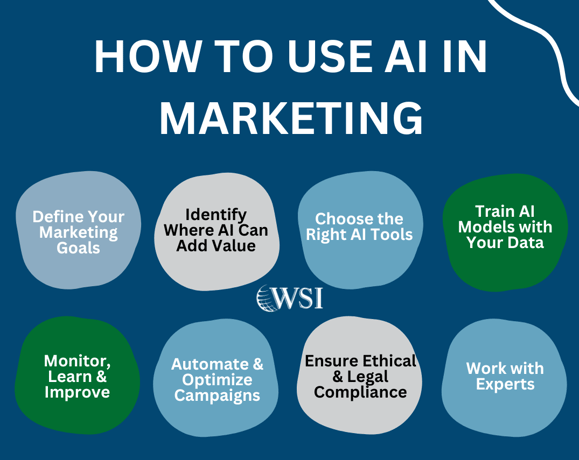
Using AI and automation in marketing involves integrating intelligent tools and automation into your marketing strategy to make smarter, faster, and more personalized decisions. Here’s a step-by-step guide on how to do it effectively:
1. Define Your Marketing Goals
Start by identifying what you want AI to help with. Common goals include increasing leads, reducing churn, improving personalization, and automating repetitive marketing tasks.
Why it matters: A clear objective helps choose the right tools and track measurable success.
2. Identify Where AI Can Add Value
Examine your current marketing workflow and determine where AI could improve efficiency. Use cases include AI-driven marketing automation, chatbots, email optimization, content generation, and customer journey tracking.
Example: If you're struggling with nurturing leads, AI can automate drip email campaigns tailored to user behavior.
3. Choose the Right AI Tools
Select AI-powered tools or platforms based on your needs. Some categories include:
- CRM + AI: HubSpot, Salesforce Einstein
- Email Marketing: Mailchimp with AI suggestions
- SEO Tools: SEMrush, Clearscope, or MarketMuse
- Paid Ads: Google Ads’ Smart Bidding, Meta Advantage+
- Content Creation: ChatGPT, Jasper, Grammarly
Marketing teams should evaluate both the functionality and scalability of these tools during selection.
4. Train AI Models with Your Data
The more relevant data you feed AI tools, the better they perform. Clean, well-structured data from your website, CRM, social platforms, and customer behavior helps the AI learn and personalize.
5. Automate & Optimize Campaigns
Deploy AI to automate tasks like:
- Lead scoring
- Content recommendations
- Ad placements
- Email workflows
Then use A/B testing and real-time analytics to refine performance.
6. Monitor, Learn & Improve
AI marketing is not set-it-and-forget-it. Continuously review performance metrics, user behavior, and algorithm updates to ensure campaigns stay relevant and effective.
7. Ensure Ethical & Legal Compliance
Respect customer data privacy (GDPR, CCPA) and avoid AI bias in targeting or messaging.
We guide clients to use AI ethically—balancing innovation with transparency and compliance.
8. Work with Experts
If you're unsure where to start, WSI’s AI consulting services can help identify the best tools, integrate them into your existing strategy, and manage performance over time.
|
Do not try to implement everything at once. Start with one area, prove results, then scale your approach. |
Typical Applications of AI Automation in Marketing Campaigns
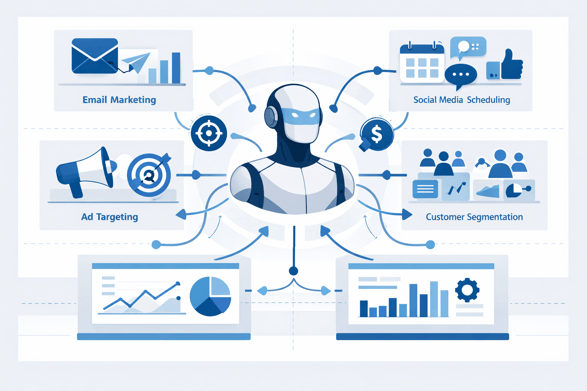
With the variety of AI-powered marketing automation systems available, the sky is the limit to what these tools can do. Some of the most common applications in business include:
-
Email Marketing: AI automation improves email performance through segmentation, timing, and personalization. In 2026, 63% of marketers use marketing automation for email marketing, making it the most widely adopted automation channel. Automation also contributes to stronger engagement, with over 60% of marketers reporting improved customer experience and communication.
-
Social Media: Social media automation refers to tools that streamline managing social media platforms. These solutions allow for the scheduling of posts, analysis of metrics, and management of campaigns across numerous platforms. Automation makes social media management more efficient and yields better results.
- Advertising: Artificial intelligence-powered advertising solutions improve targeting, ad placement, and messaging, thereby enhancing the efficacy of advertising campaigns and generating return on investment (ROI).
Common AI Marketing Automation Use Cases
Here are common use cases you can apply in your business. These are the areas where you’ll see the most impact on efficiency, conversions, and revenue.
Lead Scoring and Qualification
AI analyzes behavior like page visits, email clicks, and downloads to rank leads.
- Identifies high-intent prospects
- Alerts sales teams at the right time
- Reduces time spent on low-quality leads
Why it matters: You focus on leads that are more likely to convert.
Email Marketing Automation
AI personalizes and sends emails based on user behavior.
- Sends follow-ups automatically
- Adjusts send times per user
- Recommends products or content
Example: Abandoned cart emails triggered within minutes.
Customer Segmentation
AI groups users based on behavior, demographics, and intent.
- Creates more relevant campaigns
- Improves targeting accuracy
- Increases engagement rates
Result: Better campaign performance with less guesswork.
Ad Campaign Optimization
AI improves paid ads in real time.
- Adjusts bids automatically
- Tests different creatives
- Targets high-performing audiences
Outcome: Lower cost per acquisition and better ROI.
Chatbots and Conversational Marketing
AI-powered chatbots handle customer interactions 24/7.
- Answer common questions
- Qualify leads instantly
- Guide users through booking or purchasing
Benefit: Faster responses without increasing staff.
Content Personalization
AI changes website or app content based on user behavior.
- Shows different offers to new vs returning users
- Recommends products or services
- Adjusts messaging in real time
Impact: Higher conversion rates.
Predictive Analytics
AI forecasts what users are likely to do next.
- Predicts churn risk
- Identifies likely buyers
- Suggests next best actions
Use case: Trigger offers before a customer drops off.
Social Media Automation
AI helps manage and optimize social content.
- Schedules posts at optimal times
- Suggests content ideas
- Analyzes engagement trends
Result: More consistent and effective social presence.
Customer Journey Automation
AI triggers actions based on user behavior across channels.
- Sends emails after specific actions
- Triggers SMS or push notifications
- Moves users through funnels automatically
Example: Download → follow-up email → demo invite.
Review and Sentiment Analysis
AI analyzes reviews and feedback at scale.
- Identifies common complaints
- Tracks brand sentiment
- Suggests response strategies
Value: Protects your reputation and improves service.
| If you are unsure where to begin, start with email automation, chatbots, or ad optimization. These typically deliver the fastest return. |
Strategies for Achieving Success with AI Automation in Marketing Campaigns
Here are some of the automation strategies that our digital marketers recommend for achieving success in AI-powered marketing automation:
1. Implement a system to constantly observe and enhance performance: Set measurable Key Performance Indicators (KPIs) to track the success of your AI automation efforts. By monitoring live outcomes, evaluating AI models, fine-tuning advertising strategies, and improving audience targeting, you can continuously optimize and improve the effectiveness of your marketing campaigns.
2. Emphasize the importance of automation in your marketing strategy: Incorporating AI solutions into your marketing operations can help optimize workflows, enhance efficiency, and ultimately lead to the success of your campaigns. By utilizing AI tools for audience research, customer journey mapping, idea generation, content research, keyword research, trend analysis, and competitor monitoring, you can streamline processes and improve campaign effectiveness.
3. Evaluate and improve your artificial intelligence models: Continuously assessing and enhancing your AI models is crucial to ensuring maximum efficiency and desired outcomes. By staying updated on the latest trends and advancements in AI technology, you can adapt your strategies to meet the evolving needs of your target audience and stay ahead of the competition.
Overall, by following these strategies and leveraging the power of AI automation in your marketing campaigns, you can unlock new opportunities for growth, efficiency, and success in reaching your target audience.
Best AI Tools for Marketing Automation
In the marketing landscape, AI can also streamline processes and enhance campaign effectiveness. Here are some (but not all!) of the top AI marketing tools and platforms available across various categories:
AI Tools for Audience Research
- Answer The Public: This social listening tool provides valuable insights into potential audiences by analyzing search queries and generating data-driven content ideas.
- Answer Socrates: Offering insights into the types of questions people are searching for, Answer Socrates helps marketers understand user intent and tailor their content accordingly.
- SparkToro: With its comprehensive audience research capabilities, SparkToro gathers data about potential customers, enabling marketers to refine their targeting strategies effectively.
- Google Trends: This tool is invaluable for discovering trending topics and content that resonates with audiences. It allows marketers to stay ahead of the curve and create relevant campaigns.
AI Tools for Customer Journey Mapping
- Kissmetrics: By analyzing customer data, Kissmetrics provides insights into customer behavior and brand interactions, facilitating the creation of more personalized and effective marketing campaigns.
- Mixpanel: By offering robust analytics capabilities, Mixpanel enables marketers to better understand customer behavior and interactions across various touchpoints.
- Amplitude: This tool analyzes the customer journey to identify friction points and optimize conversion paths, helping marketers enhance the effectiveness of their campaigns.
- Semrush Persona: By leveraging AI-powered persona templates, Semrush Persona enables marketers to build detailed buyer personas, ensuring targeted and relevant messaging.
AI Tools for Idea Generation and Content Research
- ChatGPT: With its natural language processing capabilities, ChatGPT assists marketers in generating content ideas and conducting initial research based on detailed prompts.
- ChatSpot: This free AI-powered assistant combines the power of ChatGPT with the unique data sources available from your HubSpot CRM. It can also be used to help write blog content, generate images, create competitor analysis, and lots more.
- Reddit: By exploring relevant subreddits, marketers can gather valuable insights and trends that can be fed into AI tools for further content ideation and research.
- MarketMuse: Offering content planning, optimization, and competitor analysis features, MarketMuse helps marketers create data-driven content strategies that resonate with their target audience.
AI Tools for Keyword Research
- UberSuggest: Powered by AI, UberSuggest assists marketers in conducting keyword research and integration, enabling them to optimize their content for search engines effectively.
- Clearscope: With its AI-driven approach, Clearscope suggests the best keywords to integrate into content, enhancing its visibility and relevance to target audiences.
AI Tools for Trend Analysis and Forecasting
- Talkwalker: Leveraging AI-powered tools, Talkwalker helps marketers identify upcoming trends and stay informed about industry developments, allowing for timely adjustments to marketing strategies.
- Zoho Social: Offering visualization tools and insights, Zoho Social enables marketers to predict trends and adapt their marketing strategies accordingly, maximizing ROI and effectiveness.
AI Tools for Competitor Monitoring
- Rival IQ: This AI tool provides comprehensive competitor monitoring capabilities, allowing brands to gain insights into competitor strategies and performance across various channels.
- Brandwatch: With its AI-driven approach, Brandwatch monitors competitor brands' online presence in real-time, offering valuable insights for competitive analysis and strategic decision-making.
- Sprout Social: By analyzing rival brands' performance on social media, Sprout Social helps marketers understand competitor strategies and trends, enabling them to refine their social media tactics effectively.
Examples of AI in Marketing Automation
Here are real-world examples of marketing automation tools to streamline tasks, personalize experiences, and boost ROI:
Email Marketing Automation
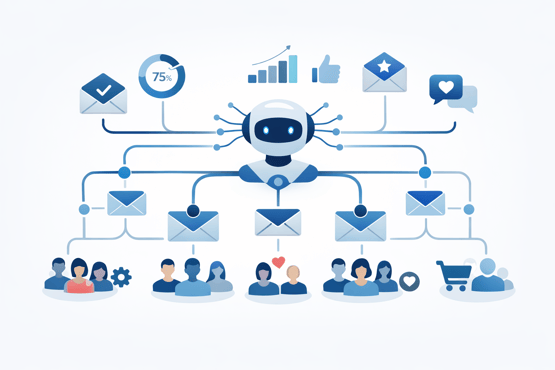
AI-powered email platforms like Mailchimp and ActiveCampaign use machine learning to personalize campaigns at scale. They can automatically segment your audience based on behaviors (like clicks, purchases, or opens), craft custom subject lines, and send emails at the optimal time for each recipient. For example, a fashion retailer might use AI to send promotional emails featuring clothing items based on a customer’s past purchases or browsing history, leading to higher engagement and conversions.
Ad Campaign Optimization (PPC & Social Ads)
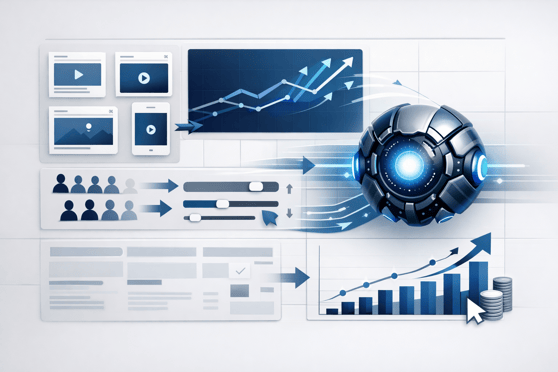
Paid search and social platforms such as Google Ads, Smart Bidding, and Meta Advantage+ leverage AI to improve campaign performance in real time. These systems automatically adjust bids, identify the most effective audience segments, and test ad creatives to optimize for conversions or return on ad spend (ROAS). For instance, a dental clinic might run AI-optimized ads for teeth whitening that only appear to high-intent users searching within a specific location and time frame.
Chatbots & Conversational AI
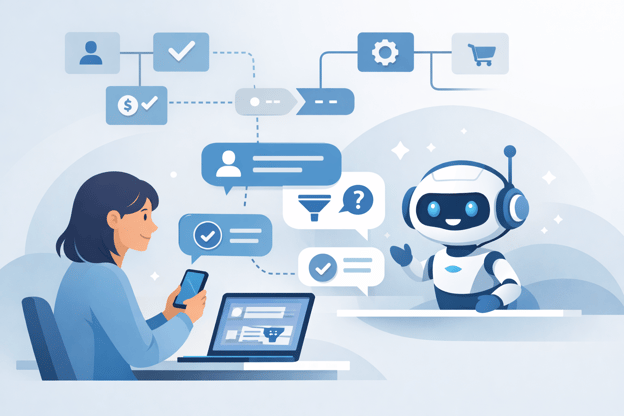
AI-driven chatbots, like those from Intercom, Drift, or Tidio, allow businesses to deliver instant customer support, qualify leads, and answer common questions—24/7. These bots can guide users through a sales funnel, provide product recommendations, and even schedule appointments. For example, an insurance agency might use a chatbot to recommend policies based on a user’s answers, and then pass warm leads directly to a sales agent.
Predictive Lead Scoring
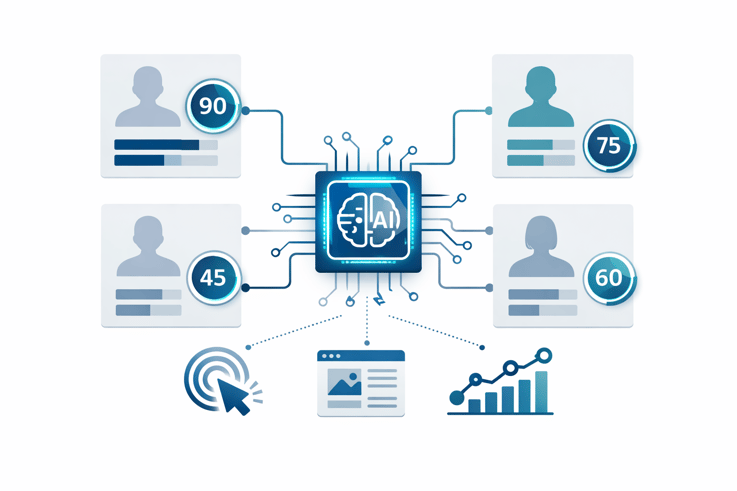
CRM systems such as HubSpot and Salesforce Einstein use AI to assign scores to leads based on how likely they are to convert. This predictive scoring looks at behavioral data, demographics, and previous interactions to prioritize follow-ups. A B2B software company, for instance, might use AI to automatically alert the sales team when a prospect reads multiple case studies or revisits the pricing page, triggering timely outreach.
AI-Driven Content Creation & Recommendations
AI tools like Jasper, Copy.ai, and Persado help marketers generate high-quality content faster. These platforms can suggest blog outlines, write ad copy, or even tailor content for different personas or tones. On top of that, AI systems can recommend which type of content (e.g., a how-to article or product demo) to serve based on the user’s behavior. For example, an edtech brand might suggest tutorials based on which course modules a user completed last.
Customer Journey Mapping & Behavior Triggers
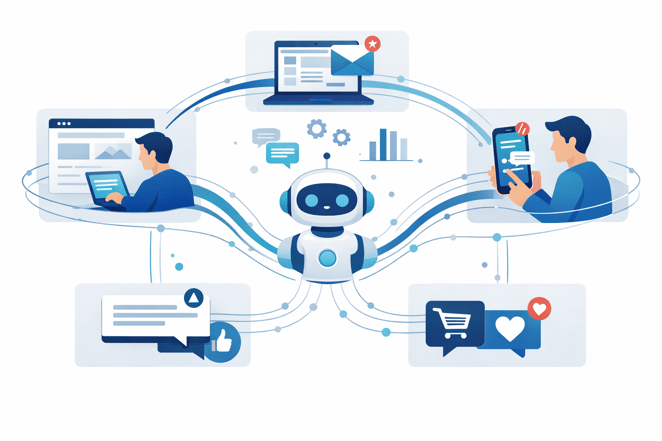
Platforms like Braze, Iterable, or Segment monitor customer interactions across devices and channels. With this data, AI can automatically trigger personalized emails, SMS, or push notifications based on user behavior. Imagine a fitness app that detects inactivity and sends a motivational message or discount on premium plans after two days without a logged workout.
Product Recommendations & Personalization
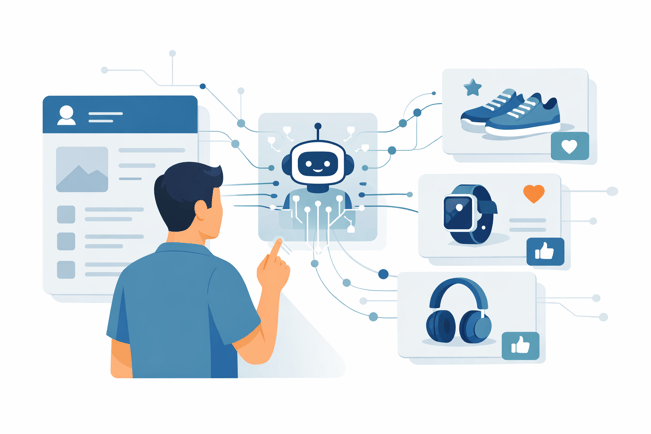
AI recommendation engines (like Amazon’s algorithm) use user data to suggest relevant products in real time. These tools analyze browsing habits, purchase history, and preferences to create a unique shopping experience for each user. For instance, a skincare brand could offer personalized product bundles for oily or dry skin types, boosting customer satisfaction and cross-selling potential.
How is AI Changing Digital Marketing?
From automating repetitive tasks to delivering hyper-targeted content, AI is reshaping how brands engage with their audiences and optimize their strategies. Here's how:
Hyper-Personalization at Scale
AI enables marketers to deliver highly personalized experiences based on real-time customer data, such as browsing behavior, location, and past purchases. Instead of one-size-fits-all campaigns, businesses can now tailor emails, website content, ads, and recommendations to each individual. For example, AI can help an eCommerce store show different homepages or product suggestions to different users, boosting engagement and conversion rates.
Smarter Content Creation and Optimization
AI tools like ChatGPT, Jasper, and Grammarly assist marketers in generating blog posts, social media captions, ad copy, and even video scripts. These tools reduce content production time while maintaining relevance and tone. AI also analyzes which topics, formats, or tones perform best, helping marketers optimize for SEO, readability, and conversion.
Advanced Customer Insights and Predictive Analytics
By analyzing vast amounts of data, AI can uncover patterns and trends that human analysts might miss. It can predict customer behavior—like who’s likely to buy, churn, or become a loyal advocate—so marketers can act proactively. Tools like Salesforce Einstein and Google Analytics 4 provide predictive scores that inform campaign targeting and budget allocation.
Marketing Automation and Workflow Efficiency
AI powers automation in everything from lead nurturing and email workflows to social media posting and A/B testing. This reduces manual workload and ensures timely, consistent communication. For instance, AI can automatically send follow-up emails when a prospect downloads a white paper or remind a customer of an abandoned cart.
Voice and Visual Search Optimization
With the rise of voice assistants (like Alexa and Siri) and visual tools (like Google Lens), AI is changing how users search online. Marketers now need to optimize content not just for typed keywords, but also for conversational queries and image recognition, adding new layers to SEO strategy.
Real-Time Ad Optimization
AI is crucial in optimizing paid ad campaigns across Google, Facebook, and other platforms. Tools like Smart Bidding and dynamic creative optimization adjust ad placements, formats, and budgets in real time based on performance data. This ensures better return on ad spend (ROAS) and more efficient budget use.
Conversational Marketing & AI Chatbots
AI-powered chatbots and voice assistants are changing how brands interact with users. These tools provide instant responses, qualify leads, and even complete transactions—improving customer satisfaction while reducing response time and cost. Companies use bots to handle FAQs, schedule demos, or suggest products—all in real time.
Enhanced Customer Experience & Accessibility
AI helps create inclusive and adaptive digital experiences. For example, AI can automatically generate alt text for images, adjust content layouts for accessibility needs, or provide multilingual content. This not only improves usability but also aligns with web accessibility compliance standards like WCAG.
Ethical Data Use & Compliance
AI is also pushing marketers to be more thoughtful about data privacy and ethical practices. With tools that collect and interpret vast amounts of user data, companies must balance personalization with compliance (e.g., GDPR, CCPA). Transparent AI use and responsible data handling are becoming essential components of brand trust.
WSI is Your Digital Marketing Company for Artificial Intelligence
When it comes to marketing automation, AI plays a role in streamlining processes, enhancing audience insights, and optimizing campaign performance. Whether it's audience research, customer journey mapping, content ideation, or competitor monitoring, leveraging the right AI tools can empower marketers to drive meaningful engagement and achieve their business objectives efficiently.
With so many AI tools available, marketers can harness the power of artificial intelligence to stay ahead of the competition and deliver exceptional experiences to their target audience.
As a leading digital marketing company, WSI harnesses the power of advanced algorithms to analyze consumer data and deliver personalized marketing solutions. Talk to us for more information about using AI and marketing automation to save time while growing your business. Request your preliminary AI assessment to experience the full potential of AI today!
.png?width=697&height=1445&name=unnamed%20(59).png)