
Key Highlights:
- Trend fatigue is real: Constantly chasing the next big thing leads to burnout, wasted budget, and team misalignment. Sustainable strategy wins.
- Blind automation backfires: Automation without a clear strategy often weakens CX and increases errors. Human oversight is key to success.
- You don’t need every platform: Going “deep” on 1–2 channels is more effective than a thin, low-impact presence everywhere.
- Content overload weakens SEO: More posts don’t equal more reach. Google and AI systems reward depth, originality, and authority.
- Use trend filters to stay focused: Smart questions help you evaluate new tactics and avoid costly distractions.
- Sustainable growth beats short-term sizzle: Long-term ROI comes from clear goals, audience alignment, and data-driven choices—not from following every trend.
As 2025 comes to an end, it is only natural to look ahead to the trends likely to set the tone for the coming year. Here at WSI, we always make a point of predicting the digital marketing trends for the coming year.
While it’s worth staying aware of new trends, not every trend deserves your attention. Even the most “talked-about” tactic may be irrelevant—or harmful—to your business goals. When you chase trends instead of following a clear strategy, you risk:
- Splitting focus across tools and tactics that don’t deliver ROI
- Confusing your team about what success looks like
- Burning time and budget on experiments that go nowhere
Trends are tactics, not strategy. And for growth-oriented businesses, that’s a costly distinction to ignore. So here are three marketing trends you should avoid in 2026.
Shiny Doesn't Mean Strategic
The way to think about digital marketing trends is in terms of the difference between shiny objects and sustainable growth.
Shiny objects are the new, exciting trends, technologies, and techniques that pop up from time to time and get everybody talking. They could be useful, but it’s just as likely that they will lack long-term viability, split your focus, divert your resources, and ultimately just distract you and your team without bringing any returns. “Shiny object syndrome” drains focus, diverts budget, and often delivers little in return.
Ask yourself: Will this trend still matter 12 months from now? If the answer is no—or unclear—it’s probably not worth chasing. Sustainable growth comes from mastering proven strategies, not constantly swapping playbooks.
Trend Fatigue Is a Silent Productivity Killer
Constant trend-chasing drains energy, lowers morale, and blurs your team’s focus on real business priorities. Unclear direction and a lack of transparency can confuse roles, responsibilities, and goals. Teams become misaligned, and collaboration becomes more difficult.
Research shows that over 50% of marketers feel overwhelmed by the pressure to stay current. That exhaustion leads to burnout—and business owners pay the price in missed goals and high turnover.
Want to keep your team aligned and energized? Trade hype for focus. Anchor your strategy in clear goals, not social media noise.
Trend #1: Over-Automation Without a Clear Strategy
AI and automation are everywhere—but using them without direction is a fast track to wasted time, poor results, and damaged customer experiences. Over 50% of marketers already use AI to streamline tasks, but adoption without a strategy creates more problems than it solves.
Don’t get us wrong; we would certainly advise you to incorporate AI into your marketing and even your operations. The point is that you should use these technologies wisely and in line with your growth strategy. When used without oversight, AI can drift off course, lose relevance, and undermine trust. The tech is only as smart as the data and human intent behind it.
More AI Doesn't Mean Better Results
So why shouldn’t you just follow the trend, take AI, and throw it at everything? Well, throwing AI at every problem won’t make your marketing smarter—just noisier. AI is powerful, but it lacks judgment, context, and common sense. Its output depends entirely on the quality of your data and oversight.
Poorly trained or misapplied AI can generate generic content, off-brand messaging, and customer interactions that feel robotic instead of relevant. Tech alone won’t drive results—strategy and stewardship will.
Unsupervised Automation = Missed Opportunities and Broken Trust
If you decide to adopt AI and then don’t oversee its operation, you will actually find that it starts to drift away from its intended purpose. We adopt AI because we assume it will reduce errors and increase efficiency, but when humans step out of the picture, the opposite tends to happen. Many businesses set up AI models and then neglect them, forgetting they require regular updates and retraining to stay effective.
When left unchecked, automation can:
- Deliver off-brand or irrelevant messages
- Create errors that frustrate customers
- Undermine loyalty by replacing human connection with cold, robotic interactions
The bottom line: Customers can tell when you’ve gone on autopilot—and they’ll disengage fast.
💡 Do This Instead: Automate with Strategy, Not Hype
Before implementing automation, define your business goals and map the strategy to get there. Then—and only then—identify where AI and automation can enhance performance, reduce friction, or scale success.
A smart automation rollout looks like this:- Clarify goals: Know what success looks like.
- Audit workflows: Spot inefficiencies before automating them.
- Build cross-functional input: Involve marketing, ops, and support.
- Choose the right tools: Match tech to your goals—not the other way around.
- Monitor and iterate: Automation isn’t “set and forget.”
Strategy-first automation enhances productivity and customer experience—without sacrificing your brand voice.
Trend #2: Spreading Too Thin Across Social Platforms
Just because a new platform is trending doesn’t mean your brand needs to be on it. Chasing every shiny channel leads to diluted messaging, wasted effort, and lower returns.
Smart social media marketing isn’t about being everywhere—it’s about being effective where it matters. Growth-oriented brands focus on the platforms where their audience is most engaged and where their content performs best.
The ROI Cost of Social Media Overload
When you try to be everywhere at once, performance suffers. Here’s how scattered social efforts hurt your bottom line:
- Diluted focus: Too many channels = shallow execution and low engagement.
- Weaker content: Quantity goes up, quality goes down—fast.
- Inconsistent branding: Mixed messaging confuses your audience and weakens trust.
- Missed engagement: Spread too thin to build meaningful interaction or community.
The result? Burned-out teams and declining ROI. It’s not sustainable—and it’s not smart growth.
When to Say No—Even If Everyone Else Says Yes
Not every new platform deserves your time. Before jumping in, ask:
- Does it align with our audience and content strengths?
- Do we have the resources to show up consistently and well?
- Will it support our brand voice and business goals?
If the answer is no—or even “not yet”—walk away. Chasing trends for FOMO’s sake is the fastest way to dilute your message and waste your marketing budget.
💡Do This Instead: Go Deep, Not Wide on Key Platforms
Instead of spreading yourself across as many platforms as you can and feeling under pressure to establish a presence on the newest arrival, focus on a few strategically selected platforms that fit your brand and audience, to which you can dedicate the necessary time and attention and for which you are confident you can create high-quality content that suits you, the platform and your target audience.
Focus on 1–2 high-fit platforms where:
- Your audience actively engages
- Your team can deliver high-quality, on-brand content
- The platform supports your goals (e.g., lead gen, thought leadership, community building)
A deep presence builds stronger brand recognition, better ROI, and a community that grows with you.
Trend #3: Content Quantity Over Quality
“Just post more” is not a strategy—it’s a shortcut to burnout and diminishing returns. In 2026, more content doesn’t mean more traction. In fact, it often leads to lower engagement, weaker SEO, and brand fatigue.
Your audience—and search algorithms—are smarter now. They reward content that delivers insight, not noise. If your team is posting just to fill a calendar, it’s time to rethink your approach.
Why “Publish More” Isn’t a Strategy
Like every digital marketing tactic, content should be approached strategically. Throwing masses of content at your audience in the hope that something will stick is the furthest thing from strategic.
Ultimately, volume alone won’t grow your business. A content calendar packed with low-impact posts leads to:
- Diminished quality and diluted messaging
- Content fatigue—for both your team and your audience
- SEO stagnation from thin, repetitive posts
Strategic content focuses on relevance, resonance, and return. That’s how you build authority, not by publishing just for the sake of it.
Generic SEO Content Is Dead—and AI Knows It
Search engines (and AI models) now prioritize content with depth, authority, and a real human perspective. Keyword stuffing and superficial articles no longer rank—or convert.
If your content doesn’t show E-E-A-T (Experience, Expertise, Authoritativeness, Trustworthiness), it won’t stand out to search engines or savvy customers.
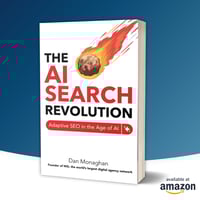 The AI Search Revolution: Adaptive SEO in the Age of AI by WSI Founder Dan Monaghan shares how SEO has evolved with the explosive growth of AI and technology. If you're finding that your old SEO strategies aren't cutting it anymore, this book is for you!
Want to win in 2026? An experienced Adaptive SEO consultant can elevate your content strategy beyond SEO hacks and deliver insight that earns clicks, links, and loyalty.
💡 Do This Instead: Build Evergreen Content that Compounds
Instead of racing to post more, focus on creating fewer—but higher-value—assets that grow over time.
Evergreen content delivers long-term ROI by:
- Attracting steady organic traffic through timeless value
- Reducing content churn and freeing up team bandwidth
- Strengthening your authority in core topic areas
Insight-rich, evergreen content doesn’t just perform better—it scales better. One great asset can drive results for years.
How to Spot a Trend That’s Not Worth It
Before chasing the next hot tactic, ask: is this trend aligned—or just a distraction? If you want to make sure that your resources are being well managed and avoid investing time and money in unproductive trends, you need to be discerning. Avoid wasting time and money on hype by assessing each new tactic with a few key questions.
Questions to Ask Before You Invest in a New Tactic
Use these questions to decide if a tactic is worth your time and budget:
- Does it align with our business goals and audience needs?
- Will it support or strengthen our brand story?
- Can we execute it well with our current resources?
- What’s the total investment—and realistic ROI?
- How will we measure success (or failure)?
Block the Noise, Trust the Data: How to Stay Focused When Everyone Else Is Pivoting
Of course, there is always a temptation to follow the crowd, and you might be enticed to follow the trend purely to soothe your fear of missing out. The best way to prevent you and your team from being drawn into the fray and potentially wasting time, energy, and attention on something that is not worthwhile is to remain grounded in your core brand values and your business goals. Stay anchored in your strategy, your performance metrics, and your audience’s needs.
- Let your business goals—not hype—guide your roadmap.
- Prioritize audience insight over competitor FOMO.
- Use real data to make calm, confident decisions.
From Trend-Chasing to Strategy-First Growth
The marketing landscape will always evolve—but chasing every new trend is no substitute for building a grounded, data-driven strategy. The most successful brands in 2026 won’t be the ones that jumped on every bandwagon; they’ll be the ones that invested in sustainable growth, authentic audience relationships, and consistent authority across channels.
Ready to refocus your efforts and cut through the noise? WSI’s experts can help you identify where trend-chasing is draining your ROI—and build a roadmap that delivers real, measurable growth.
🔍 Book your free Adaptive Marketing Audit and take the first step toward smarter, strategy-led success.
FAQs on Marketing Hype to AvoidQ: Should I ignore all digital marketing trends in 2026? Q: How do I know if a trend is right for my business? Q: What’s the smart way to use AI and automation? Q: How many social media platforms should I be on? Q: Why is content quality more important than quantity now? Q: How can I keep my team focused amid all the noise? |