
Key Highlights
-
What a digital customer journey is and why it matters
-
The five key stages from awareness to advocacy
-
How AI supports real-time journey optimization
-
What a digital customer journey map includes
-
How to identify and fix friction points
-
Practical examples for local and regional businesses
-
Step-by-step guidance to build your own journey map
Digital customer journeys are no longer what they used to be. Gone are the days of a straightforward path from awareness to purchase. Today, customers interact with brands across multiple channels like social media, websites, emails, and more, expecting a seamless and personalized experience at every touchpoint. For digital marketers, understanding and optimizing this complex journey is crucial.
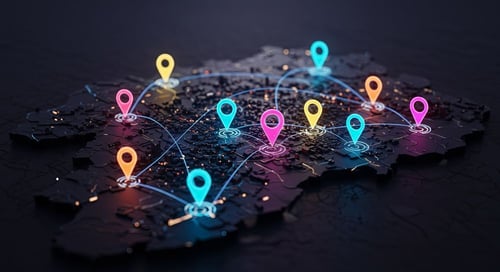 Digital customer journeys aren't just a funnel anymore. It's more like a sprawling city map with endless routes, shortcuts, and detours. Every interaction matters. Every touchpoint can be a make-or-break moment. That's why today's marketers need more than intuition. They need clear maps and smart tools that keep pace with customer expectations.
This isn't theory. It's the real deal, in real time. Customers expect seamless experiences wherever they connect with your brand, whether that's on social media, your website, or a quick chat.
And AI? It's the secret weapon turning raw data into meaningful journeys.
What is a Digital Customer Journey?
A digital customer journey is the path a customer takes online, from first discovering your business to becoming a loyal advocate. It includes every digital touchpoint, such as search results, social media, ads, website visits, emails, and reviews. Understanding this journey helps you attract the right audience, guide them through the decision process, and improve conversions. When you map and optimize each stage, you create an effective strategy that supports long-term growth and measurable performance.
|
Customers complete most of their research before speaking to sales. If you are not visible and consistent across touchpoints, you lose opportunities before conversations even start. |
Digital Customer Journey Stages
-1.png?width=697&height=414&name=unnamed%20(46)-1.png)
Here are the different stages of the digital customer journey:
Awareness. Your potential customer recognizes a problem or need and begins researching. This is where SEO, paid search, and social media help you get discovered.
Consideration. They compare options and evaluate solutions. Educational content, case studies, and email nurturing build trust and position you as a credible choice.
Decision. They are ready to take action. Clear messaging, strong calls to action, optimized landing pages, and a smooth user experience help convert interest into leads or sales.
Retention. After the purchase, the focus shifts to delivering value. Ongoing communication, helpful resources, and responsive support increase customer satisfaction and lifetime value.
Advocacy. Satisfied customers recommend your brand. Reviews, referrals, and community engagement turn loyal clients into promoters who attract new business.
|
Most conversion issues are not traffic problems. They are journey problems. Fixing friction between stages often delivers faster results than increasing ad spend. |
Understanding the Modern Customer Journey
Once upon a time, the customer journey was neat and predictable: Awareness led to Consideration, then Purchase, followed by Retention and maybe, if things went really well, Advocacy.
Today, it is unpredictable. Customers move between social media, search, websites, apps, and reviews within hours. Every interaction is a digital touchpoint that can move them closer to a decision or push them away.
Channels such as social media, email, search results, websites, apps, and online reviews all influence buying decisions. That means you must stay visible and consistent across platforms.
AI now helps map and optimize this journey. It analyzes behavior, identifies which touchpoints drive conversions, and enables real-time personalization. Predictive insights help you respond before customers disengage.
Start by defining clear buyer personas. Map your touchpoints. Review your data to find drop-off points. Use chatbots, CRM tracking, and AI-driven recommendations to improve their digital customer experience at each stage. Then test and refine continuously.
What is a Digital Customer Journey Map?
A digital customer journey map is a visual representation of how your customers interact with your brand across digital channels.
It outlines every key touchpoint, from the first search or social media interaction to purchase, retention, and advocacy. The goal is to understand what your customer is thinking, feeling, and doing at each stage.
A strong journey map includes:
-
Customer stages such as awareness, consideration, decision, retention, and advocacy
-
Digital channels used at each stage
-
Customer goals and questions
-
Pain points or friction
-
Opportunities to improve experience and conversions
This is not just a marketing exercise. It connects your SEO, paid media, content, website experience, email marketing, and CRM strategy into one clear view.
When you build a digital customer journey map, you can:
-
Identify gaps in messaging
-
Reduce drop-off points
-
Improve conversion rates
-
Align marketing and sales
-
Make smarter budget decisions
Benefits of Customer Journey Mapping
-1.png?width=587&height=440&name=unnamed%20(47)-1.png)
Improved Customer Experience
You understand your customer’s needs at each stage. This helps you deliver the right message at the right time.
Higher Conversion Rates
By identifying friction points on your website, landing pages, or checkout process, you can remove barriers and increase completed actions.
Better Marketing Alignment
Journey mapping connects SEO, paid ads, content, email, and sales into one clear strategy. Everyone works toward the same customer goals.
Smarter Budget Allocation
You see which channels drive real results. That means you can invest more in what performs and reduce wasted spend.
Stronger Retention and Loyalty
Mapping does not stop at the sale. You can improve onboarding, follow-up communication, and long-term engagement.
Clearer Use of Data and AI
With defined stages and touchpoints, AI tools and analytics platforms can track behavior more accurately and support personalization.
When you map the journey, you move from isolated tactics to a structured strategy focused on measurable growth.
|
Journey mapping directly affects revenue by improving lead quality, shortening sales cycles, increasing retention, and raising customer lifetime value. |
What Does This Look Like in Practice? Scenario Walkthrough: Local Dental Clinic vs. Regional Retailer
Let's zoom in on two very different businesses: a local dental clinic and a regional retailer, and see how their customer journeys play out in this digital-first world. We'll also highlight one AI tool in action for each stage.
Local Dental Clinic: Human Meets High Tech
-1.png?width=596&height=374&name=unnamed%20(48)-1.png)
Here's what a modern customer journey could look like for a local dental clinic:
Awareness (Chatbots)
Someone searches "best dental cleaning near me." Your AI-powered chatbot on the website greets the visitor:
"Hi! Need help scheduling an appointment or want to know about our services?"
It answers FAQs instantly and can even book an appointment without needing to wait on hold.
Consideration (CRM)
After browsing, the visitor leaves contact details to get a consultation. The CRM system tracks this lead, logging interactions and sending personalized follow-ups, like reminders for teeth whitening promotions or educational content on oral health.
Purchase (AI-Optimized Scheduling)
The patient books an appointment online with an AI-driven scheduling tool that optimizes calendar slots for both patient convenience and staff availability—no awkward back-and-forth.
Post-Purchase (Sentiment Analysis)
After the appointment, an automated survey powered by sentiment analysis goes out. It picks up on subtle feedback trends, alerting staff if any patients mention discomfort or delays so that issues can be addressed quickly.
|
AI is most effective when applied to specific friction points such as response time, abandoned carts, scheduling gaps, or post-purchase follow-up. |
Regional Retailer: Scale Meets Personalization
-1.png?width=742&height=287&name=unnamed%20(49)-1.png)
Here's what a modern customer journey could look like for a regional retailer:
Awareness (AI-Powered Search & Social Monitoring)
A shopper scrolls through Instagram and sees a tailored ad powered by AI analyzing their past browsing habits. AI also monitors social media chatter about your brand, flagging trending product interests to tweak ad focus.
Consideration (AI Chatbots & CRM)
The shopper visits your website and adds items to their cart. An AI chatbot pops up, answering questions about sizing and shipping. Meanwhile, your CRM tracks the browsing and cart abandonment data to trigger personalized emails with discount offers.
Purchase (Fraud Detection & Order Management)
At checkout, AI systems run fraud detection checks seamlessly to protect the shopper. Post-purchase, an AI-powered order management system updates the customer in real time about shipping status.
Post-Purchase (Predictive Analytics & Upselling)
Based on purchase history, AI predicts when the customer might be ready for replenishment or complementary products. Personalized emails with product recommendations are sent, aiming to convert one-time buyers into loyal customers.
AI Tools That Supercharge Every Touchpoint
Here is a comprehensive overview of AI tools that can significantly enhance and optimize every touchpoint of your customer journey, ensuring a seamless and personalized experience for your customers. These advanced technologies are designed to engage visitors, nurture leads, secure transactions, and analyze feedback, all while providing real-time insights and automation to streamline your marketing efforts.
- Awareness
- Consideration
- AI Tool Example: CRM Systems (Salesforce Einstein)
- What It Does: Tracks interactions, personalizes outreach, and nurtures leads.
- Purchase
- AI Tool Example: Fraud Detection Tools (Kount)
- What It Does: Protects transactions and ensures a secure checkout experience.
- Post-Purchase
- AI Tool Example: Sentiment Analysis (MonkeyLearn, IBM Watson)
- Analyzes customer feedback to improve the experience.
How to Create a Customer Journey Map
Creating a customer journey map helps you understand how people interact with your brand and where you can improve results. Follow these practical steps.
Define Your Buyer Personas
Start with clear personas based on real data. Identify your audience’s goals, challenges, behaviors, and decision triggers. Use CRM data, sales feedback, and analytics to avoid assumptions.
Set Clear Objectives
Decide what you want the map to achieve. You might want to increase conversions, reduce drop-offs, improve onboarding, or shorten your sales cycle. Clear goals keep the exercise focused.
Identify Key Stages
Outline the main stages, such as awareness, consideration, decision, retention, and advocacy. Keep it simple and aligned with how your customers actually buy.
List All Touchpoints
Document every interaction across search, paid ads, social media, email, website pages, landing pages, chatbots, sales calls, and support channels. Include both online and offline interactions if relevant.
Capture Customer Actions and Emotions
At each stage, define what the customer is doing, what questions they have, and what concerns may stop them from moving forward. This reveals friction points.
Analyze Your Data
Review website analytics, campaign performance, conversion paths, heatmaps, and CRM reports. Look for drop-off points, long time gaps between stages, and underperforming channels.
Identify Gaps and Opportunities
Ask where messaging is unclear, where content is missing, or where the user experience creates confusion. These are your improvement areas.
Prioritize Improvements
Focus first on changes that impact revenue, such as improving landing pages, strengthening calls to action, or refining paid targeting. Then optimize supporting touchpoints.
Test and Refine
Use A B testing, performance tracking, and regular reviews. Customer behavior changes. Your journey map should evolve with it.
When done properly, a customer journey map becomes a strategic tool. It aligns your SEO, content, paid media, and automation around how your customers actually move from interest to loyalty.
Digital Customer Journey Map Example
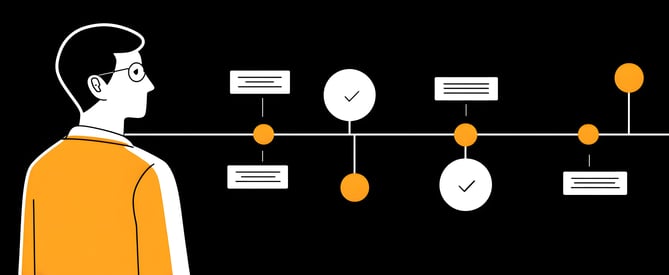
Example Persona
Marketing Manager at a mid-sized company. The goal is to generate more qualified leads. The challenge is limited internal resources.
Stage 1. Awareness
Touchpoints: Google search, LinkedIn post, blog article
Customer action: Searches “how to improve lead quality.”
Customer question: Why are our leads not converting?
Opportunity: Publish SEO optimized educational content that addresses this pain point.
Stage 2. Consideration
Touchpoints: Website service page, case study download, email follow-up
Customer action: Compares different marketing automation providers
Customer question: Which solution fits our budget and team size?
Opportunity: Offer clear service breakdowns, results-focused case studies, and a lead-nurturing email sequence.
Stage 3. Decision
Touchpoints: Landing page, consultation booking form, sales call
Customer action: Requests a consultation
Customer question: Can this provider deliver measurable ROI?
Opportunity: Highlight proven results, testimonials, and a clear onboarding process.
Stage 4. Retention
Touchpoints: Onboarding emails, reporting dashboard, quarterly review meetings
Customer action: Engages with reports and strategy updates
Customer question: Are we seeing measurable improvement?
Opportunity: Provide transparent reporting and regular performance insights.
Stage 5. Advocacy
Touchpoints: Review request email, referral program, LinkedIn engagement
Customer action: Leaves a positive review and refers a peer
Customer question: Was this partnership worth recommending?
Opportunity: Deliver consistent results and make it easy to share feedback.
This example shows how each stage includes:
-
A clear goal
-
Specific digital touchpoints
-
Customer questions
-
Business opportunities to improve experience
From Static Diagrams to Real-Time Dynamic Maps
Remember when journey maps were just walls plastered with sticky notes? Yeah, that won't cut it anymore. Customer journey maps today are alive, interactive, dynamic, and powered by real-time data.
With AI's help, you're not guessing how customers move between touchpoints. You're watching it happen live, uncovering new insights, spotting pain points before they snowball, and continuously optimizing every step.
For instance, tools like UXPressia and Miro now offer AI features that automatically analyze customer data and update your journey maps—no more manual guesswork.
Why Real-Time Data Matters
Real-time data means you can personalize and pivot on the fly. You can catch trends as they develop and respond immediately.
Imagine a sudden spike in product returns flagged by AI-driven sentiment analysis. That's your chance to fix a problem before it hurts your brand. Or a surge in social media questions about a new feature—AI chatbots can jump in to provide instant answers and guide customers to helpful content.
AI Makes Personalization Scale
Personalization used to be a luxury for small segments of customers. Now, AI lets you personalize at scale by tailoring offers, content, and support to millions without losing that personal touch.
This is where predictive analytics shines. AI finds patterns humans can't see, predicting what your customers want before they know it themselves. The result? Marketing that feels personal, not pushy.
The upside? Customers tend to stay longer when their experience feels effortless and relevant. Instead of clunky, one-size-fits-all interactions, you're offering conversations that actually make sense at the right time and in the right place. That kind of thoughtfulness builds loyalty fast.
It's also a win for your team. With repetitive tasks offloaded to automation, they get to focus on the work that moves the needle.
Fewer dropped balls. More upsells. Less churn. And yes, higher revenue without the extra chaos.
Practical Steps to Start Mapping Your AI-Powered Journey
- Define your goals — Are you trying to reduce cart abandonment? Increase repeat visits? Pinpoint pain points?
- Gather your data — From your website analytics, social channels, CRM, and customer service logs.
- Choose your AI tools — Look for integration capabilities and ease of use.
- Create detailed buyer personas — Leverage AI to analyze existing customer data for accuracy.
- Map and analyze — Use AI-powered journey mapping software to visualize paths and pain points.
- Validate with real customers — Combine AI insights with human feedback.
- Iterate continuously — Your journey evolves. Your map should, too.
AI is a game-changer, but it's not a magic wand. The best results are achieved when AI insights are combined with human intuition and expertise.
Use AI as a partner to highlight opportunities, automate the mundane, and reveal hidden patterns, but always apply a human lens before making big decisions.
|
Do not map your journey based on assumptions. Use CRM data, analytics, sales feedback, and customer interviews to validate every stage. |
Visual Aid: Customer Journey Map Template
To assist in mapping your customer journey, use WSI's Buyer Persona Guide & Template. This resource offers a structured framework for identifying and analyzing each touchpoint effectively.
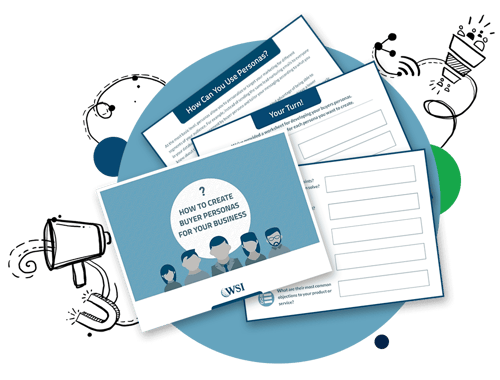 👉👉 Download WSI's Buyer Persona Template
Contact Us for Help with Customer Journey in Digital Marketing
Mapping your customer journey with AI might sound intimidating, but the payoff is huge. Better insights, smarter personalization, happier customers.
For those who want a leg up, WSI offers a free Buyer Persona Guide & Template to get you started on the right path. And if you want a deep dive, our team can help you map your journey from data to action with expert consultation.
Download the Buyer Persona Template now or schedule a consultation with our digital marketing pros.