Key Highlights
- Why backlinks remain a top-ranking signal even as AI reshapes how search works
- The difference between traditional SEO, AEO, and GEO, and how they work together
- How to structure content so AI platforms can pull from and cite your pages
- Practical steps to start measuring AI search visibility today
We’ve all seen how quickly search is changing. Tools like Google’s AI Overviews, ChatGPT, and Perplexity are starting to answer questions directly on the search page, sometimes without sending traffic anywhere else. It’s no surprise many marketers are wondering: if AI is taking over search, do backlinks still matter?
The short answer? Yes, they absolutely do. Even as AI reshapes how people discover content, backlinks remain one of the strongest signals of authority and trust. In fact, they may be more valuable than ever.
From Keywords to AI-Powered Answers
Not too long ago, SEO was fairly straightforward. Many teams used traditional methods such as researching keywords, content optimization, building links, and climbing the rankings. While that foundation still matters, AI search has changed the way people interact with information.
Instead of a simple list of links, AI-driven tools pull data from multiple sources and serve up a ready-made answer. That means fewer clicks, more “zero-click” searches, and a new challenge for anyone relying on organic traffic. Zero-click searches now account for approximately 60% of all Google searches.
SEO professionals are now adapting by focusing on Answer Engine Optimization (AEO) and Generative Engine Optimization (GEO)—strategies that make content easy for AI systems to understand and quote.
Why Backlinks Still Matter in 2026
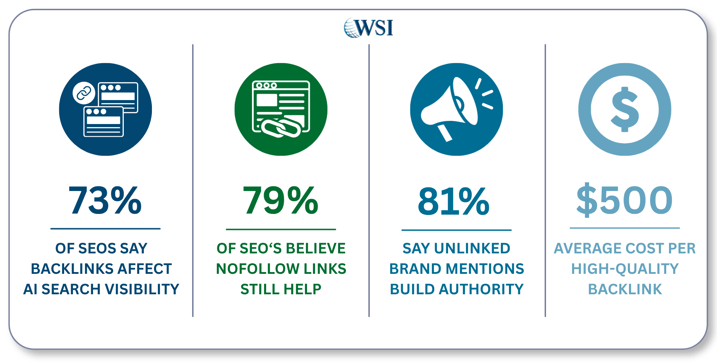
Here’s the reality: no matter how advanced AI search becomes, backlinks continue to carry enormous weight. A recent survey of SEO professionals found that:
- 73% say backlinks affect visibility in AI search results.
- 79% believe even nofollow links move the needle.
- 81% say unlinked brand mentions help build authority.
And here’s the kicker—over half of respondents don’t think Google can consistently identify paid links, proving that links are still a critical (and sometimes misunderstood) ranking factor.
What’s also interesting is the cost: building high-quality backlinks is getting more expensive, averaging around $500 per link. In competitive industries like law, gaming, and finance, SEO teams dedicate over a third of their budgets to link building.
So, while AI search is changing where people find content, backlinks still determine whose content gets found.
|
73% of SEO professionals say backlinks still affect visibility in AI search results, even as AI Overviews reduce clicks. |
What is Traditional SEO?
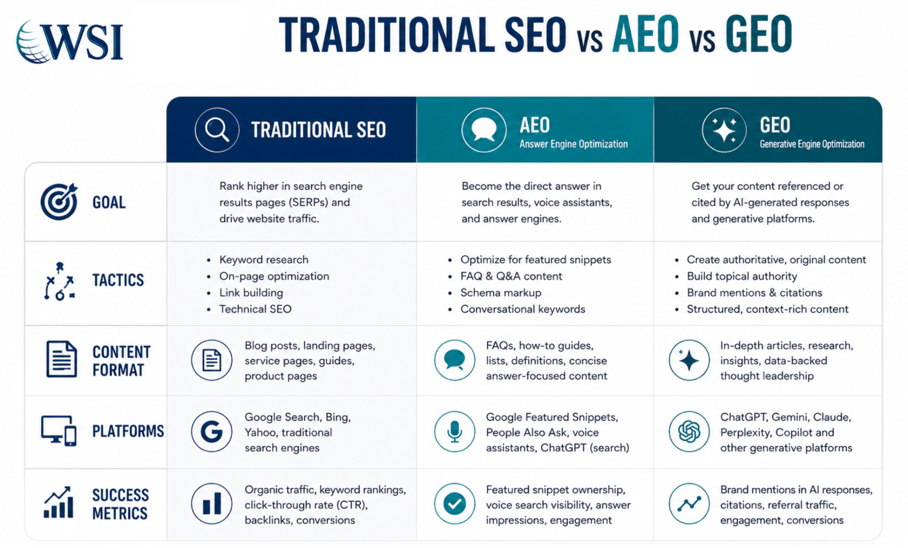
Traditional SEO is the process of improving your website so it appears higher in search engine results, especially on Google.
It helps search engines understand your pages, match them to relevant searches, and decide whether your site is useful and trustworthy.
Traditional SEO usually focuses on keywords, website structure, content quality, backlinks, page speed, mobile experience, and local visibility.
Tips for Traditional Search Engine Optimization
1. Start with search intent
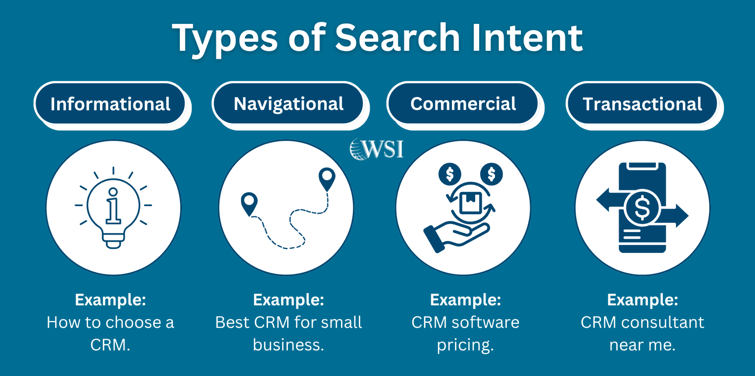
Before writing or optimizing a page, ask what the searcher wants.
Common search intent types:
- Informational: “How to choose a CRM.”
- Commercial: “Best CRM for small business.”
- Transactional: “CRM software pricing.”
- Local: “CRM consultant near me.”
Your page should match the intent behind the keyword. A product page will rarely rank well for a “how to” query. A blog post may not convert well for a “pricing” query.
2. Build pages around focused keyword themes
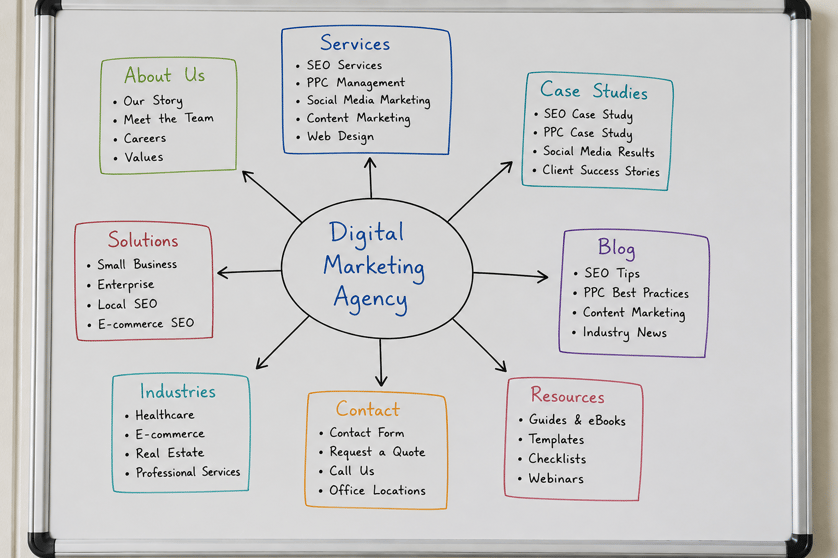
Avoid targeting one keyword in isolation. Build each page around a clear topic.
For each important page, define:
- Primary keyword
- Related keywords
- Common questions
- Buyer stage
- Main conversion goal
Example:
A dental clinic should not only target “dentist Washington.” It may also need pages for “emergency dentist Washington,” “teeth whitening Washington,” and “family dentist Washington.”
3. Fix technical SEO issues
Search engines need to find, crawl, and understand your pages.
Check these areas:
- Page speed
- Mobile usability
- Broken links
- Redirect errors
- Duplicate content
- Missing or poor title tags
- Missing meta descriptions
- XML sitemap
- Robots.txt settings
- HTTPS security
- Indexing issues in Google Search Console
Technical SEO does not replace good content. But a poor technical setup can stop good content from ranking.
4. Write clear title tags and meta descriptions
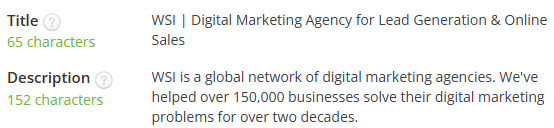
Your title tag helps search engines and users understand the page.
A good title tag should:
- Include the main keyword
- Describe the page clearly
- Stay focused
- Encourage the right user to click
Example:
- Poor title:
Home - Better title:
Digital Marketing Agency in Chicago
Meta descriptions do not directly guarantee rankings, but they can improve click-through rates when written well.
5. Create useful, original content
Search engines reward pages that help users complete a task.
Strong content usually includes:
- Clear answers
- Original examples
- Expert input
- Updated information
- Local relevance where needed
- Proof points such as results, reviews, or case studies
Avoid thin pages that repeat what competitors already say. Add useful details based on your experience, your market, and your customers’ questions.
6. Improve E-E-A-T signals
Google looks for signs of Experience, Expertise, Authoritativeness, and Trustworthiness.
You can improve trust by adding:
- Author names and credentials
- Case studies
- Customer reviews
- Contact details
- Clear service pages
- Privacy policy and terms
- Real business information
- Secure website setup
- Accurate, updated content
This matters more for industries such as finance, healthcare, legal, education, and professional services.
7. Strengthen internal linking
Internal links help users and search engines find related content.
Use internal links to connect:
- Blog posts to service pages
- Service pages to case studies
- Location pages to local proof
- FAQ pages to conversion pages
Use descriptive anchor text. Avoid vague links like “click here.”
Example:
Better anchor text:
Learn more about our SEO services for local businesses.
8. Earn high-quality backlinks
Backlinks still help traditional SEO, but quality matters more than volume.
Good backlink sources include:
- Industry publications
- Local business directories
- Partner websites
- Digital PR
- Guest articles on relevant sites
- Community sponsorships
- Professional associations
Avoid buying low-quality links. They can damage trust and rankings.
9. Optimize for local search
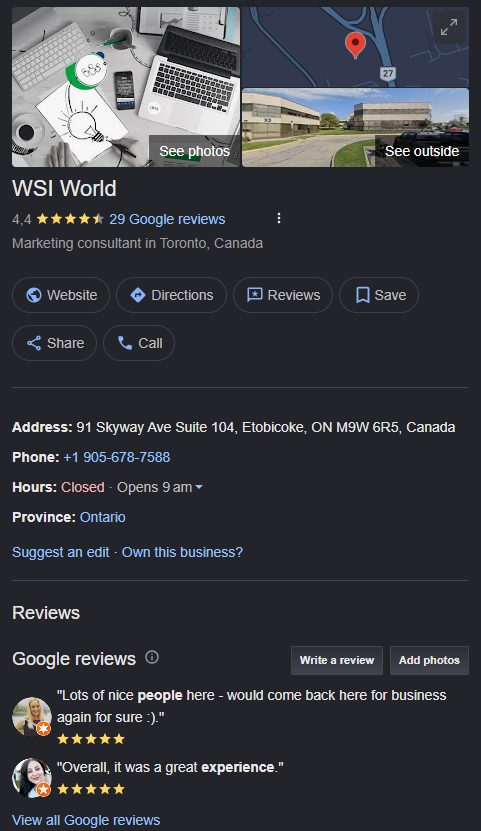
For local businesses, Google Business Profile is essential.
Focus on:
- Accurate business name, address, and phone number
- Correct business categories
- Photos
- Reviews
- Local landing pages
- Consistent directory listings
- Location-specific content
Example:
A law firm with offices in New York City and Albany should have separate location pages with local services, local proof, and clear contact details.
10. Track performance and improve over time

SEO is ongoing. Review performance every month.
Track:
- Organic traffic
- Keyword rankings
- Click-through rate
- Conversion rate
- Leads or sales from organic search
- Pages gaining or losing traffic
- Technical errors
- Backlink growth
Use tools like Google Search Console, Google Analytics 4, and SEO platforms such as Semrush, Ahrefs, or Moz.
What is AI SEO?
AI SEO is the process of optimizing your website and content so they can be found, understood, and trusted by AI-powered search tools.
This includes Google’s AI results, ChatGPT, Perplexity, Gemini, Copilot, and other answer engines that summarize information rather than just showing a list of links.
AI SEO usually focuses on clear content, strong expertise, trusted sources, structured information, brand mentions, reviews, and consistent business details across the web.
How to Optimize Your Website for AI-Powered Search
1. Answer real customer questions clearlyAI search favors content that directly solves a user’s problem. If you want to rank in AI search, you need to build pages around the questions your buyers actually ask.
Examples:
- “How much does a commercial solar installation cost?”
- “What is the best CRM for a small law firm?”
- “How long does dental implant recovery take?”
Use plain answers near the top of the page. Then add details, examples, costs, risks, comparisons, and next steps.
2. Build topic depth, not random blog volumeMany generative AI models are pre-trained on large amounts of data, but AI search may also use current web sources to support its answers. Your content should be specific enough to be useful and clear enough to be checked.
A better approach is to create strong content clusters. For example, a B2B cybersecurity company might build:
- Main page: Cybersecurity Services
- Supporting pages: Ransomware Prevention, Compliance Audits, Cloud Security, Incident Response
- Proof pages: Case Studies, FAQs, Industry Reports, Client Results
This helps search engines and AI systems understand what your business is known for.
3. Show experience and trustAI search needs reliable sources. Add clear proof that your business knows the topic.
Include:
- Author names and credentials
- Real project examples
- Client testimonials
- Case studies with numbers
- Original photos, screenshots, or process details
- Review signals
- Clear contact details
- Updated dates on key pages
This supports Google’s emphasis on helpful, reliable, people-first content.
4. Use structured dataStructured data helps search engines understand your pages. Google supports formats such as JSON-LD, Microdata, and RDFa, and recommends JSON-LD for structured data.
Useful types include:
- Organization
- LocalBusiness
- Product
- Service
- FAQPage
- Article
- Review
- Event
- BreadcrumbList
Keep the markup honest. The structured data must match what users can see on the page.
5. Make your content easy to quoteGenerative AI search engines often extract short, clear answers. Format content so it can be understood quickly.
Use:
- Short paragraphs
- Clear headings
- Direct definitions
- Step-by-step sections
- Comparison tables
- FAQ sections
- Specific facts, prices, ranges, and examples
For example, instead of saying “We offer custom marketing services,” say “Our SEO programs include technical audits, content planning, local SEO, monthly reporting, and conversion tracking.”
6. Keep technical SEO cleanAI search still depends on crawlable, indexable web pages. Google’s AI features draw from content in its Search index, so technical SEO remains important.
Check
- Pages are not blocked by robots.txt
- Important pages are indexable
- XML sitemaps are current
- Internal links point to priority pages
- Pages load quickly
- Mobile experience is strong
- Broken links are fixed
- Duplicate pages are controlled
- Images have useful alt text
For local businesses, AI search may use location, reviews, business profiles, and service relevance.
Focus on:
- A complete Google Business Profile
- Consistent name, address, and phone details
- Local service pages
- Reviews that mention specific services
- Location-specific FAQs
- Local case studies
- Photos of your team, office, work, or products
Example:
A plumber should have separate pages for emergency plumbing, drain cleaning, water heater repair, and each major service area.
8. Earn mentions from trusted sourcesAI tools often look for corroboration. Your brand should appear in places beyond your own website.
Build visibility through:
- Industry directories
- Local business associations
- Guest articles on relevant sites
- Digital PR
- Partner pages
- Podcast interviews
- Review platforms
- Case studies with clients or vendors
Avoid paid link schemes or low-quality directory spam.
9. Prepare for answer engines, not only rankingsChatGPT Search provides answers with links to relevant web sources, and OpenAI says ChatGPT can search the web when a question may benefit from current information.
This means your content should be easy for answer engines to interpret. Create pages that answer:
- Who is this for?
- What problem does it solve?
- How does it work?
- What does it cost?
- What makes your approach credible?
- What should the user do next?
Traditional rankings are no longer enough.
Track:
- Organic traffic by landing page
- Branded search growth
- Assisted conversions
- Search Console queries
- Bing Webmaster Tools performance
- Referral traffic from AI tools was visible
- Mentions in AI answers for priority questions
- Leads from content pages
Bing’s guidelines cover how it discovers, indexes, evaluates, and surfaces content across Bing Search, Copilot, and related search experiences.
Google AI Mode vs Traditional Search vs AIO
Google AI Mode
Google AI mode is more conversational. This is where AI search differs from standard results. It can support follow-up questions, summarize several sources, and apply personalization based on context such as location, query history, or stated preferences.
Traditional Search
Traditional Search shows a ranked list of links. It works best for simple searches, local searches, brand searches, and product searches. Your SEO focus should be clear pages, strong titles, fast loading, reviews, and local visibility.
AIO
AI Overviews, or AIO, show an AI-generated summary inside Google Search. They often include links to source pages. They work best for “how to” questions, comparisons, and research searches. Your content needs clear answers, expert input, trust signals, and useful examples.
How Search Engines Work
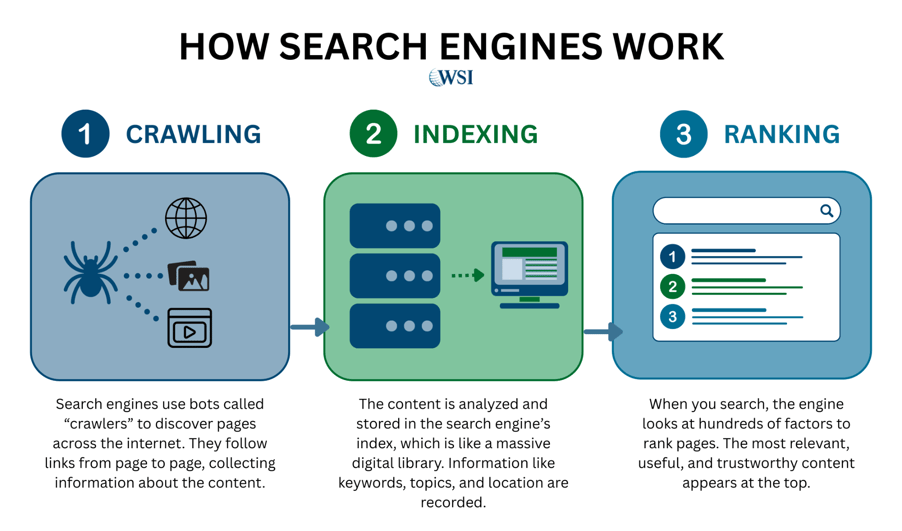
Search engines do three main things.
Crawl
Search crawlers discover pages through links, sitemaps, and known URLs. Google uses crawlers, also called Googlebot, to fetch pages from the web.
Index
After crawling, the search engine analyzes the page. It looks at text, images, videos, structure, and other signals. It then stores the information in a large index. Only indexed pages can appear in search results.
Serve and rank
When a user searches, the search engine looks through its index and ranks results based on relevance, meaning, quality, usability, and context such as location or settings. Google says links or references from other prominent websites can help its systems assess whether content is trustworthy.
How Generative AI Works
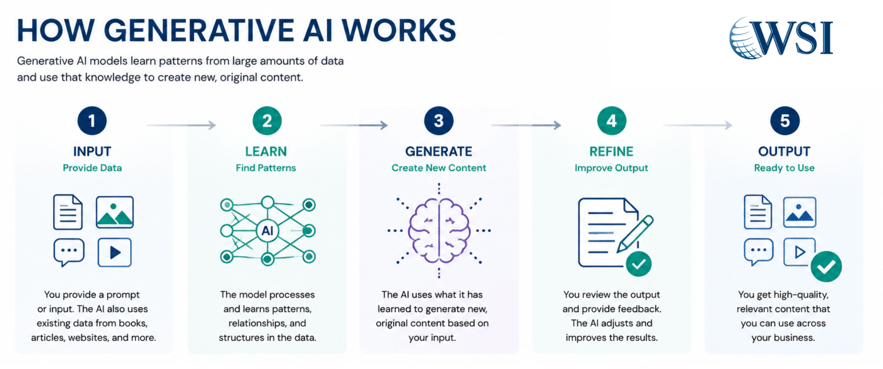
Generative AI creates new content in response to a prompt. That content can include text, images, code, audio, and video. IBM defines generative AI as AI that can create original content in response to a user’s request.
For text-based AI, such as LLM's (large language models):
The Model is Trained on Large Amounts of Data
It learns patterns in language, structure, topics, and relationships between words and ideas.
Text is Broken into Tokens
Tokens are small pieces of text. The model uses these pieces to process and generate language.
The Model Predicts the Likely Next Tokens
A large language model does not “think” like a person. It predicts what text is likely to come next based on the prompt, its training, and any extra information it has been given.
Many Models Use Transformer Architecture
Transformers are widely used for large language models because they can process sequences of language and capture relationships across context. IBM describes transformers as a neural network architecture strongly associated with large language models.
AI Search Often Adds Retrieval
In AI-powered search, the system can retrieve current web pages, review them, and use them to ground the answer. Google describes retrieval-augmented generation, or RAG, as a way to improve quality, accuracy, and freshness by using relevant pages from the Search index.
The Smartest Strategy: A Blend of Old and New
The best way forward isn’t to abandon traditional SEO—it’s to build a hybrid strategy that works for both search engines and AI.
Here’s what that looks like:
- Keep building quality links. They still signal trust and authority to both Google and AI-driven platforms.
- Structure your content for AI. Use schema markup, FAQs, and clear Q&A sections so AI can easily pull from your pages.
- Show credibility. Add author bios and credentials, and cite trustworthy sources—AI engines look for this when choosing what to display.
As digital marketing experts explain, it’s about striking a balance between writing for people and structuring for machines.
|
Pro Tip: Don't choose between SEO and AEO. Structure your content with clear H2's, FAQ sections, and schema markup, then build links to it. That single approach wins in both traditional and AI search. |
Practical Tips for Digital Marketers and SEO Companies
If you’re running digital marketing campaigns or managing SEO for clients, here are a few steps you can start right away:
- Review your backlinks. Remove spammy ones and focus on acquiring links from relevant, high-authority websites.
- Create modular content. Break down content into smaller, answerable sections—this makes it easier for AI to pull into its summaries.
- Track new metrics. Don’t just look at rankings; monitor AI mentions, retrieval frequency, and citation rates.
- Write for both humans and AI. Engaging content for readers, but structured in a way AI systems can parse.
- Implement schema markup across your pages. Pages with structured data (schema markup) are 40% more likely to appear in AI-generated answers.
|
Still tracking only keyword rankings? You're missing the picture. Add AI citation tracking, zero-click trends, and brand mention monitoring to get a full view of your search performance in 2026. |
How to Measure Progress in 30 Days
Unlike traditional SEO (which takes months to show impact), AI search visibility can shift faster. Within 30 days, you should start tracking:
- How often does your content show up in AI Overviews or summaries?
- Whether your site is being cited by AI tools like ChatGPT.
- Changes in organic traffic—especially from zero-click search behavior.
- Engagement on pages optimized with schema and structured Q&A.
AI search is here to stay, and it’s already reshaping how people consume content. But one thing hasn’t changed: backlinks remain a critical factor in determining which sources get visibility.
For businesses, marketers, and SEO companies, the winning formula is clear: embrace AI-driven optimization without abandoning the fundamentals. Build links, structure your content for AI retrieval, and position yourself as a trustworthy source.
|
Ready to future-proof your SEO strategy? WSI combines traditional link-building, content optimization, and AI search readiness into one integrated plan. |
Ready to Take SEO Into the AI Era?
We help brands adapt their SEO strategies to today’s rapidly evolving search landscape. From building high-authority backlinks to optimizing content for AI-driven search engines, we’ll ensure your business stays ahead. Let’s talk about how we can boost your visibility in both Google rankings and AI-powered search results. Contact us today to get started.