
Key Highlights
- The difference between Generative Engine Optimization (GEO) and Answer Engine Optimization (AEO)
- How AI platforms like ChatGPT and Google Gemini select and use content
- How to structure your content so AI can easily understand and extract it
- Tips on optimizing content for AI in a practical, structured way
- The role of topical authority and content clusters in AI search
- How internal linking strengthens context and improves performance
- Why schema markup helps AI interpret your content correctly
- How to test and refine your content for better results in AI-driven search
Search engine technology is shifting toward AI-driven answers. Instead of simply offering a list of links, search engines now use artificial intelligence to provide direct and detailed answers. This shift means that simply producing good content is no longer enough.
To stay visible, your content must be organized in a way that AI systems can understand, interpret, and trust. This is the foundation of Generative Engine Optimization (GEO). Knowing how to structure content for AI search is not about manipulating algorithms. It is about arranging information clearly so AI systems can confidently use it to generate accurate responses.
A well-structured website acts like a blueprint, guiding AI to the exact information needed to answer a user’s query. This guide provides actionable best practices on how to optimize content for AI search and succeed in the new era of AI-powered search.
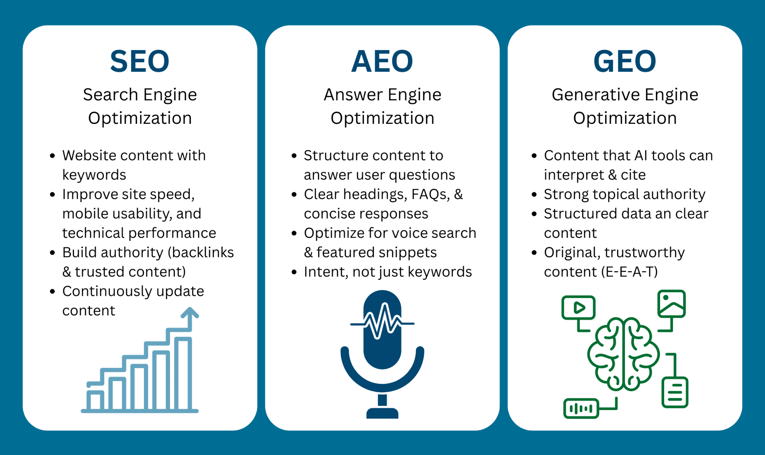
What is Answer Engine Optimization (AEO)?
AEO focuses on traditional search engines, like Google Search and voice assistants such as Google Assistant. The goal is to get your content to be chosen as a direct answer through a featured snippet or voice response. AEO works best when your content is clear, concise, and structured in a question-and-answer format. It often includes FAQs, short definitions, and well-organized headings.
What is Generative Engine Optimization (GEO)?
GEO focuses on how your content is used by AI platforms such as ChatGPT or Google Gemini. These tools generate full answers, instead of only showing a list of links first. GEO means ensuring your content is trusted, relevant, and well-structured enough to be included in those answers. This involves building strong authority in your niche, publishing in-depth content, and answering real user questions naturally.
How Generative Search Chooses Content
Generative search selects and combines information from multiple sources to produce one answer. It does not rely on rankings alone.
Content with strong topical authority is more likely to be used. This involves publishing useful, in-depth content about a specific topic. Short paragraphs, direct answers, and well-organized sections make it easier for AI to extract information.
Trust is another key factor. If your content is supported by other reliable sources or your brand is mentioned across the web, AI is more likely to include it. Fresh, updated content also performs better, especially for topics that change often.
What AI Looks for When Parsing Content
AI engines rely heavily on patterns. They look for signals that demonstrate subject expertise. A clear structure tells the system that the author understands the topic, while a logical flow shows that ideas connect naturally.
When your structure is strong, AI can easily identify the main topic without confusion. It understands how smaller details support the bigger picture. This is why the organization provides a strong competitive advantage. If two pages contain the same information, the one that is cleaner and easier to read is far more likely to be cited.
Provide Direct Answers First
AI systems prioritize content that answers a question immediately. When a heading introduces a topic, the first one or two sentences should clearly and directly answer that question.
Start with a short conclusion, then expand with supporting details. Avoid long introductions or context before delivering the answer.
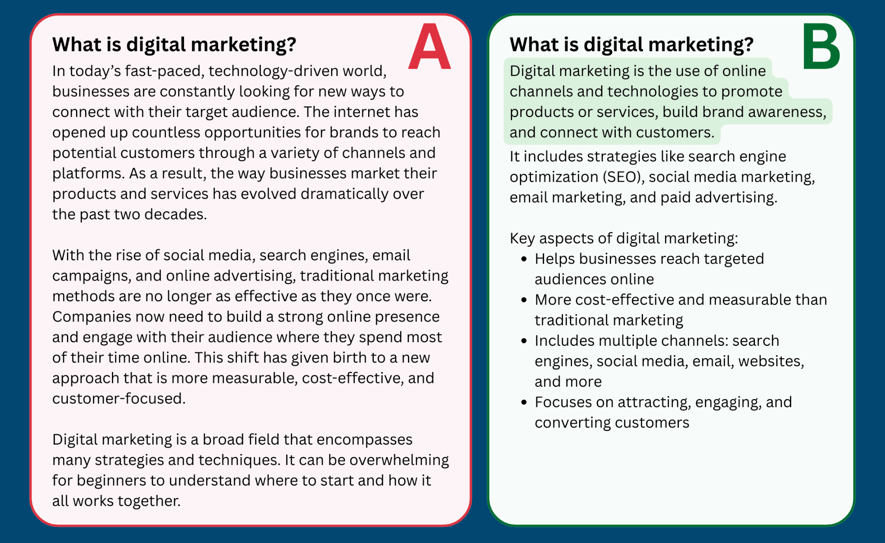
In the above example, Exhibit A has too much context, and the answer comes too late. But, with exhibit B, the answer first, and then the content expands with supporting details.
Creating Scannable Content for Fast Extraction
Making content easy to scan is one of the most overlooked aspects of AI optimization. Just like people skim online content, AI systems quickly scan pages to extract useful information.
Avoid long, intimidating blocks of text. Keep paragraphs short, ideally three to four sentences each. This improves readability and keeps the focus on one idea at a time. Adding white space also makes it easier for AI systems to process your content without confusion.
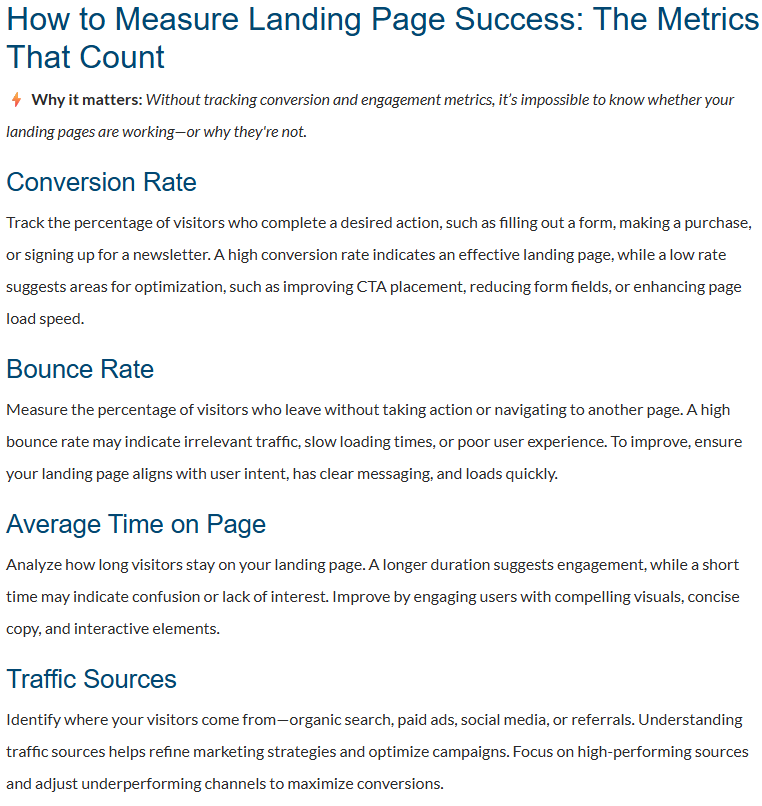
Add TL;DR and Summary Sections
AI systems favor content that highlights key points quickly. A summary at the top helps both users and AI understand your page fast. Include a brief TL;DR, followed by key takeaways in bullets if needed. You can also add short summaries under major sections. Keep everything concise and factual so AI can easily extract it.
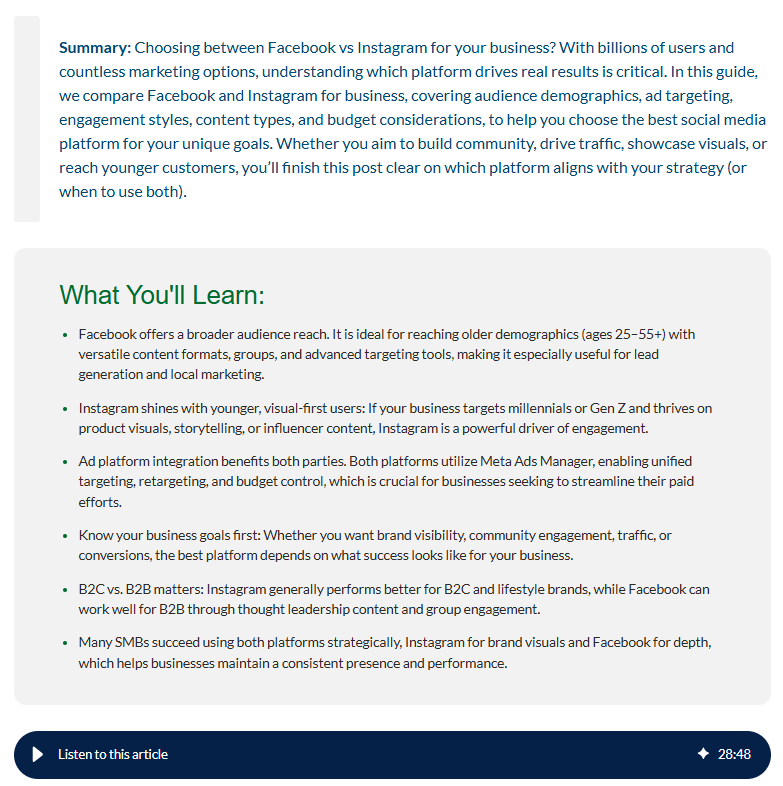
Format Content for AI Extraction
Structured formatting increases the chances of your content being selected.
Use formatting such as:
- Short definition paragraphs (40 to 60 words)
- Bullet point lists for tips or benefits
- Numbered steps for processes
- Tables for comparisons when relevant
Clear formatting improves both readability and extraction, key AI optimization techniques for improving visibility.
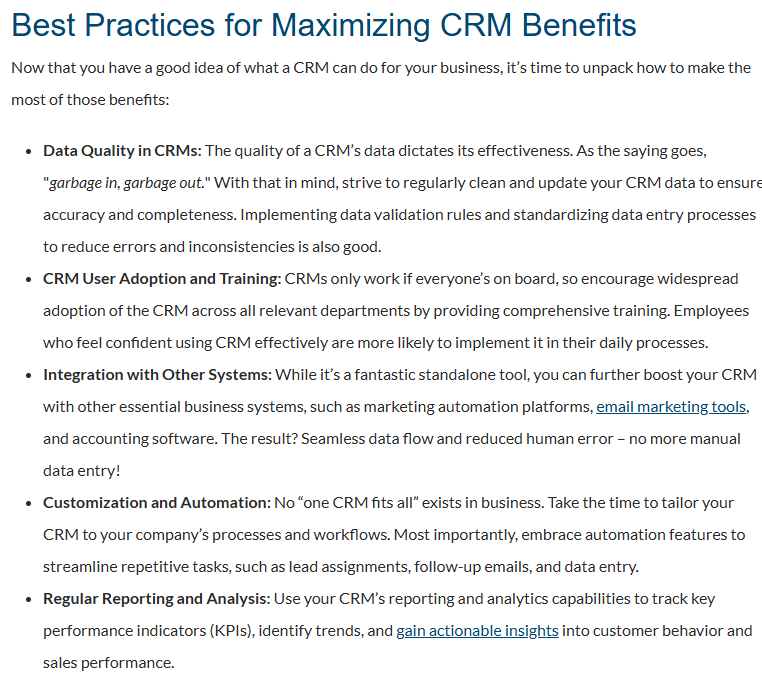
Use Content Chunking to Improve Visibility
Content chunking means breaking your page into small, focused sections that each answer a single question or idea.
Every section should have a clear heading and a direct answer. Keep it concise and easy to understand on its own.
When your content is organized into clean, independent blogs, it becomes easier for AI systems to extract and reuse.
Write in a Conversational Style
AI systems are trained on content that mirrors how people speak. Write as if you are answering a real question. Keep your language simple and direct. Avoid unnecessary jargon where possible.
Build Topical Authority with Content Clusters
Instead of creating isolated pages, organize your content into clusters around a central topic. Link related articles together and cover multiple angles of the same subject.
This signals expertise and increases the likelihood that your content will be referenced in AI-generated summaries.
Use Internal Linking to Strengthen Context
Internal links help AI systems understand how different pages relate to each other.
Ensure every important page is connected and easy to navigate. Link to relevant articles, service pages, and supporting content within your site.
Match Content Structure to Search Intent
Different types of queries require different content formats. Aligning your structure with user intent helps AI deliver your content in the right context.
Example:
- Informational structure for definitions and guides
- Comparison structure for evaluating options
- List formats for recommendations
- Transactional pages for pricing
Include Original Insights and Real-World Examples
AI systems prefer content that shows real expertise, and generic content is less likely to be used.
Add examples, case studies, and data to support your points. Share insights from your own experience.
This type of detail strengthens AI-optimized content, making it more likely to be selected and referenced by AI systems.
|
For example, we optimized this blog in December 2025: Master Your Social Media Customer Journeys Engagement. We expanded the content to better match user intent by answering key questions such as “What is social media engagement?” We also added practical examples, a structured posting plan, relevant FAQs, and a “Key highlights” summary at the top of the blog. Compared to the previous three months, the blog generated 211 clicks and 85,000 impressions, indicating a strong increase in search visibility and reach. |
Ensure Technical Accessibility for AI Crawlers
Well-structured content will not perform if AI systems cannot access it. Technical accessibility ensures your content can be crawled, indexed, and used in AI-generated responses. Make sure your site loads quickly, works on mobile, and uses secure HTTPS. Keep your XML sitemap updated and allow access through your robots.txt file. Avoid blocking important content behind logins or scripts, ensuring AI systems can crawl and use your pages.
Test and Refine Your Content
Optimization does not stop after publishing. Check how your content is cited, summarized, and which sections are used in tools like ChatGPT and Perplexity AI. If needed, adjust your headings, simplify answers, and break content into smaller sections. Regular updates improve your chances of being included in AI-generated responses.
Why Structure Matters More Than Ever
AI systems parse everything. They break sentences into smaller pieces to evaluate meaning and context. If your page contains large walls of text without breaks, AI struggles to understand it.
Headings act as signposts. Think of them as the structural framework of your webpage. Without headings, content becomes an unorganized pile of words. Proper headings create a clear outline that both users and AI systems can follow easily.
Best practices:
- Use one H1 tag per page: Clearly state the primary topic.
- Organize sections with H2s: Divide content into major sections.
- Use H3s for subpoints: Break complex ideas into smaller parts.
- Maintain logical order: Avoid skipping heading levels (for example, H2 to H4)
The Role of Schema Markup in AI Understanding
If headings define structure, schema markup provides clear context. If headings form the skeleton of your content, schema markup acts as the nervous system. Schema markup is structured code that explicitly tells search engines what your content represents.
For example, a simple heading that says “Frequently Asked Questions” might not be enough. Adding the FAQPage schema clearly signals to AI that the content contains questions and answers. This removes ambiguity and increases trust.
To position your site as a reliable data source, implement:
-
FAQPage schema for Q&A content
-
HowTo schema for step-by-step guides
-
Article or BlogPosting schema for general content context
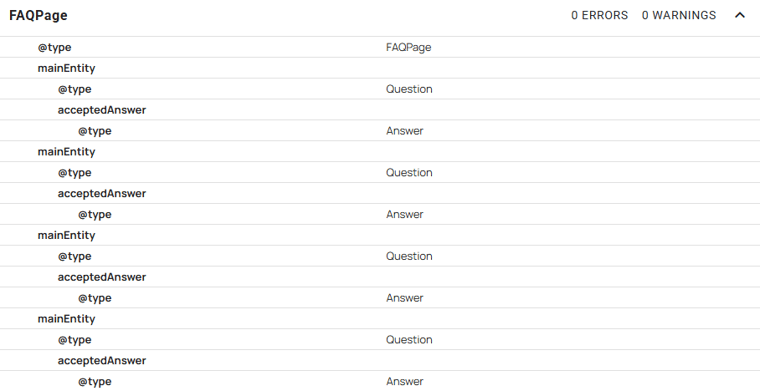
You don’t need to be a developer. Tools like Rank Math, Yoast SEO, or free tools like JSONLint, Google Rich Results Test, and Schema.org can help you implement structured data easily.
Where to Focus Next
AI answer engines are no longer experimental. They are transforming how people find information. Your visibility now depends on how effectively your content communicates with AI systems.
If content cannot be parsed, it cannot be used. And if it isn’t used, it becomes invisible in search results.
The opportunity is still wide open, but success belongs to those who prioritize clean structure, clarity, and proper schema implementation.
Want help making your content more AI-friendly? iSigma Solutions specializes in structured content strategies, from schema markup to scannability. Learn more about their approach here →
About This Post: This blog post was contributed by a WSI partner and reflects their perspective on AI-driven search.