
Key Highlights
- How AI is changing day-to-day marketing work and what skills your team needs now
- Where AI delivers the fastest return for small and mid-sized businesses
- How to introduce AI without disrupting your team or workflows
- What practical use cases can you implement in the next 30–90 days
- How to manage risks like data privacy and compliance from day one
AI and the future of marketing are set to evolve faster than the internet did. While many businesses hesitate, early adopters are already gaining an advantage. PwC estimates AI will add $15.7 trillion to the global economy by 2030, changing how businesses attract and convert customers. The opportunity is still open, especially for small and mid-sized businesses.
You don’t need a big budget or technical team to get started. You need clarity on where AI fits in your business.
Here are the key shifts shaping AI and the future of marketing:
- Marketing roles and skills are changing
- AI works best as a partner, not a replacement
- Businesses need to adapt processes and workflows
- Ethical use of AI matters
For business owners, the focus is simple: understand what’s changing, prepare your team, and implement AI responsibly without getting lost in technical detail.
Real examples of the artificial intelligence impact on marketing show the impact:
- Sephora uses a chatbot to handle 75% of daily customer queries, freeing staff for higher-value work
- Coca-Cola uses AI to analyze data and personalize marketing at scale
How AI Is Used in Digital Marketing
Customer Insights and Data Analysis

AI processes large volumes of data to identify patterns in customer behavior.
- Predicts what your audience wants
- Segments customers more accurately
- Improves targeting and messaging
This helps you make better decisions based on real behavior, not assumptions.
Content Creation and Optimization

AI supports content planning, writing, and performance tracking.
- Generates blog topics, ads, and email drafts
- Optimizes headlines and keywords for SEO
- Recommends updates based on performance
You still need human input, but AI speeds up production and improves consistency.
Personalization at Scale
AI allows you to tailor experiences for each user.
- Product recommendations based on behavior
- Personalized email campaigns
- Dynamic website content
This increases engagement and conversion rates without manual effort.
Chatbots and Customer Support

AI-powered chatbots handle routine customer interactions.
- Answer FAQs instantly
- Qualify leads
- Provide 24/7 support
This reduces workload and improves response time.
Paid Advertising Optimization
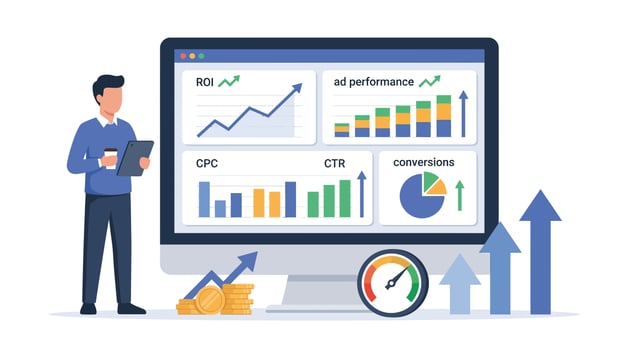
AI improves how your ad budget is spent with paid advertising.
- Automates bidding strategies
- Tests multiple ad variations
- Targets high-intent audiences
This leads to better ROI and lower cost per acquisition.
Predictive Analytics
AI forecasts future outcomes based on past data with analytics.
- Identifies likely buyers
- Predicts churn
- Suggests next best actions
You can act earlier and focus on high-value opportunities.
SEO and Search Optimization

AI helps you stay competitive in search rankings.
- Identifies keyword opportunities
- Analyzes competitors
- Tracks algorithm changes
With ongoing updates, your SEO stays aligned with how search engines evolve.
Importance of AI In Digital Marketing
The future of marketing and artificial intelligence is already shaping how businesses compete online. The importance of AI in digital marketing comes down to one thing: it helps you make smarter decisions faster and act on them at scale.
Better Decision-Making
AI analyzes large amounts of data in seconds.
- Identifies trends and customer behavior
- Reduces guesswork in campaigns
- Supports more accurate forecasting
You base your strategy on real insights, not assumptions.
Improved Customer Experience
AI helps you deliver more relevant interactions.
- Personalized content and offers
- Faster response times through chatbots
- Consistent experience across channels
This leads to higher engagement and stronger customer loyalty.
Increased Efficiency
AI automates repetitive marketing tasks.
- Email scheduling and segmentation
- Ad optimization and testing
- Reporting and performance tracking
Your team spends less time on manual work and more on strategy.
Higher Conversion Rates
AI improves targeting and timing.
- Reaches users when they are ready to act
- Delivers the right message to the right audience
- Optimizes landing pages and campaigns
This results in more leads and better ROI.
Scalable Marketing Efforts
AI allows you to grow without increasing resources at the same rate.
- Manage larger audiences
- Run multiple campaigns simultaneously
- Maintain personalization at scale
This is critical for small and mid-sized businesses looking to expand.
Competitive Advantage
Many businesses are still slow to adopt AI.
- Early adopters gain market share
- Faster testing and adaptation
- Stronger positioning in search and paid channels
Acting now gives you an edge while others hesitate.
Continuous Optimization
AI keeps learning and improving over time.
- Refines campaigns based on performance
- Adjusts strategies as behavior changes
- Keeps your marketing aligned with trends
This supports long-term growth rather than short-term wins.
Understanding the Impact of AI on Marketing Roles and Skillsets (What This Means for Your Team)
One of the foremost uses of AI is automation. As marketing departments adopt AI, its automation functionalities will make some marketing jobs obsolete while creating others. AI will phase out some traditional roles and create entirely new ones—especially in data, martech, and compliance. But don't panic—this evolution creates more opportunities than it eliminates. Future marketing teams will find the following roles and functions becoming more prevalent as a result of AI.
For SMEs with smaller teams: You don't need to hire for every role immediately. Focus on building these capabilities gradually or partnering with experts who already have them.
Data Strategists and Analysts

Data is already central to most modern marketing strategies. AI tools like Google Analytics or Quantilope are already being used to collate and analyze large quantities of customer data. This will require dedicated professionals who can interpret data and analytics. They would work closely with AI to streamline data analysis processes and enhance marketing efficiency.
- For your business: If you don't have a dedicated analyst, consider training your existing marketing person in basic data interpretation or partnering with a consultant to translate data insights into growth strategies.
Martech Specialists
Marketing teams will seek out individuals who specialize in managing and optimizing martech platforms. These specialists will use their expert knowledge of AI and machine learning to help refine and enhance marketing strategies.
- For your business: You probably don't need a full-time martech specialist yet. Focus on mastering 2-3 core tools (like HubSpot or Google Analytics) before expanding your tech stack.
Content Creators and Curators

When AI first emerged, many people assumed that it would render professional content creators obsolete. Nothing could be further from the truth. The human touch will still be required to create content that is authentic and relatable. Great content still wins. AI can assist, but human creators will keep your brand relatable and real.
- Practical application: Use AI for research, outlines, and first drafts—but always have a human review, edit, and add your brand's unique voice before publishing.
Compliance and Ethics Officers

Data privacy is a central part of AI-driven marketing. Since marketing campaigns will depend on the data gathered from customers, businesses will need to ensure that they are following the rules when it comes to data collection and use. Compliance and ethics officers will be needed. They will be responsible for monitoring the marketing team's data usage and ensuring compliance with privacy laws, including the General Data Protection Regulation (GDPR) and the California Consumer Privacy Act (CCPA). Non-compliance isn't an option. Assign dedicated oversight to stay ahead of privacy laws like GDPR and CCPA.
- For smaller businesses: You don't need a full-time compliance officer. Start with clear data collection policies and use platforms (like HubSpot or Google Analytics) that handle compliance automatically. Review your practices quarterly.
Innovation Managers
These hybrid marketing/technology experts would have to be on the team to ensure that new technologies are promptly identified and integrated.
- Budget-conscious approach: As a business owner, you're likely the innovation manager for now. Dedicate 2 hours monthly to researching new AI tools and testing one new capability per quarter.
As far as skills are concerned, marketers will need the following as a minimum:
- Technological proficiency (Start with: Basic understanding of your current marketing tools)
- Data literacy (Start with: Reading Google Analytics reports and understanding conversion metrics)
- Adaptability (Start with: Willingness to test new approaches and learn from results)
- Strategic thinking (Start with: Connecting marketing activities to business outcomes)
- Creativity and innovation (Start with: Using AI for ideation while adding human insight)
Training priority: Focus on data literacy first—it's the foundation for everything else.
Action Step: Review your team’s current roles. Where are the gaps? Which of these five skills does your team need most? Start there. WSI’s AI Consultants can help you realign job functions and training plans without overwhelming your current operations.
Embracing AI as a Collaborative Partner, Not a Replacement for Human Expertise (How to Reassure Your Team)
One reason many businesses and marketers have been reluctant to adopt AI is the belief that it would ultimately replace them. As the technology has developed and its capabilities have become more widely understood, it has become increasingly apparent that it is not intended to make human expertise redundant. Nor, on the other hand, should it be regarded as a mere tool, because it is more than that.
For business leaders: This is exactly the message your team needs to hear. Frame AI adoption as empowerment, not replacement.
AI isn't a threat—it's your competitive edge. Treat it as a growth partner, not just a tool. It works as a collaborative partner that supplements and enhances human ideas and skills. As a business leader, you need to communicate to your team that AI is a powerful tool that will make their work easier to manage and will help them to bring out their best.
This is another way in which AI is transforming job roles in marketing (and elsewhere, for that matter). Whereas marketers and content creators would once have had to do everything themselves, from research and brainstorming to writing, editing, and correcting, AI can handle many of those tasks. It can contribute to the generation of ideas, provide research and fact-checking, and even generate initial drafts and templates for the creative to refine and edit. These functionalities do not exist to make humans obsolete. Instead, they enhance productivity and free up marketing teams to focus on higher-level work that requires more critical thinking and creativity.
Real-world example: Instead of spending 3 hours researching blog topics, your team member uses AI to generate 20 topic ideas in 10 minutes, then spends those 3 hours crafting compelling content that reflects your brand's unique voice and expertise.
Some other ways that AI serves marketers as collaborative partners include:
Aiding and Enhancing Decision-making
Every decision is only as good as the information on which it rests. We all make the best decisions we can using whatever data we can gather and analyze. However, our capacity is severely limited in this regard. AI can collect and analyze vast amounts of data, presenting us with accurate, far-reaching insights that we can then use to drive better decisions. AI-driven analytics tools such as Google Analytics or HubSpot make us all better marketers because they remove guesswork and speculation and turn marketing into a discipline grounded in hard facts.
- Business impact: Instead of debating which marketing channel works best, AI shows you exactly which sources bring customers who actually buy. This lets you double down on what works and eliminate what doesn't.
Supporting Creativity and Innovation
AI automates the busywork—so your team can focus on strategic, creative thinking. Not only does productivity improve, but so does innovation. Innovation is what differentiates your business from its competitors. Therefore, having more time and space to generate innovative ideas will ultimately make you more competitive and fuel your company's growth.
- Practical outcome: When your marketing person isn't stuck formatting reports or researching basic industry stats, they can focus on developing breakthrough campaigns that set you apart from competitors.
Supporting and Strengthening Leadership
AI takes care of data-heavy tasks—freeing you up to lead, motivate, and innovate. AI is much better at these tasks than humans are, but it lacks the intuition and foresight to navigate crises. They also can't inspire or motivate a team. In much the same way that AI assists creativity and innovation, it also uplifts and supports leadership. It can handle the data-driven tasks, freeing you to provide inspiration and foresight to guide your team, while staying focused on growth and development.
- Leadership advantage: While competitors' leaders are buried in spreadsheets, you'll be building relationships, solving strategic challenges, and positioning your business for long-term growth.
AI Trends in Marketing
AI and the future of marketing are moving quickly. If you want results, you need to focus on the trends that directly impact performance, customer experience, and ROI.
Here are the key AI marketing trends you should be acting on:
AI-Driven Personalization
Personalization is becoming more precise and expected.
- Websites adapt content based on user behavior
- Emails and offers change in real time
- Product recommendations improve conversion rates
What to do: Start with email and website personalization. These deliver quick returns.
Predictive Marketing
AI is shifting marketing from reactive to proactive.
- Identifies which leads are most likely to convert
- Predicts customer churn
- Suggests next best actions
What to do: Use your CRM data to prioritize high-value prospects.
AI-Powered Content Creation
Content production is faster, but quality control matters more.
- AI generates blogs, ads, and social posts
- SEO recommendations are built into tools
- Content updates are automated based on performance
What to do: Use AI for drafts and optimization, but keep human review for accuracy and tone.
Smarter Paid Advertising
AI is improving how ad budgets are managed.
- Automated bidding adjusts in real time
- Audience targeting becomes more precise
- Creative testing happens at scale
What to do: Focus on clear goals and conversion tracking. Let AI handle optimization.
Conversational Marketing and Chatbots
Customers expect instant responses.
- AI chatbots handle common queries 24/7
- Lead qualification happens automatically
- Conversations guide users toward conversion
What to do: Implement a chatbot for high-traffic pages or FAQs.
Voice and Visual Search
Search behavior is changing beyond text.
- Voice queries are more conversational
- Image-based search is growing in eCommerce
- SEO strategies must adapt to new formats
What to do: Optimize content for natural language and include high-quality images.
AI and Data Privacy
As AI use grows, so does the need for responsible data use.
- Stricter privacy regulations
- Greater demand for transparency
- First-party data becomes more valuable
What to do: Build trust. Be clear about how you collect and use data.
AI Marketing Tools You Should Use
AI Tools for Content Creation
These help you produce blogs, ads, emails, and social posts faster while keeping quality consistent.
Top tools:
How to use them effectively:
- Generate first drafts, not final versions
- Align outputs with your brand voice
- Use them to scale SEO content production
WSI insight:
Content still needs human review. Google rewards useful, credible content. Focus on expertise and trust, not volume.
AI Tools for SEO and Content Optimization
These tools help you rank higher by identifying what your audience is searching for and how to structure content.
Top tools:
What they help you do:
- Find high-intent keywords
- Optimize pages for search engines
- Analyze competitors
WSI approach:
SEO is ongoing. You need continuous updates, content refreshes, and performance tracking to maintain rankings.
AI Tools for Paid Advertising
AI improves targeting, bidding, and ad performance.
Top tools:
-
Google Ads (with AI-driven bidding)
-
Meta Ads Manager
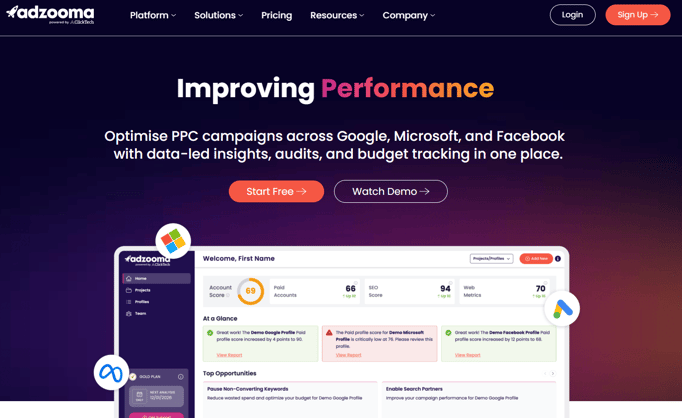
Best use cases:
- Automated bid strategies
- Audience segmentation
- Ad performance optimization
Practical tip:
Do not fully automate without oversight. Review performance weekly and adjust based on actual conversions, not just clicks.
AI Tools for Email Marketing and CRM
These tools personalize communication and improve lead nurturing.
Top tools:
What AI does here:
- Predicts the best send times
- Personalizes email content
- Scores are based on behavior
WSI insight:
Segmentation matters more than automation alone. AI works best when your customer data is clean and structured.
AI Chatbots and Customer Engagement
These improve response time and customer experience.
Top tools:
Use cases:
- 24/7 customer support
- Lead qualification
- Booking and inquiries
Important:
AI chat should feel helpful, not robotic. Train it using real customer questions.
AI Tools for Social Media Management
These tools help you plan, create, and analyze social content.
Top tools:
Benefits:
- Content scheduling
- Performance insights
- AI-generated captions and posts
Tip:
Use AI to assist, but keep your messaging human and relevant to your audience.
AI Tools for Analytics and Insights
These help you make better decisions using your data.
Top tools:
-
Google Analytics
-
Hotjar
-
Tableau
What you gain:
- Deeper understanding of user behavior
- Conversion tracking
- ROI measurement
WSI perspective:
Data only works if you act on it. Set clear KPIs tied to revenue, not vanity metrics.
How to Introduce AI to Your Team Without Panic:
- Start with benefits: Show them how AI will eliminate their least favorite tasks first
- Demonstrate, don't lecture: Let them see AI handle a time-consuming project in minutes
- Address fears directly: Ask what concerns them most and provide specific reassurances
- Celebrate early wins: When AI helps someone finish a project faster, share that success with the whole team
Preparing for the Future of Work: Adapting to AI-Driven Change
Although AI opportunities are increasingly obvious, it will still take some adjustment and training for your team to adopt it and integrate it fully into their workday. The key is gradual implementation—don't try to transform everything at once. And good news—most SMEs see meaningful results within 90 days when following a structured approach.
Step 1: Build a Learning Culture
Invest in training that keeps your team ahead of AI's curve.
- Start here: Dedicate 30 minutes weekly to AI learning. Set up a shared folder where team members can share useful AI tools or insights they discover. Budget-friendly option: Begin with free online resources and YouTube tutorials before investing in formal training.
Step 2: Utilize AI to Boost Role Efficiency
Demonstrate to your team members how AI tools can enhance their productivity and efficiency without compromising their existing roles. Encourage them to master these tools so they can experience their benefits firsthand.
- Quick wins to demonstrate: Have your marketing person use AI to generate 10 social media post ideas in 5 minutes, or use ChatGPT to create email subject line variations for A/B testing.
- Success metric: Track time saved on routine tasks—aim for 20% efficiency gain in the first month.
Step 3: Create a Supportive Environment for Learning and Testing
Encourage team members to explore AI in an environment where they know they have the full support of the leadership.
- Practical approach: Establish 'AI experiment time'—allocate 2 hours monthly for each team member to test new AI tools or processes.
- Important rule: No failures, only learning opportunities. Document what works and what doesn't.
Step 4: Define New, AI-enhanced Career Pathways
Explain to your team how AI will change their career trajectories. Define new career paths for roles that are heavily affected by AI. This will help team members understand their current standing and gain a clear vision of how they can progress in an AI-driven environment.
- Example conversation: 'Sarah, your role as marketing coordinator is evolving. Instead of spending hours on manual reporting, you'll use AI for data analysis and focus on strategy development. This positions you for a marketing manager role within 18 months.'
- Key point: Frame changes as promotions, not replacements.
Step 5: Arm Your Team with Real AI Fluency - From How It Works to What It Means Ethically
Secure formal training to help your team members understand and integrate AI. The training content will help them learn AI skills, understand the technology's capabilities, and fully grasp its ethical implications and frameworks. WSI's AI Consultants can provide the training your team needs, as well as work out a tailor-made solution for incorporating AI into your marketing and operations.
Training priorities for SMEs:- Month 1: Basic AI tool usage (ChatGPT, Google Analytics AI features)
- Month 2: Data privacy and ethical considerations
- Month 3: Advanced applications specific to your industry
- ROI expectation: Teams typically achieve 25-40% productivity gains within 90 days of structured training.
Need help getting started? Our team can guide your internal change process and deliver tailored AI Workshops.
The Ethical Considerations of AI in Marketing (Stay Compliant and Build Trust)
AI can grow your business, but you need to use it responsibly. Ethical practices protect your brand, keep you compliant, and build customer trust.
Why It Matters
- Protects your reputation
- Reduces legal risk
- Builds customer loyalty
Customers notice how you use their data and content.
1. Respect Data Privacy
Be clear about what data you collect and why.
Do this:
- Use simple, clear privacy policies
- Add cookie consent tools
- Collect only what you need
- Delete unused data every 6 months
Impact:
73% of consumers prefer brands that are transparent about data use.
2. Be Transparent About AI
Tell people when and how you use AI.
Examples:
- “AI-assisted content, human-reviewed”
- “You’re chatting with our AI assistant.”
Result:
Transparency builds trust and reduces confusion.
3. Use AI to Support, Not Replace Content
AI helps with speed, but quality still needs human input.
Best practice:
- Use AI for ideas, outlines, and drafts
- Add your expertise and brand voice
- Fact-check everything before publishing
Rule:
If it sounds generic, improve it before you publish.
Your Simple AI Ethics Checklist:
Before Implementing Any AI Tool, Ask:
- Does this tool respect customer privacy?
- Are we being transparent about AI use?
- Will this help or harm our customer relationships?
- Do we have permission to use the data we're feeding into AI?
- Can we explain how this AI system makes decisions?
Monthly Ethics Review:
- Are we collecting only necessary data?
- Have we been transparent about AI use in our content?
- Are customers responding positively to our AI implementations?
- Do our AI practices align with our brand values?
Red Flags to Avoid:
- Using AI to manipulate customer emotions
- Collecting data without clear consent
- Creating content that misleads about AI involvement
- Making promises your AI can't keep
When AI is embraced as a collaborative partner, and your business adjusts to changing roles and skill sets, and ethical considerations are taken into account, the future of marketing can be a bright and profitable one.
The competitive advantage: While others rush to implement AI without considering ethics, you'll build sustainable practices that protect your business and earn long-term customer loyalty. Bottom line: Ethical AI isn't a constraint—it's a competitive differentiator that builds trust and drives sustainable growth.
Ready to Use AI to Scale Smarter? Get Your Competitive Advantage Before Others Do
WSI helps business leaders implement AI systems that automate, scale, and drive results. Whether you need help auditing your martech stack, rethinking your data strategy, or training your team on responsible AI—we’ve done it before and can guide you through it.
Take the first step and book a free consultation with a WSI AI Consultant.