Key Highlights
- Customer behavior already reveals how decisions are made. The advantage comes from using those signals to remove friction and improve conversion.
- Where decisions slow down is where revenue is lost. Identifying these moments early helps improve pipeline quality and close rates.
- Personalization is about relevance, not automation. What matters is how well your response reflects real customer intent and timing.
- Small, deliberate changes outperform complex strategies. Addressing recurring questions and objections often drives immediate performance gains.
- Consistency across touchpoints drives measurable growth. When signals guide actions across marketing and sales, outcomes become more predictable.
- Execution, not data volume, determines results. Growth comes from applying insights with discipline, not collecting more information.
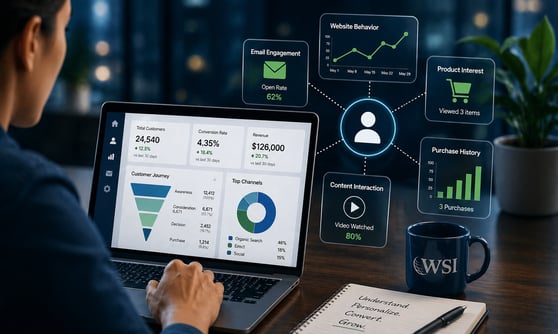
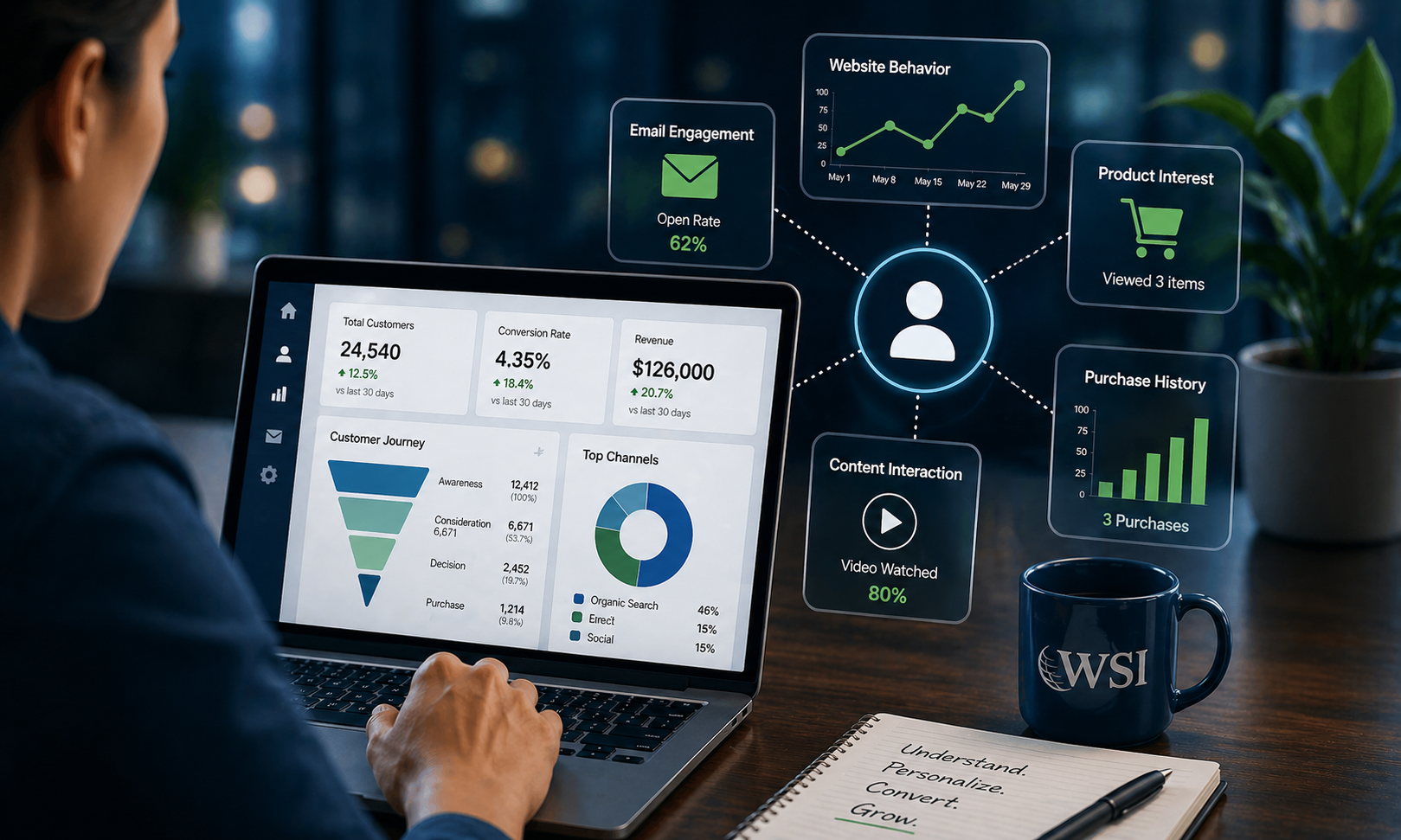
Every inquiry, phone call, purchase, and customer interaction leaves behind a signal. Taken together, these signals form your first-party data, information your business collects directly from the people you serve.
Your customer data already shows where deals slow down, where they move forward, and why. Growth comes from acting on those signals consistently.
That gap shows up in stalled conversion rates, repeated objections in sales conversations, and missed opportunities to increase customer value. The issue is rarely effort. It is a lack of clarity on which signals matter and how to act on them.
Personalization plays a role here, but not in the way it’s often understood. It does not come from complex systems or large teams. It comes from recognizing patterns in customer behavior and responding to them in a way that reduces friction and builds confidence.
Research from McKinsey & Company shows that companies that apply personalization effectively generate 40% more revenue from those efforts. The difference comes down to how clearly your data guides decisions across the business.
Why First-Party Data Drives Smarter Personalization
First-party data is the information your business collects directly from customers through interactions, transactions, and conversations. That includes:
-
Contact details from inquiries
-
Purchase histories
-
Website behavior
-
Customer feedback and reviews
-
Conversations your team has every day
This data is accurate, relevant, and specific to your business. Unlike third-party data, it reflects real interactions with your customers. That makes it far more useful when you want to improve how you communicate, sell, and deliver your services.
Here is where first-party data becomes commercially useful. When you base decisions on actual customer behavior, three things improve quickly:
-
Speed of response
-
Relevance of communication
-
Friction in the buying process
These are not marketing improvements. They are conversion drivers.
Consider a simple example: if you notice that most customers ask the same three questions before making a purchase, you can address those questions upfront—on your website, in your emails, or during calls.
That one change can immediately increase conversion rates.
According to Salesforce, 73% of customers expect companies to understand their needs and expectations. If your business doesn't meet that expectation, someone else will.
How Teams Can Use Simple Signals to Improve Conversions
Small teams already have enough data to improve performance. The constraint is not resources. It is how consistently that data is used to guide decisions.
The goal is to identify a small number of signals that influence decisions and act on them consistently.
Start with what you already have. These signals tell you exactly where to focus:
- Inquiry patterns: What do people ask before they buy? What concerns come up repeatedly?
- Sales conversations: What objections do you hear most often?
- Customer behavior: Which services are most popular? Which pages get the most attention?
- Reviews and feedback: What do customers praise? What nearly stopped them from choosing you?
Here is how this shows up in practice: A local service business noticed that many customers asked about turnaround time before booking. They updated their website and inquiry responses to clearly state timelines upfront. The result: fewer back-and-forth messages and a noticeable increase in confirmed bookings.
An online retailer used purchase history to send simple follow-up emails recommending related products. This small change increased repeat purchases without increasing advertising spend.
Neither example relies on new tools or larger teams. The change comes from acting on what customers consistently indicate.
According to HubSpot, personalized call-to-actions convert 202% better than generic ones. When your messaging reflects what customers actually care about, they respond.
Focus on building simple systems that turn customer signals into consistent actions across your website, sales process, and follow-ups.
Real Personalization vs Automated "Noise"
Many businesses believe they are personalizing when they are automating.
The difference matters. Automation distributes messages. Personalization improves decisions.
In practice, this often shows up as:
- Generic emails with a first name inserted
- Broad offers are sent to every customer
- Messages that don’t reflect real needs or timing
This increases activity, but rarely improves conversion. Just because a customer receives an email with their name on it doesn’t mean they are being given a genuinely personalized experience. If personalization does not help a customer move forward, it does not contribute to revenue.
Real personalization is different. It is timely, relevant, and based on actual behavior. A more effective approach is to:
- Follow up with customers who recently inquired but didn’t convert
- Recommend services based on previous purchases
- Provide helpful information based on common questions
This approach adds value without adding friction.
Research from Epsilon shows that 80% of consumers are more likely to buy from brands that offer genuinely personalized experiences. The difference comes down to intent. If your personalization helps the customer make a decision, it works. If it simply adds more messages, it gets ignored.
How to Design "Delight Moments" That Impact Revenue
Small improvements at key points in the journey have a direct impact on conversion and repeat business. These are points where customers either move forward or hesitate, directly impacting revenue.
These "delight moments" aren't random; they come directly from patterns in your first-party data. They require attention to detail.
Here are a few practical examples:
-
Fast, Relevant Responses: If a customer sends an inquiry, responding quickly with a clear, tailored answer can immediately set you apart. Speed + relevance = higher conversion rates.
-
Proactive Information: If customers always ask the same questions, answer them before they ask. This reduces friction and builds confidence.
-
Thoughtful Follow-Ups: Following up after a purchase or service shows that you value the relationship, not just the transaction. It also creates opportunities for repeat business.
-
Personalized Recommendations: Use past behavior to suggest relevant services or products. This increases average order value without additional marketing spend.
-
Consistent Experience Across Channels: Whether someone finds you on search, social media, or referrals, the experience should feel consistent and reliable.
When these moments are consistent, customers move faster, hesitate less, and are more likely to return.
Metrics That Show Meaningful Personalization
If you want to improve results, you need to track what matters. Focus on metrics that connect directly to business outcomes:
-
Conversion Rate: Are more inquiries turning into customers?
-
Response Time: How quickly are you replying to customer inquiries? Even a 10–15% improvement in response time often leads to higher close rates.
-
Repeat Business: Are customers coming back?
-
Customer Lifetime Value: Are customers spending more over time?
-
Inquiry Quality: Are you attracting better-fit customers?
Improvements in these metrics reflect how effectively your business is responding to customer signals.
This is how first-party data becomes a growth system. You identify signals, apply changes, measure impact, and refine continuously. Over time, small improvements compound into predictable gains in conversion and customer value.
When customer signals are consistently translated into action, conversion improves, sales cycles shorten, and customer value increases over time.
The advantage comes from clarity and consistent execution across your customer journey. Small improvements, applied deliberately, compound into measurable growth.
A Quick Check: Are You Using Your Customer Data Effectively?
Before investing in new tools or campaigns, it’s worth assessing how well your current data is being used across your business.
Consider the following:
- Are common customer questions clearly addressed before someone reaches out?
- Do your sales conversations repeat the same objections week after week?
- Are follow-ups based on what customers have actually shown interest in?
- Can you identify where inquiries typically slow down or drop off?
- Are you using past behavior to guide what customers see next?
If the answer to most of these is unclear, the issue is not data availability. It is how that data is being applied.
This is where many growth opportunities are missed. The signals are already there. They are just not being used consistently across decisions.
Turn Customer Insights into Measurable Growth
If your business is collecting customer data but performance is not improving, the issue is not volume. It is how that data is being applied across decisions.
At WSI, we focus on a simple progression:
Signal → Insight → Action → Outcome
- Identify the signals that influence customer decisions
- Translate those signals into clear adjustments across marketing and sales
- Apply changes consistently across key touchpoints
- Measure impact on conversion, speed, and customer value
This creates alignment across your business. Marketing attracts the right inquiries. Sales conversations become more focused. Customers move forward with greater confidence.
The result is not more activity. It is better outcomes from the activity you already have.
If you want to see where your current data is underperforming, start with a clear assessment of your customer journey. Identify where decisions slow down, where questions repeat, and where opportunities are lost.
That is where growth is already waiting.