
Key Highlights:
- Customer journeys now start and end in-platform. Zero-click environments like Google AI Overviews and Instagram Shops mean customers convert without ever reaching your site.
- Outcome-driven mapping replaces the funnel. Modern journey strategies align customer motivations with business goals, across all lifecycle stages, not just awareness to sale.
- Motivational triggers drive real decisions. Factors like instant rewards, sustainability proof, and AI agent influence shape what (and where) people choose to buy.
- Messaging must follow behavior, not assumptions. Use behavior-based segmentation and personalization tools to align content with how buyers actually move across channels.
- Journey mapping tools are accessible for SMBs. Platforms like UXPressia, Miro, and ActiveCampaign make it possible to build effective, conversion-focused journeys on a budget.
Today, people often decide what to buy without ever visiting your website. AI tools summarize your brand for them, and social platforms let them discover and purchase in one place. To stay competitive, you need to focus on the outcomes. Mapping customer journeys in the AI era means aligning every touchpoint with what your buyers are doing and what they expect.
In this guide, you'll learn how to find and fix the gaps that reduce conversions. We'll cover how to adjust your messaging for AI, how to understand what drives your buyers, and how to build simple journey maps that work for small and mid-sized businesses.
How is AI Journey Mapping Different from Traditional?
Traditional journey mapping is usually a one-time or periodic exercise. Teams gather data, build a map, and revisit it months later.
AI customer journey mapping runs continuously, by pulling in live data from your website, CRM, ads, and customer interactions. This means that you can react faster to changes in customer behavior, seasonal trends, or campaign performance.
This is where an AI customer journey map becomes critical, helping you keep your insights current and aligned with real buyer behavior.
The Funnel Is Dead: Welcome to the AI + Zero-Click Journey
In 2026, customer journeys are no longer linear—and they rarely end on your website. With AI Overviews on Google, TikTok in-feed shopping, and Instagram's native checkout, buyers are discovering, comparing, and converting all within platforms. The journey has gone platform-native.
What’s Driving this Change?
-
AI Summaries Replace Search Clicks: Google AI Overviews and Bing Copilot deliver answers on the SERP—no click required. This is why 60% of searches now end without a visit to your site.
-
In-App Actions Are the New Conversions: Customers shop, book, and message directly within TikTok, Instagram, and even search results — redefining what a "conversion" looks like.
-
Attribution Is Getting Blurry: With platform-native behaviors and no-click decisions, traditional website tracking and attribution tools fall short.
What This Means for You
To stay visible, brands must show up inside the platforms—not just try to pull people out of them. That means optimizing for on-platform visibility, AI-readiness, and conversion points where customers already are.
Customer Journey Mapping Process Stages
Customer journey mapping tracks how a prospect moves from first awareness to long-term loyalty. For marketing and growth, you should focus on these customer journey mapping stages:
Awareness
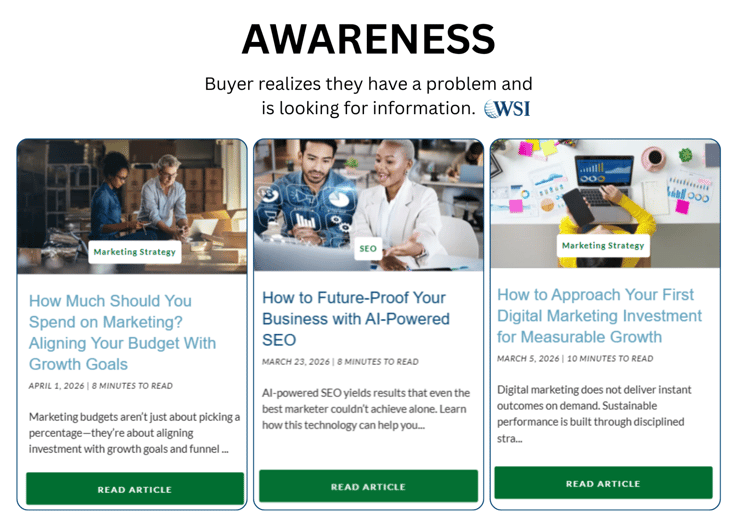
This is where the buyer realizes they have a problem or need and is searching for visibility and educational content.
Tactics include SEO, social content, paid ads, and educational blog posts.
Consideration
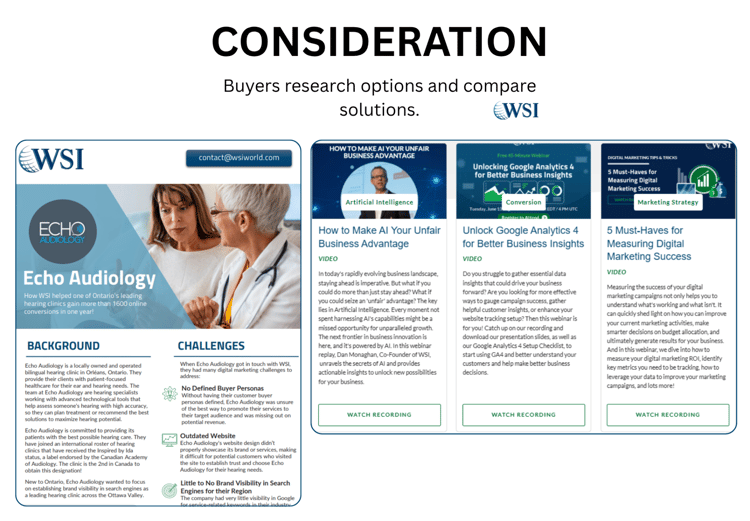
Customers research options and compare solutions. Your goal is to build trust and show expertise so that they choose you.
Tactics include case studies, guides, webinars, and comparison content.
Decision
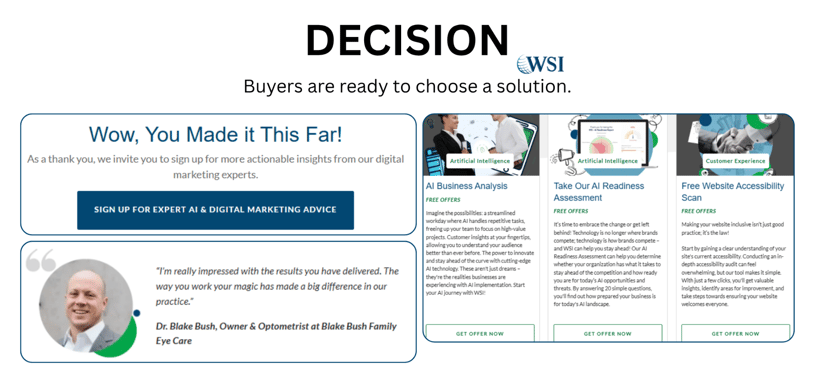
The buyer is ready to choose a solution, and your goal is to remove friction and prove value.
Tactics include demos, testimonials, clear pricing, and clear CTAs (calls to action)
Retention
The customer has now purchased and is using your product or service. Your goal is satisfaction and ongoing engagement.
Tactics include onboarding, email nurturing, support, and helpful content.
Advocacy
Your goal is now to turn satisfaction and ongoing engagement, because happy customers promote your brand.
Tactics include reviews, referrals, loyalty programs, and user-generated content.
How to Map What Actually Drives Conversions
Traditional journey maps track stages. Outcome-driven maps track results — what the customer wants, what your business needs, and how to align the two at every interaction point.
An artificial intelligence customer journey matters more than ever in a world of AI agents and fragmented touchpoints. Mapping for outcomes helps you optimize not just for sales, but also for retention, referrals, and long-term value.
How to Build an Outcome-Driven Map
-
Start With Clear Goals and Personas: Know what you want (e.g., more qualified leads, higher LTV) and who your customers really are—including their goals, pain points, and behaviors.
-
Define Stages That Reflect Reality: Move beyond awareness-consideration-decision. Include stages like "in-feed discovery," "AI comparison," and "silent research".
-
Document Emotions and Actions: What is your customer doing, thinking, and feeling at each touchpoint? This is where friction — and opportunity — hides.
-
Assign KPIs to Every Stage: Whether it's email clicks, AI citation impressions, or in-platform conversions, define what success looks like at every stage of the journey.
-
Find Gaps and Test Fixes: Use behavior data to spot where customers drop off, then test content, UX, or messaging changes to improve outcomes.
Tools to Make It Happen
Platforms like UXPressia, Miro, and Medallia can help you create dynamic, shareable journey maps. Marketing platforms like HubSpot or ActiveCampaign can layer in behavior-based automation to personalize each step.
What Really Moves the Needle?
Today, decision-making is fast, emotion-driven, and increasingly mediated by AI. Your job is to know what motivates your audience before they act, and be ready when the AI agent speaks on your behalf.
Motivation Triggers to Watch
-
Instant Gratification: Buyers expect immediate value. Break offers into smaller, fast wins — think micro-conversions like free tools, quick-start trials, or fast shipping.
-
Proof of Sustainability: Vague promises don’t cut it. Customers want tangible proof: durability claims, emissions data, verified sourcing.
-
Emotional Resonance (e.g., Nostalgia): Familiar brand assets or themes from “better times” spark trust and attachment—especially in uncertain markets.
-
Creative Participation: Gen Z doesn’t just consume—they create. Brands that offer remixable content or invite co-creation see stronger loyalty.
AI-Centric Decision Points to Optimize For
-
AI Agents as Gatekeepers: Tools like ChatGPT, Gemini, and voice assistants are now filtering decisions. If you’re not optimized for AI citation, you’re invisible.
-
Zero-Click Interfaces: Google’s AI Overviews cite ~5 sources per summary—but most users won’t click. You need to be answer-worthy to get visibility.
-
In-Feed Social Commerce: Instagram Shops, TikTok Stores—buyers convert mid-scroll. Your content and offers must be optimized for the feed, not just the landing page.
-
Privacy-First Personalization: With cookies disappearing, users expect a clear value exchange for sharing data. Be explicit about benefits and respect consent.
Align Messaging to Behavior, Not Assumptions
Today, decision-making is fast, emotion-driven, and increasingly mediated by AI. Your job is to know what motivates your audience before they act, and be ready when the AI agent speaks on your behalf.
Strategies That Match Modern Behavior
-
Ditch the Linear Journey: People discover you on TikTok, research via Google, ask ChatGPT, then DM your brand. Messaging must be platform-native and touchpoint-aware.
-
Use Behavior-Based Segmentation: Go beyond demographics. Segment based on actions: pricing page visits, email clicks, and video watch depth. These signals tell you what people care about.
-
Personalize at Scale (the Right Way): Leverage tools like VBOUT or HubSpot to dynamically personalize emails, landing pages, or ads based on real-time behaviors — without sounding robotic.
Why It Matters
Messaging that mirrors behavior converts better — and ranks better. AI systems like Google’s Gemini favor brands that match user intent and interaction context. That’s how you earn both attention and AI citations.
Challenges in the AI Era
- You're losing visibility in the journey: Users don't always click through, so you miss valuable data about how they found you and what influenced their decision.
- Your website is no longer the center: Decisions are shaped across search engines, social feeds, review platforms, and AI-generated results.
- Messaging gets diluted by AI summaries: If your messaging isn't clear and consistent, it can lose meaning or show up inaccurately.
- Attribution is harder to track: It's more difficult to connect conversions to specific channels. Buyers interact with multiple touchpoints, often in ways that traditional analytics can’t fully capture.
- Journeys are no longer predictable: Customers move back and forth between research, comparison, and purchase, often across different devices.
- Personalization expectations are higher: Generic messaging gets ignored.
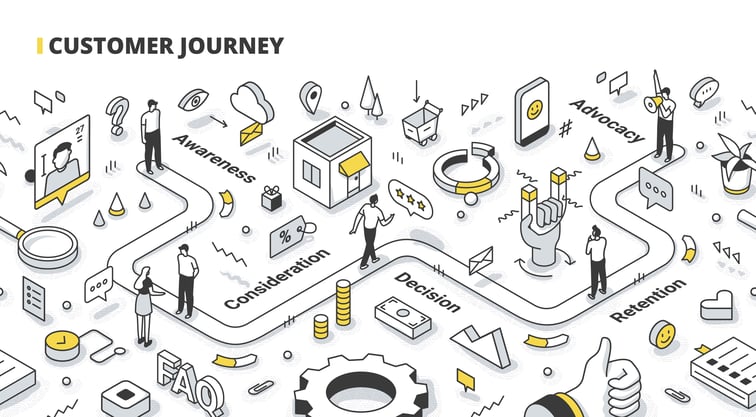
Journey Mapping That Works for SMBs: Templates You Can Actually Use
You don’t need a giant marketing team to map powerful customer journeys. What you need is clarity, a few smart tools, and a framework that aligns with how people buy — especially when they’re not clicking through to your site.
3 Journey Templates That Drive Real Results
-
Awareness → Conversion Map: Build visibility through SEO, social, and platform-native content. Nurture leads with behavior-based emails and on-platform retargeting.
-
Retention Map: Use personalized offers, loyalty programs, and proactive support to increase customer lifetime value. Trigger automations based on usage or feedback.
-
Cross-Sell / Up-Sell Map: Identify post-purchase behaviors and serve relevant offers via email, chat, or social. Think “You may also like” — but smarter and timed right.
Tools That Make It Possible (Even on a Budget)
-
Visual Mapping: Miro, UXPressia, Lucidchart
-
Automation + Segmentation: ActiveCampaign, HubSpot, Klaviyo
-
Data + Analytics: Google Analytics 4, Hotjar, CRM tools
Why SMBs Should Care
In the AI era, every touchpoint matters—because not every user will land on your website. Mapping outcomes across platforms helps you connect, convert, and retain customers where they already are.
At WSI, we specialize in helping businesses design and implement customer journeys that align with today’s digital behaviors. Contact us today to learn how we can help you improve your customer journey mapping and conversion rates.