
Key Highlights
- Email tops ROI charts again. In 2026, email marketing continues to lead with a $36–$45 return per $1 spent, thanks to better targeting and conversion rates than social or search.
- AI-powered personalization drives growth. Tools like ActiveCampaign and HubSpot allow behavioral triggers, predictive content, and tailored journeys that increase revenue by up to 41%.
- Owned audience = long-term asset. Email is immune to algorithm shifts. It’s the most reliable way to engage users who’ve opted in and already trust your brand.
- Smarter automation that feels human. Frameworks like CHEETAH and tools like Superhuman and Klaviyo make emails feel personal, timely, and emotionally relevant.
- New metrics matter more than opens. CTOR, RPE, and Customer Lifetime Value now take priority over open rates in understanding true campaign performance.
- Email connects the omnichannel journey. From SMS to retargeting ads, email serves as the anchor, using zero-party data to personalize at scale and unify touchpoints.
Email marketing in 2026 is outperforming every other digital channel in ROI. But what separates high-performing email strategies from inbox noise is the right balance of AI automation and human connection. By combining behavioral personalization with smart automation, businesses are turning email into a top-performing revenue engine.
Whether you’re a business owner, marketer, or eCommerce leader, understanding how to personalize at scale—without sacrificing authenticity—is the key to unlocking repeat sales, stronger relationships, and long-term customer value.
Current State of Email Marketing
Today, performance depends on how well you understand your audience and how consistently you refine your approach.
Privacy Rules
Privacy changes from companies like Apple and Google have made traditional tracking less reliable. Open rates, originally a key metric, are now inflated or obscured. This means that you need to focus on first-party data and track meaningful actions such as clicks, conversions, and revenue generated from each campaign.
Personalized Messages
Sending the same message to your entire list will reduce engagement. Instead, segment your audience based on actions like browsing, past purchases, or inactivity. You can then create content tailored to your audience's behavior, ensuring each message feels relevant and timely rather than generic.
AI for Efficiency and Targeting
AI helps with optimizing send times, testing subject lines, and even drafting content. If it is used correctly, it can improve efficiency and identify patterns you might miss. However, it still requires human oversight to ensure your messaging stays relevant and aligned with your brand.
Automation
Campaigns like welcome sequences, abandoned cart reminders, and re-engagement emails consistently outperform one-off sends. Automated flows allow you to respond to user behavior in real time, improving both engagement and conversion rates.
Deliverability
Email providers are stricter about what reaches the inbox. Engagement levels, list quality, and sending habits all affect your results. If you send to inactive users or use poor-quality lists, your emails are more likely to be filtered out.
Content Quality
Sending more emails will not improve results if the content lacks value. Clear, relevant, and concise messages perform better, especially on mobile devices where most emails are opened. Each email should serve a specific purpose and address a real need.
Integration with Other Channels
Email marketing should support your content marketing, SEO, and paid campaigns. For example, someone who visits your website from a search engine should be guided into an email sequence that continues the conversation and moves them toward a decision.
Email Marketing Predictions
Email will continue to perform well, but only for businesses that adapt to user behavior and platform evolution. Here are the email marketing trends you should look out for:
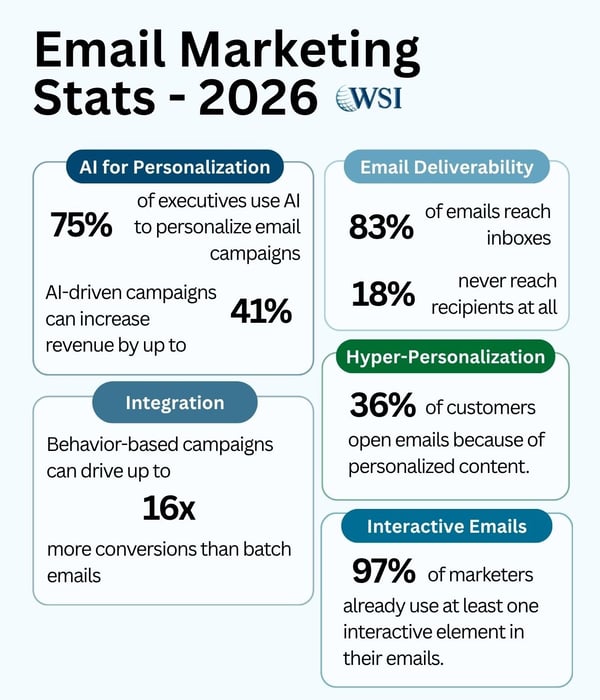
- AI will be used more for shaping content and timing, but do not use it to replace the human element. 75% of executives already use AI to personalize email campaigns, and AI-driven campaigns can increase revenue by up to 41%.
- Hyper-personalization will become the standard. Build stronger buyer personas, and respond to actions, not just schedules. 36% of customers open emails because of personalized content.
- Privacy changes will continue to limit tracking. Invest in collecting your own data through forms, surveys, and gated content. Many businesses are already struggling to measure email performance accurately, and open rates are becoming less reliable due to privacy changes.
- Interactive emails will increase engagement. Test interactive elements, but start with simple ones, like surveys or expandable content. 97% of marketers already use at least one interactive element in their emails.
- Most users check email on mobile first, so make sure your message is clear in 5 seconds, or it will be ignored.
- Deliverability will get harder. Remove inactive subscribers and focus on quality over quantity. Only about 83% of emails reach inboxes, and nearly 18% never reach recipients at all.
- Email and omnichannel integration will grow. Connect your email platform with your CRM and ad platforms to give you a clearer view of the full customer journey and improve conversion rates. Behavior-based campaigns can drive up to 16x more conversions than batch emails.
- Accessibility is gaining legal and practical importance. Use clear fonts, proper contrast, alt text for images, and logical structure.
Why Email Still Drives More Revenue Than Any Other Channel
In 2026, email continues to outperform every digital marketing channel in terms of ROI and direct revenue. While social platforms and search ads fight for attention, email quietly delivers results—with an average return of $36 to $45 for every $1 spent.
Email vs. Social Media
Email drives conversion rates of 4.24%, while social media lags at just 0.59%. That’s a 7x performance advantage, largely because email targets people who have already opted in, they know your brand, and are more likely to act.
Social media still plays a role in discovery and engagement, but email is where conversions happen. Think of it as your digital sales closer.
Why Email Wins
-
It’s direct: You own the relationship. No algorithms, no pay-to-play visibility—just you and your customer.
-
It’s intentional: Subscribers expect your emails and are more likely to act on personalized content.
-
It’s measurable: You can track opens, clicks, conversions, and ROI with precision.
How to Improve Your ROI from Email
-
Segment by behavior: Group your list based on browsing history, purchase activity, or engagement level.
-
Send relevant offers: Tailor messages to match each segment’s interests or needs.
-
Test and optimize: Run A/B tests on subject lines, CTAs, content length, and send time.
-
Automate smartly: Use welcome sequences and abandoned cart flows to capture immediate value with minimal effort.
While social commerce is growing through platforms like TikTok Shop and Instagram Shopping, email remains the most dependable and controllable channel for generating sales, nurturing loyalty, and scaling revenue.
Why Email Wins
One of email’s biggest strengths in 2026 is control. Unlike social media, where your visibility depends on ever-changing algorithms, email gives you direct, dependable access to your audience—on your terms.
Platform Independence = Long-Term Stability
-
You own the list: Your subscriber database isn’t rented or restricted by a third party.
-
You're not at risk: No sudden drops in reach due to platform changes or account issues.
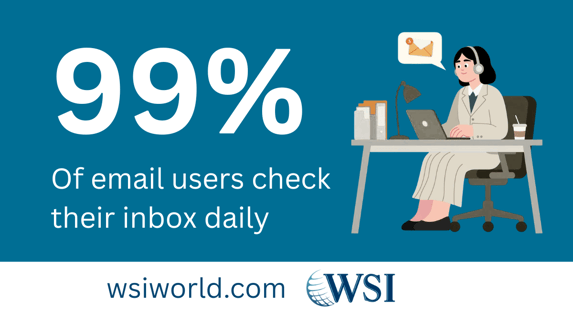
- Your messages get seen: 99% of email users check their inbox daily, making it the most consistent way to connect.
Common Pitfall: A Bloated, Unresponsive List
Many businesses struggle with large lists that don’t convert. That hurts deliverability, open rates, and engagement.
How to Stay Lean and Effective
-
Clean your list regularly: Remove inactive or bounced contacts every 60–90 days.
-
Use lead magnets that attract the right audience: Think value-first—free tools, exclusive content, or early-access deals.
-
Re-engage before you remove: Send a “still interested?” email with a clear incentive to stay subscribed.
Owning your audience gives you freedom—but maintaining that relationship requires regular attention and smart segmentation. A healthy list is a profitable list.
Industry Benchmarks for Email Marketing
|
Industry |
Average Open Rate |
Average Click-Through Rate (CTR) |
Average Conversion Rate |
|
Clothing & Accessories |
33.1% |
1.83% |
5.54% |
|
eCommerce |
35.63% |
2.62% |
0.22% |
|
Automotive |
29.4% |
1.83% |
5.45% |
|
Electronics |
29.3% |
1.85% |
6.11% |
|
Food & Beverage |
31.2% |
1.7% |
5.8% |
|
Non-Profits |
40.04% |
3.27% |
0.18% |
|
Education & Training |
35.64% |
3.02% |
0.18% |
|
Health & Beauty |
30.5% |
1.24% |
4.8% |
|
Sporting Goods |
31.9% |
1.88% |
6.13% |
|
Toys & Hobbies |
31.7% |
2.03% |
5.96% |
Sources: https://www.klaviyo.com/uk/blog/email-marketing-benchmarks-open-click-and-conversion-rates and https://mailchimp.com/resources/email-marketing-benchmarks.
Smarter Emails with AI
In 2026, successful email campaigns don’t rely on luck or volume—they rely on AI. Advanced platforms like ActiveCampaign, HubSpot, and Klaviyo use real-time behavioral data to create highly personalized, high-converting emails that feel one-to-one.
What Makes AI Personalization So Powerful
-
Predictive Engagement: AI learns from user behavior, clicks, views, and past purchases to send the right message at the right time.
-
Revenue Growth: Businesses using AI-driven email strategies see up to 41% more revenue than those using traditional batch sends.
-
Speed to Conversion: AI reduces the time to generate sales-qualified leads by over 200%, helping you close faster.
Easy Ways to Get Started with AI Email
-
Automate behavior-based flows: Set up emails triggered by actions like product views, cart abandonment, or completed purchases.
-
Use smart segmentation: Create groups based on behaviors, not just demographics—such as “viewed but didn’t buy” or “repeat buyer.”
-
Leverage predictive product recommendations: Tools like Klaviyo can suggest items customers are likely to want based on past behavior.
You don’t need a technical background to use AI in your email strategy. These platforms are built for marketers, with drag-and-drop tools that make advanced personalization accessible—and profitable.
The Power of Email Automation
Automation isn’t just about saving time—it’s one of the biggest revenue multipliers in modern email marketing. Done right, automated workflows consistently outperform one-off campaigns by a wide margin.
Why Automation Wins
-
Abandoned Cart Emails: These flows generate up to 30x more revenue than standard campaigns — averaging $3.07 per recipient, compared with $0.10 from generic blasts.
-
Welcome Series: First-impression emails have open rates above 80%, setting the tone for trust, engagement, and early conversions.
High-Impact Flows to Implement Now
-
Welcome Series: Introduce your brand, set expectations, and offer a first-purchase incentive.
-
Browse Abandonment: Trigger personalized follow-ups when users leave without buying.
-
Cart Recovery: Remind shoppers of what they left behind, and sweeten the deal with a time-sensitive offer.
-
Post-Purchase Nurture: Recommend complementary products, request reviews, or enroll users in loyalty programs.
Bonus: These Flows Scale With You
As your list grows, automated workflows ensure every new subscriber or buyer gets a personalized experience—without added manual work.
Automation isn’t about sending more emails. It’s about sending the right email, at the right moment, to the right person—every time.
The Backbone of Your Omnichannel Strategy
In 2026, email is more than a standalone channel; it’s the central hub that ties your marketing ecosystem together. From SMS and paid ads to loyalty programs and in-app messaging, email anchors the customer journey with consistency, context, and measurable impact.
Email’s Strategic Role
-
Omnichannel Connector: Coordinate campaigns across platforms with consistent messaging and offers—email becomes the glue that holds it together.
-
Customer Data Engine: Email is where customers willingly share preferences, feedback, and intent—unlocking powerful zero-party data.
Why Zero-Party Data Matters
With third-party cookies disappearing, the most valuable data is what customers tell you directly—their product preferences, pain points, or buying habits. You can gather this through:
-
Signup forms with optional questions
-
Surveys embedded in emails
-
Interactive content like quizzes or product selectors
-
Preference centers for email frequency or interests
Use Zero-Party Data to Personalize at Scale
-
Tailor content and product recommendations
-
Segment based on expressed preferences, not just behavior
-
Trigger personalized flows that feel uniquely relevant
By combining omnichannel delivery with first-hand customer insight, email becomes your most adaptive, responsive, and trusted marketing tool.
Overcoming Common Email Challenges as You Grow
Scaling email marketing is a double-edged sword—more subscribers mean more opportunities, but also a greater risk of generic, ineffective communication. To succeed at scale, your strategy must evolve to prioritize personalization, automation, and list health.
3 Growing-Pain Solutions for Smart Email Scaling
-
Avoid List Fatigue. If engagement is dropping, try:
-
A re-engagement campaign with a compelling offer or feedback request
-
Pausing emails to disengaged contacts temporarily
-
Letting subscribers adjust frequency or topics via a preference center
-
-
Automate Without Losing the Human Touch. Tools like Klaviyo and ActiveCampaign let you:
-
Trigger flows based on behavior (e.g., cart abandonment, page views)
-
Use dynamic content blocks to personalize messaging for each segment
-
Keep consistent branding and tone across automated messages
-
-
Optimize What Works, Drop What Doesn’t
-
Run A/B tests on subject lines, CTAs, and send times
-
Prioritize high-impact segments (e.g., frequent buyers, new subscribers)
-
Track metrics like Click-to-Open Rate (CTOR) and Revenue per Email (RPE) to guide strategy
-
The goal isn’t just to send more emails—it’s to send smarter ones that resonate and convert at scale.
AI Personalization vs. Spammy Automation
In 2026, email marketing success depends on one thing: relevance. AI-powered personalization delivers timely, context-aware messages that feel human—while spammy automation floods inboxes with generic, off-target content that gets ignored (or flagged).
Here’s how they differ:
Spammy Automation Traits to Avoid
-
Irrelevant Sends: Messages don’t match customer intent or timing
-
Over-Sending: Prioritizing frequency over usefulness
-
Generic Content: No segmentation or tailored messaging
Characteristics of Smart AI Personalization
-
Behavior-Based Triggers: Send based on real actions (e.g., cart abandoned, product viewed)
-
Predictive Relevance: AI recommends what the customer likely needs next
-
Dynamic Content: Adjusts text, images, or offers for each segment automatically
Performance Benchmarks (2025–2026)
-
Open Rates: 20.9% (personalized) vs. 9.7% (generic)
-
Revenue Growth: 40% faster for AI-personalized campaigns
-
Lead Qualification Time: 234% faster with AI-driven emails
AI personalization is the new standard—not just for better performance, but for delivering real value with every send.
How to Write Emails People Actually Read in 2026
The inbox is noisier than ever—the average professional receives 100+ emails daily. To stand out, your message must be clear, concise, and mobile-optimized at first glance.
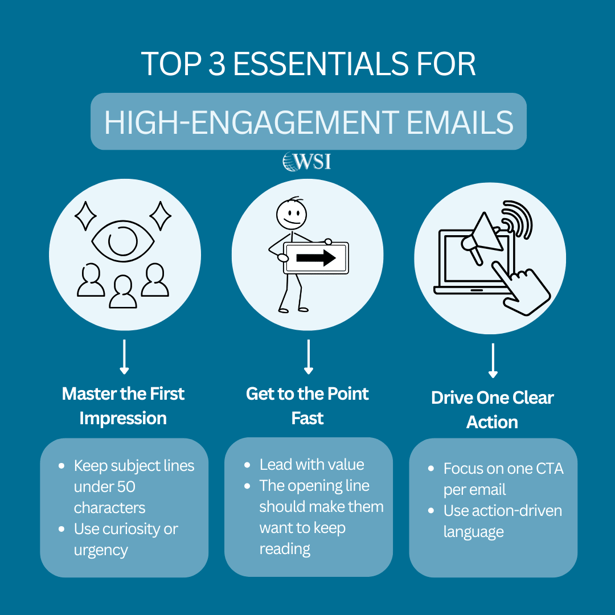
3 Essentials for High-Engagement Emails
-
Master the First Impression
-
Keep subject lines under 50 characters for mobile readability.
-
Use curiosity or urgency, but stay true to the message inside.
-
-
Get to the Point Fast
- Lead with value: What’s in it for the reader?
-
Avoid fluff. The opening line should make them want to keep reading.
-
Drive One Clear Action
-
Focus on one CTA per email and place it prominently.
-
Use action-driven language: “Get 20% Off,” “Start Your Free Trial,” “Download Now.”
-
Pro Tip: Simplicity = Readability
-
Use short paragraphs and bullet points
-
Avoid walls of text
-
Make sure your CTA is visible without scrolling
Emails that respect the reader’s time earn more clicks, replies, and conversions—especially in a mobile-first world.
Stop Wasting Budget on Ineffective Email Campaigns
If your email campaigns aren’t generating ROI, it’s not just a content problem—it’s a strategy and metrics problem. In 2026, smart email marketing focuses on precision, not volume.
4 Ways to Optimize Budget and Results
-
Clean Your List Regularly
-
Remove inactive or unengaged contacts
-
Re-engage lapsed subscribers with targeted offers or surveys
-
Improves deliverability and sender reputation
-
-
Automate for Impact, Not Just Scale
-
Use tools like Klaviyo, ActiveCampaign, or Mailchimp
-
Set up flows for welcome series, abandoned cart, and product recommendations
-
Saves time while delivering timely, personalized messages
-
-
Track the Right Metrics
-
Focus on Conversion Rate (CVR) and Revenue per Email (RPE)—not just open rates
-
Use Click-to-Open Rate (CTOR) to gauge content effectiveness
-
Drop underperforming campaigns that don’t move the needle
-
-
Target Smarter
-
Segment by behavior (e.g., high-value customers, recent browsers)
-
Avoid “batch and blast”—personalize content to where the customer is in their journey
-
Quick Win: A/B Test Everything
-
Subject lines
-
CTA wording and placement
-
Email design and length
The smallest tweaks can unlock major gains in engagement and revenue.
Automation Frameworks That Feel Human
In 2026, the best email automation feels like a one-on-one conversation—not a robotic broadcast. The key? Using behavioral triggers, real-time personalization, and frameworks that adapt to context.
1. High-Touch Personalization Tools
These platforms combine AI with CRM data to craft emails that feel truly personalized:
-
ActiveCampaign: Adjusts content using real-time behavioral logic.
-
HubSpot: Sends emails triggered by user actions (e.g., product viewed, demo requested).
-
Superhuman: Uses AI to mimic your writing style for highly personal outreach.
2. Industry-Specific Smart Frameworks
Tailored tools that match niche needs:
-
eCommerce: Klaviyo predicts purchase intent and automates product recommendations.
-
Sales: Jazon merges AI with human review for ultra-relevant B2B outreach.
-
Creators: Kit (formerly ConvertKit) collects preferences through progressive profiling.
3. The CHEETAH Framework for Human Emails
This storytelling-based structure builds emotional engagement while keeping content digestible:
-
Captivate: Win attention with a bold subject line and visual hook.
-
Humanize: Use plain language—no jargon.
-
Entertain: Add a dash of humor, curiosity, or creativity.
-
Easy: Keep copy concise, use bullet points, and stick to one message.
-
Transitions: Use visuals (e.g., images or spacing) to guide the reader’s eye.
-
Animate: Add subtle motion (e.g., GIFs) to highlight offers or CTAs.
-
Harmony: Align your email content with your landing pages for a seamless experience.
This kind of framework helps brands move beyond transactional email to relationship-building—without losing scale.
Metrics That Reveal True Performance in 2026
In 2026, open rates are no longer a reliable measure of success. To understand what’s really working in your email marketing, you need deeper, outcome-focused metrics that reflect true engagement, revenue impact, and deliverability.
1. Engagement Metrics That Matter
-
Click-to-Open Rate (CTOR)
Measures: How compelling your content is once the email is opened.
Why it matters: A high CTOR signals relevant, action-driving content. -
Reply Rate
Measures: Direct responses from recipients.
Why it matters: Indicates real interest and relationship potential—especially valuable in B2B. -
Forward/Share Rate
Measures: Organic reach through user sharing.
Why it matters: Shows your content is valuable enough to be passed along.
2. Business & Revenue Metrics
-
Conversion Rate (CVR)
Measures: How many recipients took a desired action (e.g., purchased, signed up).
Why it matters: A core indicator of campaign effectiveness. -
Revenue Per Email (RPE)
Measures: Average revenue generated per email sent.
Why it matters: Helps prioritize high-performing segments or campaigns. -
Customer Lifetime Value (CLV)
Measures: Long-term revenue per subscriber.
Why it matters: Tracks retention and loyalty generated through email.
3. Deliverability & List Health
-
Inbox Placement Rate (IPR)
Measures: Emails that land in the primary inbox (not spam).
Why it matters: No visibility = no engagement. -
Domain Reputation
Measures: The trust level of your sending domain.
Why it matters: A poor reputation hurts deliverability across all campaigns.
Bonus: Acquisition Efficiency
-
Customer Acquisition Cost (CAC) via email
-
Email Subscriber Cost vs. Revenue Per Email (RPE)
Tracking these gives you a complete view of both short-term ROI and long-term sustainability. Instead of focusing solely on superficial metrics like open rates, these more comprehensive indicators provide valuable insights into customer behavior, financial performance, and the health of the email list, allowing marketers to refine their strategies for more meaningful engagement and sustained growth.
Ready to unlock the full potential of email marketing for your business? At WSI, we specialize in helping growth-oriented business owners implement AI-driven email strategies that not only drive immediate revenue but also build long-term customer relationships. Schedule a free email marketing audit today to identify key areas for improvement and learn how we can help you scale your business with smarter, more effective email marketing.