Key Highlights
- What the human element in marketing actually means (and why it matters now)
- How human-centric marketing improves personalization, trust, and lead quality
- Where AI tools need human oversight to perform well
- The real cost of over-relying on automation without a clear strategy
- How a WSI Consultant combines global expertise with local market knowledge
- How to measure whether your marketing is connecting with the right people
Editor's Note: This post was originally published in May 2024 and has been updated with additional content about different types of landing pages in August 2026.
In a society where digital interfaces prevail, it is easy to overlook that there is a human being behind every screen, and that person wants connection and understanding. We at WSI recognize this essential truth and prioritize genuine, empathetic connections in our digital strategies. WSI's Consultants embrace the combination of digital innovation and human skill to establish meaningful relationships and achieve corporate success.
Although technology facilitates data analysis and process automation, the human element in marketing imparts depth and significance to these encounters. With everything from AI and AR to interactive content and automated marketing strategies, preserving a human connection is vital when technology profoundly influences human relationships and marketing tactics. Strategies should consistently focus on making digital experiences more human, guaranteeing that every interaction is characterized by authentic connection and comprehension.
In fact, we at WSI believe in this ethos so much that we made it our tagline! "Embrace Digital. Stay Human." highlights our dedication to utilizing technology while emphasizing the human aspect in all our efforts.
What is the Human Element in Digital Marketing?
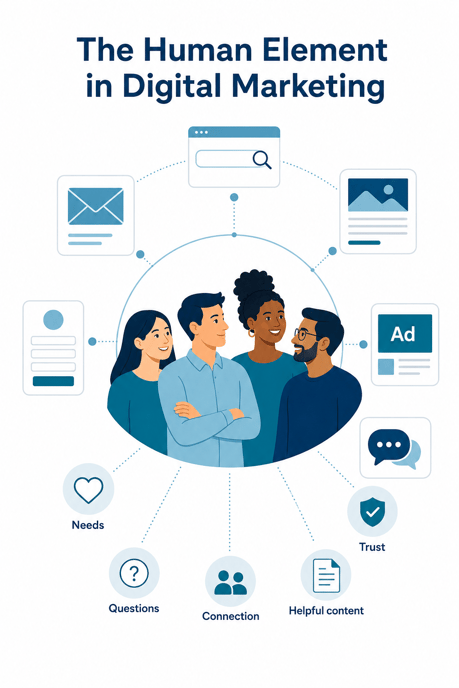
The human element in digital marketing is the focus on real people behind every click, search, form fill, and purchase.
It means understanding your audience’s needs, questions, emotions, and decision process before choosing tactics like SEO, paid ads, email, content, or AI.
Digital tools help you reach people. The human element helps you connect with them.
It shows up in clear messaging, useful content, honest communication, personal service, trust-building, and experiences that make customers feel understood.
Without the human element, marketing can feel generic, automated, or pushy. With it, marketing becomes more relevant, helpful, and effective.
Adopting a Human-Centric Marketing Approach to Embracing Change
Businesses need to adapt as technology changes. But adaptation should not mean using every new tool without a clear reason.
Technology works best when it improves the customer experience. AI can help analyze behavior. Automation can help manage follow-up. Analytics can show what people do on your website. But people still need to interpret that information and decide what it means.
For example, your analytics may show that users leave a service page before contacting your business. A tool can show the drop-off point. A marketing expert can review the page and identify the likely cause, such as unclear messaging, weak calls to action, slow load times, limited trust signals, or missing answers to common questions.
That is where the human element matters. It turns information into better decisions.
| Human-guided strategy is what separates personalization that converts from personalization that feels generic. |
What Happens When Businesses Rely Too Much on Tools?
When technology runs without human direction, businesses can run into common problems:
- Generic content that sounds like every competitor.
- Ad campaigns that chase clicks instead of qualified leads.
- Automated emails that feel cold, poorly timed, or irrelevant.
- Reports that track too many numbers and miss revenue impact.
- AI-generated recommendations that do not match the brand, audience, sales process, or local market.
The issue is rarely the tool itself. The issue is the lack of strategy behind it. Digital tools need clear goals, expert review, and ongoing refinement to perform well.
Where Human Expertise Improves Digital Marketing
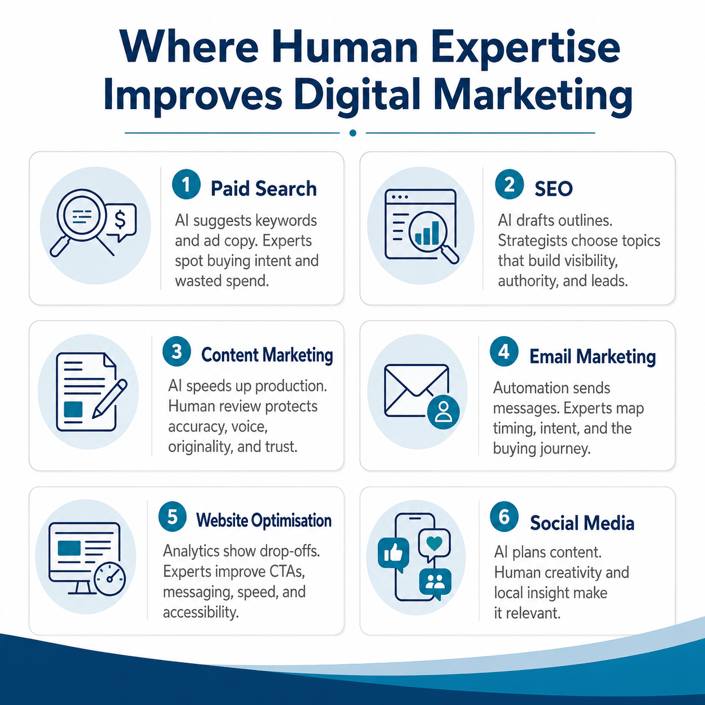
- Paid search: AI can suggest keywords and ad copy, but a human expert knows which search terms show buying intent and which ones may waste budget.
- SEO: AI can help create outlines and drafts, but a strategist decides which topics support visibility, authority, and lead generation.
- Content marketing: AI can speed up production, but human review protects accuracy, brand voice, originality, and trust.
- Email marketing: Automation can send messages, but a human expert maps the buying journey and prevents the wrong message from reaching the wrong person at the wrong time.
- Website optimization: Analytics tools can show where users drop off, but an expert can identify what needs to change, such as clearer calls to action, stronger messaging, faster load times, or better accessibility.
- Social media: AI can help plan content, but human creativity and local market knowledge make the message feel relevant to the audience.
The Significance of Human Expertise in Artificial Intelligence
AI can support digital marketing in many useful ways. It can help with research, planning, content drafts, reporting, segmentation, and campaign support.
But AI still needs human oversight.
People need to check accuracy, review tone, protect customer privacy, reduce bias, and make sure the output reflects the brand and audience. This is especially important when AI influences customer communication, advertising, lead scoring, or content creation.
The goal is not to replace human judgment. The goal is to use AI to help teams work faster and make better-informed decisions, while people remain responsible for trust, quality, ethics, and customer understanding.
| AI can surface insights, but a strategist decides what to do with them. Without human direction, AI campaigns tend to produce generic content, poorly timed messages, and campaigns that chase clicks instead of customers. |
Advantages of Human Expertise in Artificial Intelligence
The incorporation of human expertise and knowledge into AI-powered systems provides a multitude of advantages, such as:
Improved Precision: Human input enhances the accuracy and relevance of AI algorithms, particularly in contextual interpretation and subjective assessment activities.
Ethics: Human oversight is crucial in ethical decision-making as it prevents biased outcomes and guarantees adherence to ethical norms in AI systems.
Customized Experiences: Human professionals' knowledge and skills allow firms to develop tailored and compassionate experiences, which enhance customer happiness and foster loyalty.
Enhanced Problem-Solving: Combining human creativity and ingenuity with AI technologies results in more efficient solutions with a more significant impact.
Adaptability: Human expertise enables the capacity for flexibility and adaptability in dynamic contexts, ensuring that AI systems maintain responsiveness to changing circumstances.
Why Work with a WSI Expert
A WSI Consultant can help your business combine digital tools with human strategy.
That matters because customer needs, search behavior, competition, regulations, and buying journeys vary by market. What works for one business, industry, or location may not work for another.
WSI Consultants bring local market understanding backed by a global network of digital marketing experience. This helps businesses apply the right mix of SEO, paid search, content, AI, automation, analytics, and website optimization based on their goals.
The focus is not on using technology for its own sake. The focus is on using the right technology to support better customer experiences, stronger marketing performance, and measurable business growth over time.