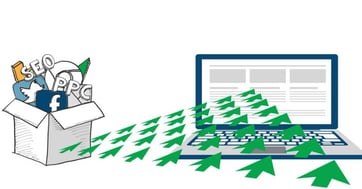
Think of it this way: You’re not trying to sell snowboards to people living in the tropics. You’re reaching out to people who live near mountains, follow snow sports accounts, and are Googling "best beginner snowboard". That’s a targeted lead.
Why does this matter? Because your time and marketing dollars are limited. Focusing on targeted leads means you’re not wasting either chasing people who were never going to buy in the first place. It’s smarter, more efficient, and gives your sales team better conversations to have.
Why Your Business Needs Targeted Lead Generation
Let’s be honest, getting “more leads” sounds great until you realize not all leads are worth your time. If your inbox is full but no one’s actually interested in buying, you’re not growing; you’re spinning your wheels.
That’s where targeted lead generation comes in. It’s not about attracting just anyone; it’s about connecting with the right people. These are the potential customers who are already showing signs that they need what you offer. They’re more likely to click, call, or convert because your product or service actually makes sense for them.
When you focus on targeted leads, your sales conversations get better, your marketing dollars work harder, and your close rates start to look a lot healthier. You’re not just “getting the word out”; you’re putting it in front of people who are already listening, and that leads to better sales outcomes.
| Getting more leads isn’t the goal. Getting the right leads is. Targeted lead generation helps your business focus time and budget on people who actually want what you sell. |
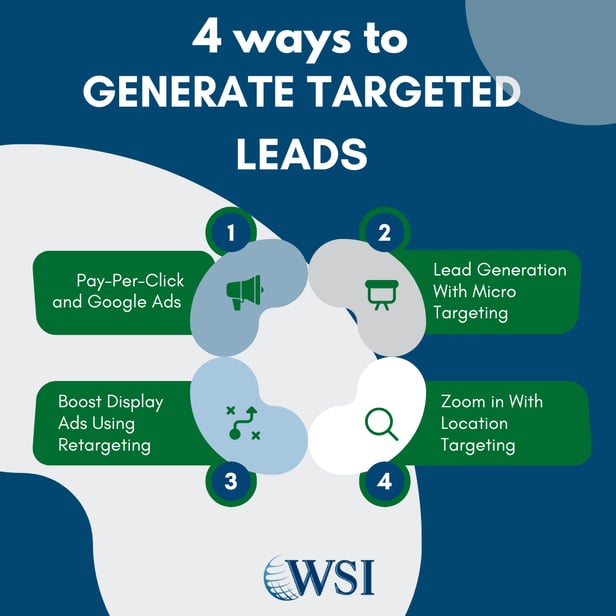
4 Ways to Generate Targeted Leads
There are businesses and marketers out there - and maybe you're one of them - pulling out their hair because digital marketing isn't working how it's supposed to. So you switch it up, try shorter content, more frequent social media posts, and a PPC campaign - but nothing works. Well, what if you didn't have to change your strategy or tactics? What if all you had to do was improve targeted lead generation? Hey, it could happen, and it's a lot less work than changing your whole strategy. Take a look at these four ways to improve targeted lead generation and generate high-quality leads:
1. Pay-Per-Click and Google Ads Advertising
Pay-per-click (PPC) campaigns delivered through Google Ads are a great way to narrow your target market. Since you will determine the search phrases for which you'd like your ads to appear, you're already engaging with a form of targeting. Once you're plugged into Google's Display Network, you'll begin to see patterns and trends in the behavior of the consumers who are showing the most interest in your brand's products or services. With PPC and Google Ads advertising, not only do you get a steady stream of targeted traffic to your landing pages, but you also receive insight into which phrases are converting at the highest rate. For simplicity's sake, PPC campaigns are one of the easiest ways to begin improving your targeted lead-gen.
2. Lead Generation With Micro Targeting
It's no secret that data is important to marketing teams and strategies, especially in 2024 and beyond. But companies often think about data the wrong way. When something doesn't work, marketers move on to the next tactic in hopes that it performs better. Everything a marketer does - whether it's successful or not - generates data. Learn to use every piece of information you have access to. For example, use old data from a failed marketing tactic to intensely micro-target your next campaign. This means that if you have data on the target group for an old, failed campaign, make sure that your new campaign does not reach any of the same people. The more granular and focused you can be with targeting, the better your results.
3. Boost Display Ads Using Retargeting
Retargeting is like magic (no, seriously). There's no better way to target an audience than to focus on people who have explicitly shown interest in a product you offer (as in they've contacted you about it, looked at your page online, or had an item in their cart). These people want to become your customers; they just aren't ready, or maybe they have a question. You should be converting this group of consumers at a pretty high rate, and retargeting will boost conversions and help you excel at capitalizing on the interest your brand generates.
4. Zoom in With Location Targeting
You've heard it before: "Location, location, location!" A growing component of digital marketing is focusing on the location of your consumers. In addition to local search, social and content campaigns, you can also target ads at your potential customers based on their location. If you're a brick-and-mortar business, this is a massive opportunity for you to get the jump on your sluggish competitors. With consumers becoming increasingly mobile (which also means reliant on their mobile devices for information), you can boost your business with some mobile marketing savvy and zoomed-in location targeting.
How to Build a Targeted Lead Generation Campaign
Building a solid lead generation campaign doesn’t need to be complicated, but it does need to be smart. The goal isn’t to cast the widest net; it’s to catch the right fish. Here's how to do that:
Know Who You’re Talking To
Start by defining your ideal customer. What problems are they trying to solve? What industries are they in? What do they care about? If you’re not clear on who you're trying to reach, your campaign will end up speaking to no one in particular.
Pro tip: Use real data, past customers, website analytics, and CRM info to paint a clearer picture.
Build the Right Offer
People don’t hand over their contact info for nothing. Give them a reason to engage: a helpful guide, a quick checklist, a free assessment, something that actually solves a problem or answers a question they have. Choose the Right Channels
Don’t just post it and hope for the best. Think about where your audience hangs out: Google, LinkedIn, email, Instagram, industry sites, and focus your efforts there. One solid channel that hits the right people is better than five that don’t.
Set Up a Clean, Simple Conversion Path
Make it easy for people to take the next step. Whether it’s filling out a form, booking a call, or downloading something, don’t bury the action in a maze of clicks. Fewer steps = more leads.
Follow Up with Purpose
Once someone shows interest, don’t leave them hanging. Have a follow-up plan in place, email sequences, retargeting ads, or a sales call that keeps the conversation going and builds trust.
Watch the Numbers
Track what’s working and what’s not. Look at click-through rates, form completions, cost per lead, whatever tells you if you’re reaching the right people. If something’s off, adjust it. A good campaign evolves.
Segmentation and Targeting Process
You can't market to everyone, and you shouldn't try. Segmentation and targeting help you focus your efforts on the people most likely to care about what you offer. Here's how the process works:
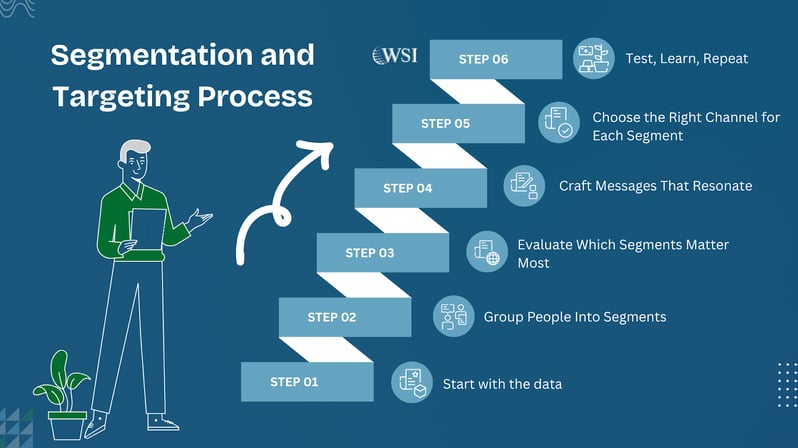
Start With the Data
Before you do anything, dig into the data you already have. Customer records, website traffic, social engagement, and email lists these can all show patterns around who’s engaging with your brand.
Look for clues like:
-
- Age, location, job title (demographics)
-
- Interests, behaviors, online habits
-
- Purchase history or lifecycle stage
-
- Pain points or common questions
Group People Into Segments
Now that you have some raw info, sort your audience into smaller, manageable groups. These could be based on:
The goal is to build meaningful segments that you can market to differently, because not everyone needs the same message.
Evaluate Which Segments Matter Most
Not every group will be worth your time. Some will have a higher potential to buy, a shorter sales cycle, or more long-term value. Focus on the ones that bring real opportunity and align with your business goals.
Craft Messages That Resonate
Now that you know who you’re talking to, shape the message around what they care about. Speak to their problems, use their language, and answer the questions they’re already asking. This is where relevance starts to pay off.
Choose the Right Channel for Each Segment
Different segments may respond better on different platforms. A local business owner might prefer email, while a marketing manager might be more responsive on LinkedIn. Use what you know to meet them where they are.
Test, Learn, Repeat
Segmentation isn’t a one-and-done task. Keep testing your assumptions, watching how each group performs, and adjusting your approach as needed. The better your targeting gets, the more efficient your marketing becomes.
Analyzing Targeted Lead Performance
Track Where Leads Are Coming From
First, know which channels are driving the most (and best) leads. Is it paid search? Organic traffic? Social? Referral partners? If you’re running multiple campaigns, each one should be tracked separately so you’re not guessing what’s pulling its weight.
Measure Lead Quality, Not Just Quantity
High lead volume looks good on paper, but it doesn’t mean much if those leads never convert.
Focus on signals like:
-
- Lead-to-customer conversion rate
-
- Time to close
-
- Average deal size
-
- Sales-qualified vs. marketing-qualified leads
Good leads move through the funnel smoothly. If they’re stalling or dropping off, something’s off.
-
Use Lead Scoring (If It Makes Sense)
For businesses with longer sales cycles or multiple products, lead scoring can help you rank leads based on how likely they are to buy. You can assign points based on actions (like downloading a guide or requesting a demo) or attributes (like company size or job title).
It’s not required for every business, but it can help your sales team prioritize the right conversations.
Review Engagement Metrics
How are leads interacting with your content, emails, or website after they come in?
- - Are they opening emails?
- - Visiting key pages?
- - Booking calls?
- - Returning multiple times?
High engagement usually means you’re speaking to the right people. Low engagement could mean your offer or message missed the mark.
Get Feedback from Sales
This step gets skipped way too often. Your sales team talks to these leads every day; they know which ones are actually a fit and which ones are wasting time. A quick feedback loop between marketing and sales helps improve targeting over time.
Look at ROI, Not Just CPL
Cost per lead (CPL) is helpful, but return on investment (ROI) tells the full story. If one campaign brings in leads for $30 each but those leads close at 5x the rate of another campaign with $10 leads, the math speaks for itself.
| Ten solid leads that convert are worth more than a hundred that never reply. Track metrics like conversion rate and lead quality, not just the number of contacts. |
Challenges in Targeted Lead Generation
Unclear Target Audience
- - Lack of data-driven buyer personas leads to vague targeting
- - Messaging misses the mark when you don't know who you're speaking to
Low-Quality or Incomplete Data
- - Outdated or inaccurate CRM/contact data reduces targeting accuracy
- - Leads may not match your ideal customer profile
Weak or Irrelevant Offer
- - Low engagement when the offer doesn't solve a real problem
- - Leads may come in, but don’t progress through the funnel
-
- Overemphasis on Lead Volume Over Quality
- - High quantity but low conversion rates
- - Sales teams waste time on unqualified leads
Marketing and Sales Misalignment
- - Disagreement on what qualifies as a good lead
- - Leads get ignored or mishandled after handoff
Tracking and Attribution Issues
- - Difficulty determining which channels or campaigns are driving results
- - Misallocated budget and poor decision-making
Shifting Buyer Behavior
- - Audience needs and habits evolve
- - Campaigns go stale if not reviewed and updated regularly
Limited Personalization
- - One-size-fits-all messaging reduces engagement
- - Lack of segment-specific content makes campaigns feel generic
Channel Saturation or Competition
- - Ads and content get buried in crowded platforms
- - Harder to stand out and capture attention
Budget Constraints
- - Not enough resources to test or refine campaigns
- - Pressure to show quick results leads to shortcuts or missteps
Targeted B2B Lead Generation - Quality Leads
Targeted B2B sales leads involve identifying companies that align with your ideal customer profile. This goes beyond basic demographics and considers factors like industry, company size, budget, and specific pain points. By customizing your outreach to address their unique challenges and showcasing how your product or service solves their problems, you'll generate leads more likely to convert into paying customers.
If you have any more questions about improving targeted lead generation, contact WSI today, your trusted Digital Marketing company.
|
FAQs about Targeted Lead Generation
#1. How long does it take to see results from targeted lead generation?
It depends on your strategy and channels. Paid ads may bring in leads within days, while organic or content-driven campaigns take longer but offer more sustainable results. The key is to track performance consistently and adjust as you go.
#2. Do I need a large budget for targeted lead generation?
Not necessarily. What matters more is how you use your budget. A focused campaign aimed at the right audience can be far more cost-effective than broader efforts with a higher spend. Small budgets can work well when paired with clear targeting and smart messaging.
#3. How often should I update my lead targeting criteria?
You should review your criteria regularly, ideally every quarter or whenever you notice changes in lead quality, sales feedback, or market behavior. If you're entering a new market or launching a new product, update immediately.
#4. Is targeted lead generation only for B2B businesses?
No. While B2B companies often use detailed targeting, B2C businesses can also benefit by focusing on segments like lifestyle, interests, or purchase behavior. Whether you're selling software or sneakers, reaching the right people matters.
#5. Can I do targeted lead generation without paid ads?
Yes. While paid ads can speed things up, you can use organic methods like SEO, email segmentation, and content marketing to attract and nurture targeted leads over time. It just takes a bit more patience and consistency.
#6. What tools can help with targeted lead generation?
There are plenty of helpful tools, including:
- - CRM platforms (HubSpot, Zoho, Salesforce)
- - Ad platforms (Google Ads, LinkedIn Ads)
- - Analytics (Google Analytics, Hotjar)
- - Email marketing tools (Mailchimp, ActiveCampaign)
- - Lead capture (form builders, chatbots, landing page tools)
The best tools depend on your goals, budget, and team size.
#7. What role does content play in targeted lead generation?
Content is a key driver; it helps attract, educate, and qualify leads. Blog posts, guides, videos, and webinars can all speak to specific audience segments and move them toward action without a hard sell.
#8. How do I prevent targeting the wrong leads?
Start by defining what a bad lead looks like; this is just as important as knowing who you do want. Then set clear filters in your ads, forms, and outreach efforts to keep those misfits out. Constant feedback from your sales team helps, too.
#9. Is it worth outsourcing lead generation?
It can be, especially if your internal team is stretched thin or lacks experience in targeting and campaign execution. In some cases, outsourcing targeted lead generation allows you to focus on closing deals while experts handle the heavy lifting of attracting the right prospects. Just make sure any outside partner understands your goals, audience, and industry. Otherwise, you risk paying for quantity over quality.
|